
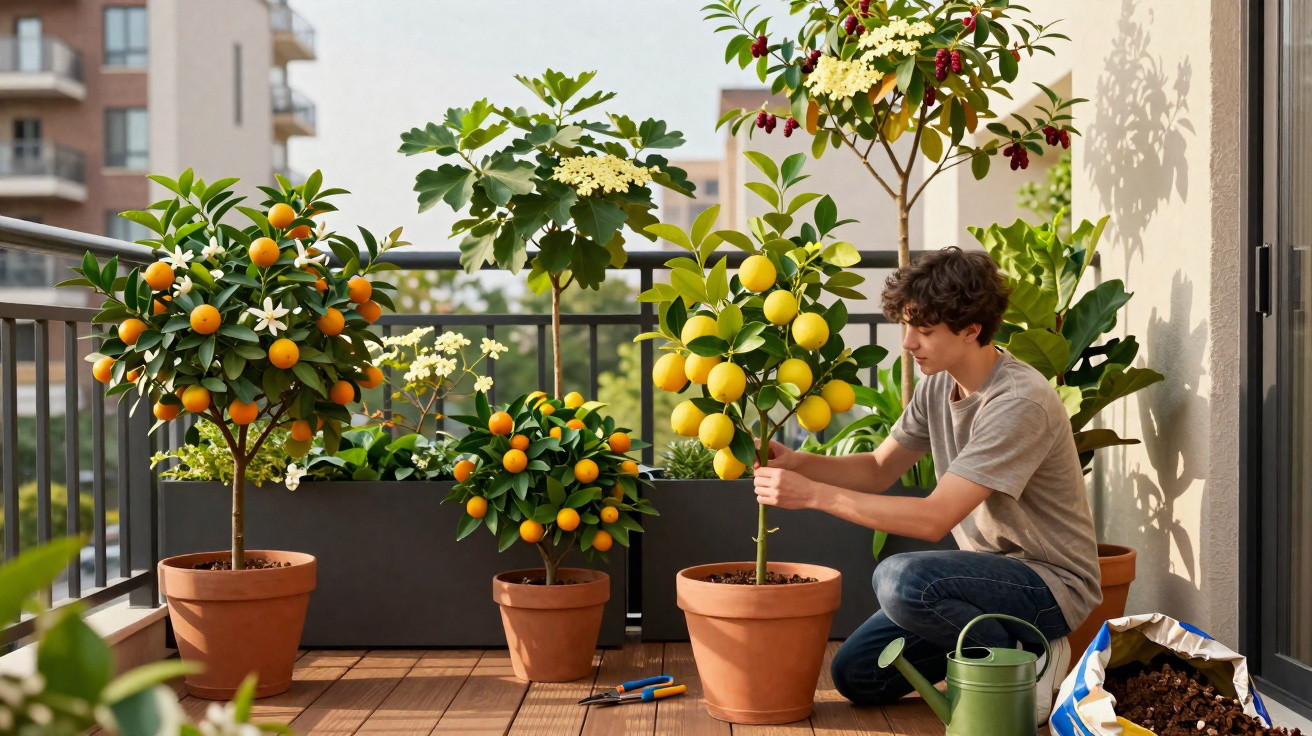
With the right fruit trees, even a small garden can become a miniature fruit-filled haven surprisingly quickly.
Many amateur gardeners give up in frustration because apple trees and similar plants seem to take forever. Yet some species produce reliably after only a few seasons – and some can even be grown in pots on a balcony or terrace. Preparing the soil properly, watering regularly and doing some pruning can dramatically shorten the wait for succulent fruit.
A fast-growing fruit garden instead of years of waiting
Fruit trees are often seen as a project for patient people. However, certain types establish themselves much more quickly and enter their fruiting phase sooner. They suit impatient gardeners, compact terraced-house gardens and even urban balconies.
"With suitable varieties, a lively, productive fruit-growing area can be established in three to five years – rather than ten or more."
The benefits extend well beyond your own harvest: the flowers attract bees and other pollinators, dense foliage gives birds cover, and the trees add structure to the garden. Consistent care during the first few years remains essential: water, mulch, feed and prune regularly, but moderately.
Essential preparation before planting
Anyone planting fast-growing fruit trees wants quick results – but without sound preparation, that advantage is easily lost. An extra half-hour spent planting can often prevent years of later frustration.
Prepare the soil thoroughly
- Loosen the soil deeply and remove stones and old roots
- Work in mature compost or well-rotted manure
- Improve heavy soil with sand or fine grit
- Prevent waterlogging; add a drainage layer if necessary
Organic fertiliser feeds young trees evenly while encouraging healthy soil life. This helps roots establish more quickly, providing the foundation for rapid growth.
Water, light and pruning
Most fast-growing fruit trees prefer:
- a location in full sun, with at least six hours of sunlight a day
- consistent moisture, particularly during the first and second year
- a light, open canopy maintained through regular formative pruning
Young trees suffer greatly when short of water. Watering diligently throughout the first two summers can often provide the equivalent of a whole extra year's growth.
Four quick-growing citrus trees for balconies and terraces
Citrus plants are widely associated with southern gardens. Several varieties not only grow quickly but also perform remarkably well in containers in central Europe, provided they are kept frost-free over winter.
1. Calamondin – the ever-present citrus fruit
Calamondin orange trees are naturally compact, cope exceptionally well with container growing and often bear plenty of small fruit while still young. In bright homes, they can flower and fruit almost all year round.
For many city dwellers, they are the first choice: they fit on a balcony, look decorative and reward growers with intensely scented flowers and tangy, aromatic fruits that are ideal for drinks and marmalade.
2. Kumquat – small but productive early on
In warm regions, kumquats have long been valued as a citrus type that fruits quickly. The small trees remain relatively compact and adapt well to containers.
Their particular advantages include:
- Early fruiting, even on young plants
- A compact growth habit, ideal for limited spaces
- Fruits that can be eaten with their peel
A sunny, sheltered spot and free-draining growing medium are usually enough to harvest a respectable quantity of fruit within a few years.
3. Lemon tree – a classic with rapid growth
The lemon tree is considered the star of citrus plants. Many varieties grow vigorously and flower several times each year. In a large pot with well-drained compost and plenty of light, they soon develop strong shoots.
Those who grow a specimen with a grafted crown on a bright terrace or loggia can often pick their first home-grown lemons for lemonade and cooking after only two to three years.
4. Mandarin tree – sweet fruit in a short time
Mandarin trees respond to warmth and sunshine with fast growth. They can stay outdoors in areas with mild winters; elsewhere, they thrive in a container with frost-free winter accommodation.
"In favourable locations, mandarin and lemon trees can yield baskets full of fruit just a few years after planting – even in a small space."
Slightly acidic, nutrient-rich soil remains important, as does regular but restrained feeding, so that growth does not become overly lush and the shoots remain sturdy.
Four robust fast starters for planting in the garden
Anyone with their own plot can establish half an orchard in no time using a few suitable species. These four soon provide both shade and a harvest.
5. Fig tree – a sun-loving reliable producer
Fig trees are no longer exotic in the milder parts of the German-speaking world. They establish quickly, form vigorous crowns and, once established, cope remarkably well with dry spells.
Figs prefer:
- a very warm, protected position, such as in front of a south-facing wall
- free-draining, relatively lean soil
- gentle pruning, chiefly thinning out
Many varieties produce worthwhile crops after just a few years. In colder areas, winter protection or a variety with greater frost tolerance is helpful.
6. Mulberry tree – sweet berries and abundant wildlife
Mulberry trees grow strongly and, after a relatively short time, yield large quantities of sweet berries. The fruit tastes like a blend of blackberry and raspberry, although it stains heavily.
Anyone planting a mulberry tree should be aware that its abundant berries attract birds and quickly create a "carpet" beneath the tree. It is therefore best not to position one directly above a patio or car.
7. Black elder – a versatile native plant
Elder grows quickly by nature and gradually forms dense woody growth. It can be trained as a small tree or a multi-stemmed shrub, repeatedly sending up fresh growth from its base.
The early-summer flowers are suitable for syrup and baking, while the ripe dark berries can be used for juice and jelly. The berries are unsuitable for eating raw and must be heated – a point many amateur gardeners initially underestimate.
"Anyone who plants elder gains a valuable wild fruit shrub within a few years, supplying insects, birds and people at the same time."
8. Peach tree – quick rewards in a warm garden
Peach trees grow rapidly, produce striking pink blossom in spring and soon provide juicy fruit in sunny locations. They favour warm, relatively dry sites with good air circulation to limit fungal diseases.
Regular pruning keeps the canopy young and encourages fresh fruit-bearing shoots. Choosing a robust variety suited to the local climate can often bring an earlier harvest and reduce the risk of losses after late frosts.
Which fruit tree suits which location?
| Fruit tree | Suitable location | Particular strengths |
|---|---|---|
| Calamondin | Balcony, terrace, bright window | Compact, frequent flowering, early fruiting |
| Kumquat | Sunny balcony, conservatory | Edible peel, very early fruit |
| Lemon tree | Large container, terrace, frost-free winter accommodation required | Vigorous growth, flowers several times |
| Mandarin tree | Mild garden, container on a sunny terrace | Sweet fruit, quick development |
| Fig tree | Warm garden, house wall, light soil | Fruits quickly, drought tolerant |
| Mulberry tree | Larger garden, open space | Heavy crops, strong tree growth |
| Elder | Garden edge, wildlife-friendly area | Native, very robust, versatile uses |
| Peach tree | Sunny, open garden | Early crops, attractive blossom |
Practical tips for higher yields in less time
Those who genuinely want to speed up their fruit garden can adjust a few key factors:
- Buy grafted young trees: They bear fruit considerably sooner than plants grown from seed.
- Mulch: A layer of bark mulch or grass clippings retains moisture and supports soil life.
- Provide wind protection: Citrus trees in containers especially respond to sheltered corners with better growth.
- Manage fruit set: During the first few years, it is better not to let every developing fruit mature, so the tree can put energy into its roots and canopy.
Another factor that is often overlooked is the choice of rootstock for grafted trees. Dwarfing rootstocks keep the tree smaller but often lead to earlier fruiting. These options are worthwhile for small gardens or where intensive care is planned.
Anyone who has never pruned fruit trees should set aside an afternoon to practise on a sample tree – ideally with a gardening neighbour who has experience. A clearly structured canopy lets more light reach the centre, reduces disease pressure and speeds up fruit ripening.


Comments
No comments yet. Be the first to comment!
Leave a Comment