
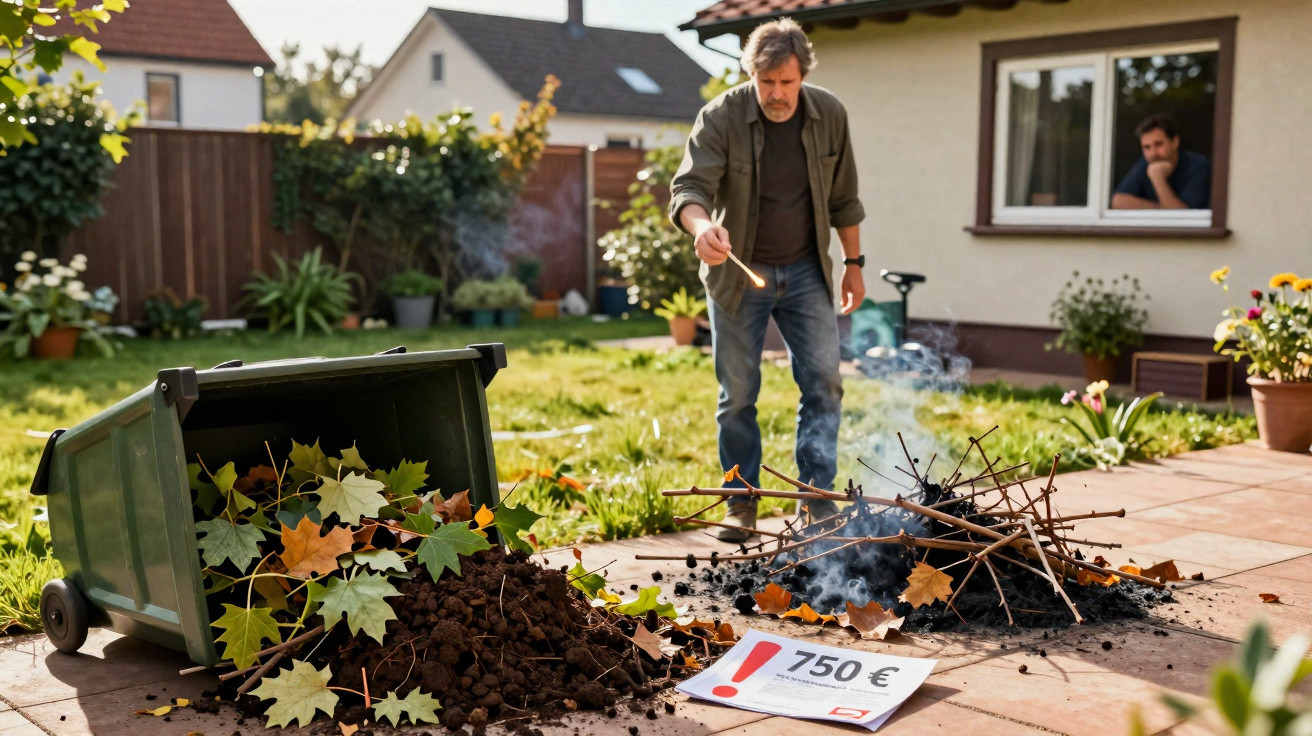
Anyone with a plot containing a lawn, flowerbeds and hedges will know the issue: branches, leaves and grass cuttings soon pile up everywhere. What seems like an ordinary part of gardening can prove unexpectedly costly, as a practice that remains widespread is not only harmful to people and the environment but also prohibited across large parts of Europe.
Why a routine task can suddenly become expensive
As soon as the first warm days arrive, millions of people head into their gardens. Beds are turned over, shrubs are trimmed, trees are pruned and lawns get their first cut. In just a few hours, a sizeable pile of so-called green waste can accumulate.
This is precisely where the crucial mistake is often made: for convenience or through habit, the plant material is simply set alight. A match, a lighter, and the pile is burning. Many regard this as an innocent, traditional disposal method. In France, as well as in many parts of Germany, the position is now clearly regulated by law: anyone burning garden waste in the open may face a fine of up to €750.
The seemingly “practical” solution of simply burning garden waste is now regarded as a prohibited environmental offence, carrying substantial penalties.
Old habits are particularly persistent in rural areas. Neighbours may readily say: “We’ve always done it this way.” However, the legal position has become considerably stricter in recent years, as the effects on health and the climate have become much more widely recognised.
What is really released when garden waste is burned
Burning branches and leaves does not simply make them disappear; it turns them into a mixture of smoke and invisible pollutants. Environmental authorities have warned about the consequences for years.
Open burning of green waste produces, among other things:
- Fine particulate matter: this can penetrate deep into the lungs and place strain on the heart and respiratory system.
- Carbon monoxide: it may cause headaches, dizziness and, in extreme cases, poisoning.
- Polycyclic aromatic hydrocarbons (PAHs): some substances in this group are considered carcinogenic.
At the same time, smoke severely worsens air quality in the immediate area. For neighbours with asthma, children or older people, a small garden fire can become a genuine burden - particularly during dry spells, when particulate levels may already be high.
A single smouldering pile of branches can briefly produce more fine particulate matter than a modern wood-burning stove does over several days.
There is also a fire risk: sparks can ignite dry grass or shrubs, especially in windy conditions. Fire services and local authorities regularly point out that supposedly “small garden fires” repeatedly develop into larger call-outs.
Ban on garden fires: what the law actually says
Many property owners assume that they can do whatever they wish on their own land. When it comes to garden fires, that is simply not the case. In France, burning plant waste outdoors is generally forbidden, even in dedicated metal bins or simple “incinerators”. Anyone caught may be liable for a penalty of up to €750.
The same rules apply there to private gardens and professionals such as landscaping businesses. The legislation does not distinguish between a “small fire” and a large heap. Even those attempting to keep a fire “under control” remain on legally prohibited ground.
In a small number of circumstances, local councils or prefectures may allow time-limited exemptions, for example where there is an acute pest infestation or for plant-health reasons. Such special arrangements are unusual, however, and are tightly restricted.
Why this matters in German-speaking countries too
The debate around open garden fires is not limited to France. Many local authorities in Germany, Austria and Switzerland also severely restrict the burning of green waste or ban it altogether.
Typical rules in German-speaking countries include:
- a requirement to obtain permission for outdoor fires
- strict prohibitions during dry periods and when the risk of wildfires is elevated
- local by-laws that completely prohibit the burning of garden waste
- fines that can amount to several hundred euros, depending on the region
So anyone who spontaneously sets fire to garden cuttings on a sunny spring day risks not only upsetting their neighbours but also attracting the attention of local enforcement officers or the fire service.
Legal alternatives: making good use of garden waste
Rather than letting plant material go up in smoke, it can become a valuable resource for the garden itself. The French environmental agency highlights several practical alternatives that can be applied directly in German gardens too.
Compost: turning waste into humus
The traditional garden solution is a home compost heap. When set up correctly, it converts kitchen and garden waste into nutrient-rich humus. This improves soil structure, retains water and supplies plants with nutrients.
Materials suitable for composting include:
- grass cuttings, added in thin layers
- finely cut branches and twigs
- leaves
- plant remains from flowerbeds
Many towns and local authorities support composting, for instance by offering discounted compost bins or information through their local environmental services.
Mulching: natural protection for soil
Covering beds and shrubs with a layer of shredded branches, leaves or grass cuttings protects the soil from drying out and erosion. Rainwater can soak in more effectively, weed growth is reduced and the soil stays loose for longer.
Mulching is especially worthwhile during hot weather, bringing two benefits at once: water requirements fall noticeably, while plants cope with dry periods with less stress.
Local collection sites and kerbside services
Many areas provide recycling centres or dedicated green-waste collection sites. Garden material is gathered there, shredded and later processed into compost or soil improvers.
Some local authorities also offer:
- kerbside collections for leaves and branches
- mobile shredding services, often seasonal or available for a small charge
- equipment loans, such as garden shredders, through council depots or neighbourhood initiatives
Using garden waste properly not only avoids fines but also provides free fertiliser and soil improver in return.
How to avoid disputes with neighbours and authorities
Smoke clouds and the smell of burning can quickly result in complaints. One afternoon of a smoky fire can permanently damage an otherwise good relationship with neighbours. In addition, a single call to the local authority or fire service is often enough to make the matter official.
Practical ways to prevent conflict include:
- consistently avoiding the open burning of green waste
- checking the rules that apply in your own local authority area before undertaking major gardening work
- speaking to neighbours when large quantities of branches or leaves need dealing with - shared solutions, such as hiring a shredder together, are often possible
Planning garden work carefully not only reduces environmental harm but also helps create a more relaxed atmosphere in the neighbourhood.
Health risks in your own garden that many people overlook
Smoke from garden fires is often romanticised - “it smells like a campfire”, people say. Its actual effects on the lungs and circulatory system are far less pleasant. Children, people with existing health conditions and older adults are especially at risk.
Fine particles and irritating gases can:
- trigger asthma attacks
- worsen chronic bronchitis
- contribute to headaches and tiredness
- increase the long-term risk of cardiovascular disease
Once these health concerns are understood, that pile of branches and leaves in the garden looks rather different. What may appear to be harmless leftover material becomes something that should be handled responsibly.
Why changing habits is genuinely worthwhile for hobby gardeners
The way garden waste is handled says a great deal about how sustainably a household operates. Those who stop burning and instead compost or mulch save money on fertiliser over time, improve soil quality and protect air quality for their neighbours.
Many local authorities also offer grant schemes. Residents may, for example, receive support towards water butts, composters or advice on wildlife-friendly garden design. Step by step, this creates a garden that not only looks attractive, but is also legally compliant and beneficial to personal health.

Comments
No comments yet. Be the first to comment!
Leave a Comment