
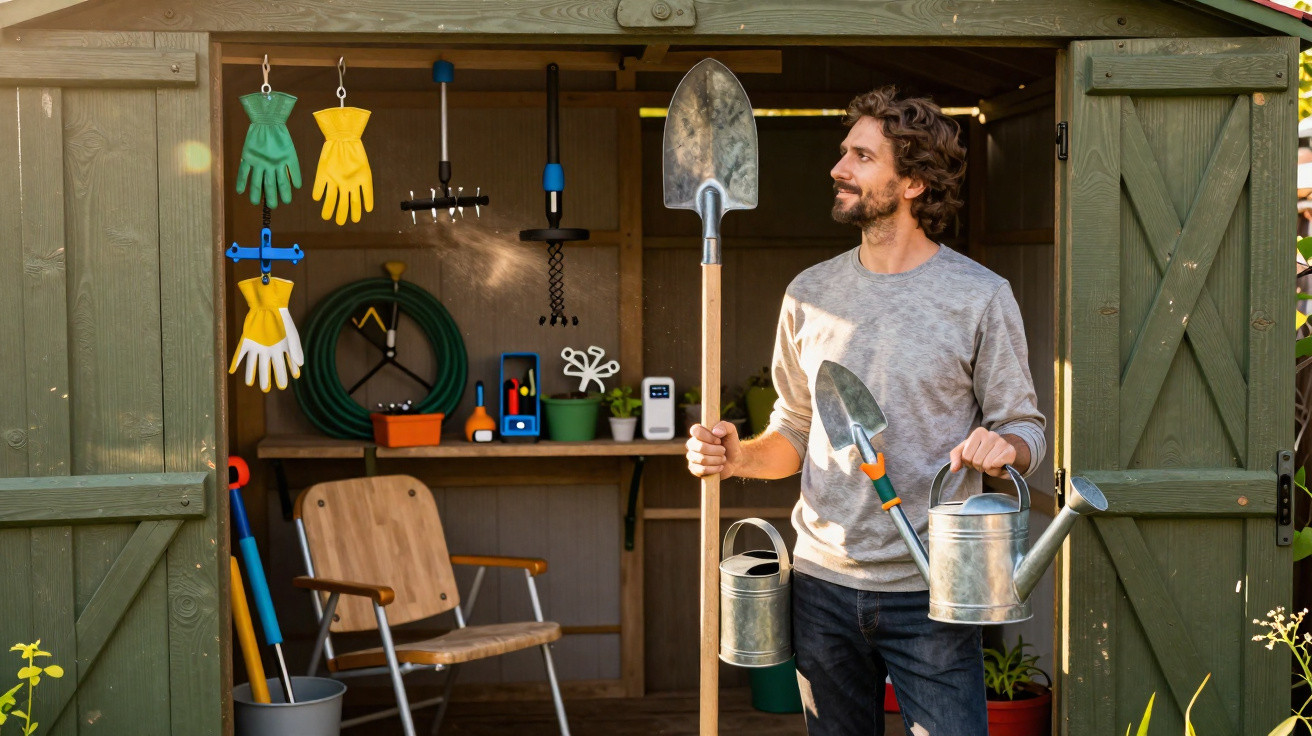
Anyone who enjoys working in the garden will recognise this: an apparently brilliant tool promises less back pain, immaculate beds and a professional-looking lawn. A few months later, it is gathering dust behind the shed door. When it comes to garden tools, marketing and reality often diverge sharply – and some products are a waste of space from the outset rather than a genuine help.
Why so many garden tools disappoint
Many fashionable aids are built around a simple promise: “One tool solves several problems at once.” That is precisely where the trouble starts. A tool that claims to do everything will often do most jobs only half-heartedly in real-world use – and fail completely when the ground is stony, clay-heavy or uneven.
In the garden, simple, sturdy tools usually work better than complicated all-rounders with too much technology and too little stability.
Poor ergonomics are another issue. Secateurs with tiny handles, bulky supports and awkward designs can leave wrists, knees or shoulders aching after ten minutes. Since many parts are made from cheap sheet metal or thin plastic, they fail after one season – sometimes after only a few uses.
The result is little benefit, plenty of frustration and a packed shed.
These 12 garden tools only clog up the shed
1. Hand grass shears for lawn edges
Small lawn-edge shears can seem useful in the garden centre. In practice, they tend to crush the blades rather than cut them cleanly. Before long, your forearm starts to ache, the cuts become inaccurate and the lawn looks ragged.
Better: sharp traditional lawn shears with long handles, or a trimmer suitable for edging.
2. Kneeling benches with handles and large frames
This combination of stool and kneeling pad takes up a lot of room, catches on plants in the bed, readily knocks over other tools when carried and spends most of its time in the way. After trying one a few times, many gardeners return to a simple foam kneeling pad.
Better: a thick kneeling cushion or kneepads that strap on like those used by tradespeople.
3. Garden gloves with plastic claws
The claws are meant to make digging easier, but they remove all fine control from your fingers. Fine roots are difficult to grasp, small plants get knocked over and hands sweat heavily inside the dense material.
Better: well-made, close-fitting gloves and a small hand trowel – far more precise.
4. Cheap Bluetooth and moisture sensors
Inexpensive moisture meters often measure only the top few centimetres of soil, produce unreliable readings and constantly send alerts to your smartphone. They cause more confusion than they solve.
The traditional “finger test” in the soil, together with a quick look at leaf colour and growth, outperforms many cheap sensors by a considerable margin.
Better: those who like technology should choose high-quality, tested sensors; everyone else can get very far with experience, the finger test and watching the weather.
5. Bulb planters with an ejector function
The label makes it look perfect: push it in, lift out the soil, place the bulb, press the soil back and you are done. In damp soil, everything sticks inside; in dry ground, the tool does not grip; and stones stop it altogether. The process is slower than simply using a spade or planting trowel.
Better: a narrow planting trowel or a sharp planting knife – more flexible and less prone to failure.
6. Spiked shoes for lawn aeration
These sandals or strap-on overshoes with metal spikes look spectacular. In reality, they may punch holes into the soil, but they also compact the surrounding ground. Your footing is unstable, making it easy to twist an ankle.
Better: a lawn aerator that removes actual soil cores, or hiring a specialist with professional equipment.
7. Fertiliser attachments for garden hoses
They are intended to mix fertiliser and water automatically in the correct ratio. In reality, the dosage varies, seals leak, and after use you will often spend longer at the sink cleaning everything than you did fertilising.
Better: measured liquid fertiliser in watering water, or a properly adjusted pressure sprayer.
8. Rotating compost tumblers
The concept sounds appealing: compost in a closed, hygienic system that can be turned. The problem is that the drums fill quickly, become difficult to move, their contents tend to dry out and decompose far more slowly than a traditional heap on the ground.
A simple compost heap on established soil forgives more mistakes than most plastic compost tumblers.
Better: a compost heap or open bin made from wood or wire, placed directly on the soil and with sufficient capacity.
9. Cases containing 10 or 12 mini garden tools
Sets in colourful plastic cases look like an “all-in-one package”. In reality, the small trowels bend on the first stone, the shears cut reasonably cleanly for only a few weeks, and the screws work loose.
- usually low-quality metal
- poor handles with little grip
- lots of pieces, little use
Better: buy three to five high-quality individual tools instead of a crammed set with disposable-quality contents.
10. Complicated oscillating lawn sprinklers
Models with numerous levers and fine adjustments react sensitively to changes in water pressure. Even a slight difference in pressure can make the device water the path instead of the beds. Nozzles clog, and the sprinkler stops halfway through its movement.
Better: a simple, robust model with few settings, or hose irrigation with a clear layout.
11. Folding pruning saws with unstable mechanisms
Folding saws save space, but cheap versions have thin, flexible blades and insecure locking mechanisms. When cutting thicker branches, the blade can bind or the lock can slip – creating a genuine risk of injury.
Better: a high-quality fixed saw, or a sturdy folding saw from a specialist manufacturer with a tested locking mechanism.
12. Weed pullers with an integrated spray system
These hybrids aim to help twice over: pull out weeds and spray herbicide immediately. In use, the spray head clogs, the unit drips, the grips do not hold the roots properly, and before long the same weeds are back.
Better: a plain, sharp weed puller and – if required – a separate sprayer.
What is really needed in the garden
Most amateur gardeners can get surprisingly far with a handful of dependable classics. Investing in quality here saves stress, money and space.
- a sturdy spade or digging fork
- a robust hand trowel for beds
- good bypass loppers or sharp garden secateurs
- a reliable fixed-blade saw
- a simple weed puller
- a watering can and a decent garden hose
Add a sufficiently large compost heap on the ground, and the basic kit is complete for almost every job throughout the year.
How to make smarter buying decisions
Before a new tool goes into the trolley, a few quick questions can help:
- Does it genuinely replace something that is missing, or does it merely duplicate a function?
- Will you use it several times each season – or more likely once a year?
- Do you know where it will be kept in the shed without getting in the way?
- Is there a simpler solution – such as a tool you already own or an everyday household item?
If you are unsure, borrow the supposed miracle tool from friends or neighbouring gardeners first. After a weekend of real use, it usually becomes very clear whether it is useful or merely fulfils a marketing fantasy.
Why minimalism in the garden shed pays off
Fewer tools mean less time spent searching, fewer repairs and lower costs. People who work only with dependable equipment develop a better feel for soil, plants and water balance more quickly, rather than relying on displays and promises.
The risk of injury also falls. Unstable folding saws, slippery spiked sandals and leaking spray systems are not merely irritating; they can be seriously dangerous, particularly on wet ground or slopes.
A tidy shed containing a few good tools is more likely to encourage gardening than a mess of half-broken equipment. Regularly sorting through tools and getting rid of poor purchases creates room for what really matters: relaxed hours outdoors and a garden that improves step by step.
Comments
No comments yet. Be the first to comment!
Leave a Comment