
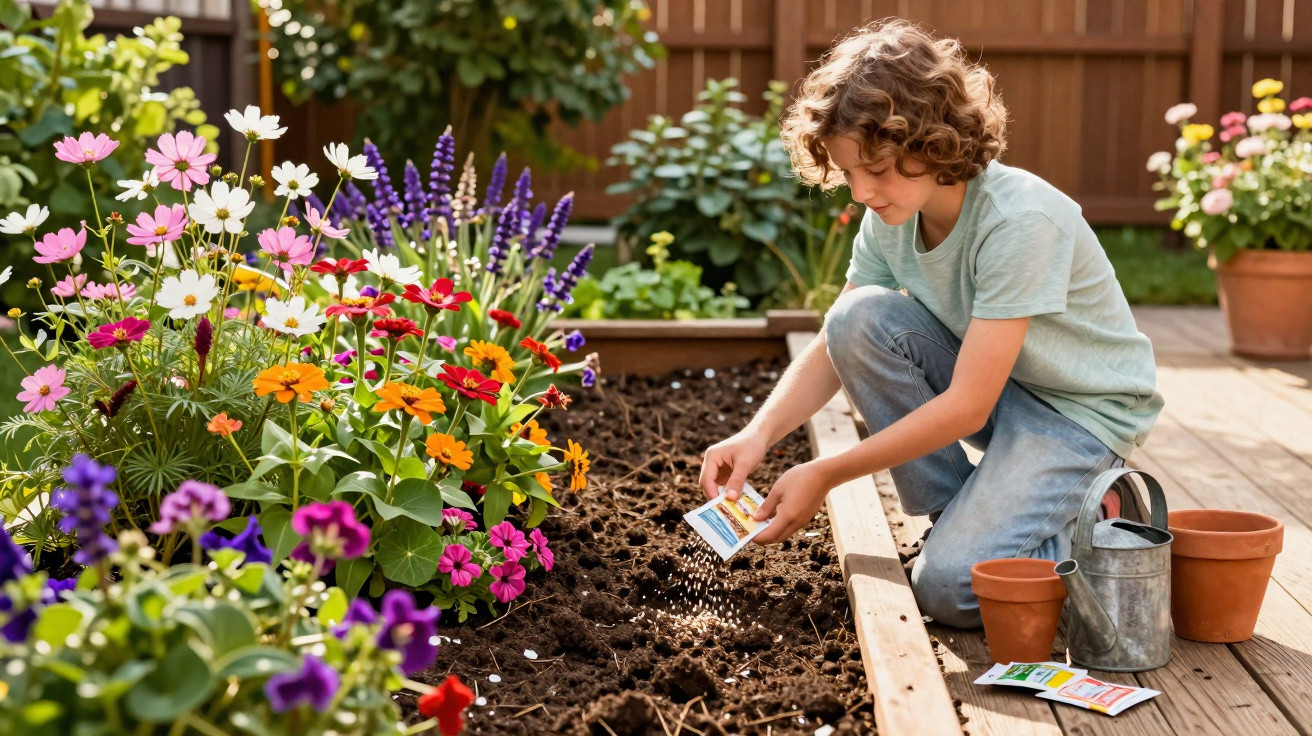
No patience for garden dreams that take years?
With the right flowers, you can turn bare beds into a colourful sea of blooms within just a few weeks.
Spring is the ideal moment to give your garden a rapid refresh. Some flower varieties grow quickly, flower early and fill those gaps that have bothered you all winter. Plant or sow now and, often by June, you can enjoy a noticeably livelier, more colourful outdoor space – whether you have a large garden or a small city balcony.
Why fast-growing flowers are such a smart choice now
In spring, the soil warms up, rain is still reasonably frequent and the sun has not yet become relentlessly intense. Many fast-starting flowers thrive in precisely these conditions. Their roots establish themselves swiftly, the plants settle into their position and put on impressive growth before the height of summer arrives.
“Planting now makes the best use of plants’ natural growth rate – with a visible result before the summer holidays.”
The appeal is not merely visual, either: a previously empty patch suddenly flowers, paths feel more inviting and the view from the kitchen window instantly becomes more cheerful. Many of these varieties also attract bees, bumblebees and butterflies. The result is a lively, buzzing garden that not only looks attractive but also supports local wildlife.
The 6 flowers that get growing quickly now
The following six varieties are considered easy to grow, fast-growing and highly decorative. They suit traditional beds, wildlife gardens, cottage gardens, contemporary urban gardens and even containers on a balcony.
1. Cosmos: an airy focal point with a meadow-like feel
Cosmos, also known as Mexican aster, combines delicate, feathery foliage with large, daisy-like flowers, giving it the appearance of a cross between a meadow flower and an ornamental plant. It adds lightness to any bed and moves in the breeze without looking bulky.
- Position: full sun to light partial shade
- Soil: fairly poor and not overly nutrient-rich
- Propagation: sow directly into the bed once there is no risk of frost
Overfeeding produces plenty of foliage but fewer flowers. A few seeds scattered widely over loose soil are enough to create a whole group of flowering plants in a short time. Cosmos is also a real magnet for insects, making it ideal for naturalistic gardens.
2. Zinnia: bright blocks of colour for beds and vases
Zinnias love warmth and thrive in sunshine. As soon as the ground has warmed thoroughly, they grow with real vigour. Their frequently bold shades – from pink and orange to yellow and red – stand out even from a distance.
They are particularly well suited to:
- colourful bed edging along paths
- large planters on a patio or balcony
- providing cut flowers for vases at home
Their stems are sturdy and the blooms last well in water. Regular cutting encourages the plant to form even more buds. They favour warm, dry positions and do not tolerate waterlogged soil at all.
3. Nasturtium: flowering ground cover, screening and an aphid trap
Nasturtium is one of the real speedsters among garden plants. It can cover entire fences, trellises or wall edges in a very short time. In hanging baskets or window boxes, it spills downwards and forms a dense curtain.
Its role in a vegetable garden is especially interesting: many gardeners deliberately use it as a “trap plant” to draw aphids away from more vulnerable species. Rather than roses or beans, it is usually the nasturtium leaves that suffer – and the plant copes well with this.
“Nasturtium does more than brighten the garden: its edible flowers and leaves add a mildly peppery flavour to salads and decoration.”
It enjoys sunny spots but also tolerates light shade. Fairly nutrient-poor soil is important, as an excess of nutrients creates lots of leaf growth and fewer flowers.
4. Gaura: delicate clouds of flowers dancing in the wind
Gaura, often sold as beeblossom, resembles a constantly flowering cloud hovering over a bed. Its fine flower stems sway in the breeze, while the white or pink blooms appear to float freely in the air. This plant is especially suited to modern, naturalistic planting schemes.
It prefers:
- full sun
- well-drained, fairly dry soil
- enough room to spread out
Once established, it proves remarkably tolerant of dry conditions. Gaura looks particularly good with grasses, lower-growing perennials or in a loosely planted gravel bed.
5. Perennial sage: colourful flower spikes with an added benefit
Perennial sage gives a bed structure. Its upright flower spikes in violet, blue, pink or rich red create clear accents. Planted in groups, it forms a real ribbon of colour that guides the eye and gives beds a more organised appearance.
“Plant perennial sage and you will also be doing bumblebees and bees a favour – they love its nectar-rich flowers.”
After the first flush of blooms, it is worth cutting the plant back decisively. In many cases, it will then produce a second, slightly lighter flowering period during summer. Perennial sage is happiest in sunny positions with free-draining soil and is well suited to low-maintenance, permanently planted beds.
6. Hardy geranium: ground cover for bare patches and weeds
Hardy geranium, often referred to as garden or perennial geranium, is not the same as the classic bedding plants used on balconies. These perennials form dense cushions, spread quickly and fill spaces between shrubs or larger perennials.
Many varieties flower for weeks in pink, blue or violet while also forming a natural “ground cover”: where hardy geranium grows, many weeds have less opportunity to take hold. It works particularly well:
- around the base of roses and ornamental shrubs
- in partially shaded border edges beside paths
- as a soft transition between lawn and flower bed
Depending on the variety, it copes with both sunny and partly shaded locations. Once established, it is regarded as robust and undemanding.
How to plant so your flowers establish faster
The best time is spring, once night frosts are unlikely in your area. Starting early gives plants a head start and means you may see flowers by the beginning of summer.
- Loosen the soil: Use a garden fork or similar tool to loosen the ground deeply, rather than digging it over completely.
- Make rooting easier: Break up clods and remove stones so roots can penetrate the soil easily.
- Prepare the planting hole: Add a little planting compost or garden compost to the hole, but do not overdo it.
- Water thoroughly: Water generously straight after planting so that the soil and roots make good contact.
In particular, the first generous watering after planting often determines how quickly a flower becomes established. Afterwards, moderate watering is usually enough, depending on the weather.
Small care measures that boost the fast-growth effect
One simple yet highly effective measure is to mulch around newly planted flowers. Covering the soil with dried-off grass clippings, autumn leaves or chipped branches keeps moisture in the ground for longer and protects roots from extreme temperature changes.
Where possible, it is worthwhile collecting rainwater in water butts or cisterns. Rainwater is softer than tap water and is especially well tolerated by most garden plants. The varieties described usually cope with short dry spells without difficulty if they have previously been watered regularly, but not excessively.
Adequate spacing between plants is equally important. Fast-growing flowers need air and room to develop. Planting them too closely risks competition for light and nutrients, more fungal diseases and fewer blooms. Young plants’ labels usually provide sensible guidance on planting distances.
What your garden could look like by June
With these six flower varieties, the effect can generally be seen after only a few weeks: the first flowers open, gaps shrink and beds appear fuller. Combining them – for example, cosmos at the back, zinnias and nasturtiums in front, with perennial sage and hardy geranium between them – creates a layered overall display.
Smaller spaces benefit greatly too: a balcony with two large containers full of zinnias and nasturtiums, plus a box of cosmos, can easily rival some front gardens visually. Careful watering and timely removal of faded stems will help you get the most from the short season.
Extra tips: combinations, risks and clever additions
Anyone wanting a garden that is both attractive and practical can combine fast-growing flowers with slower-growing perennial shrubs and plants. The “sprinters” fill the gaps until the long-term plants have built up enough volume. This keeps the bed appealing from the outset.
Too much enthusiasm can bring one possible risk: sowing or planting very densely can quickly create a tangle of foliage that is harder to maintain. A deliberately planned mix of taller and shorter varieties is better. Place tall cosmos at the back, medium-height zinnias in the middle, and ground cover such as hardy geranium or climbing nasturtium at the front – this keeps everything visible.
If you fancy it, you can also add annual summer flowers such as pot marigolds or sweet peas. They fit well alongside the varieties listed here and increase the impression of a lush, lively garden. With a little planning, even a previously dreary patch can become a colourful stage – much more quickly than many amateur gardeners expect.


Comments
No comments yet. Be the first to comment!
Leave a Comment