
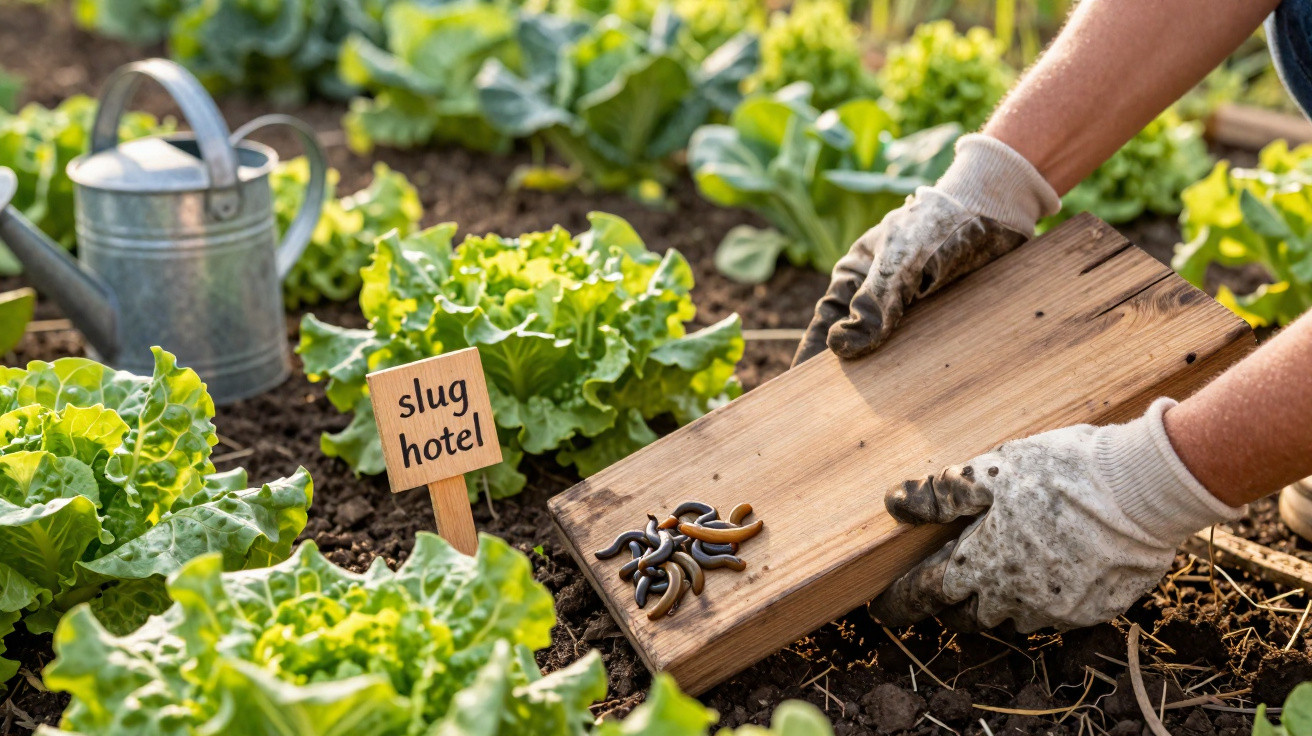
Anyone who tends their own vegetable patch may experience this shock only once, yet never forget it: everything looked perfect in the evening, but by morning seedlings and tender leaves have been eaten down to the stems. The same culprit is usually responsible: slugs. Rather than reaching for a packet of poison, increasing numbers of gardeners are relying on an exceptionally simple, almost free solution: an ordinary board made from untreated wood.
Why slugs destroy our vegetables so relentlessly
Slugs may appear slow-moving, but they are ruthless feeders at night. Once darkness falls and conditions are sufficiently damp, they emerge from hiding and head straight for lettuce, beans, spinach or young brassica plants.
The explanation is straightforward: these molluscs have no protective shell. Their skin dries out rapidly, making them entirely dependent on moisture. Sunlight and wind can be fatal to them.
"This constant need for moisture is precisely the slug's weak point – and the basis of the wooden-board trick."
Early in the morning, they urgently seek a safe, moist place to shelter for the day. By deliberately providing that refuge, you draw them away from the plants and can collect them later without difficulty.
The wooden board as a slug hotel: how the trick works
The idea is remarkably simple: place a flat wooden board directly on the soil, either within the bed or along its edge. A dark, damp and protected space forms beneath it – exactly the kind of place slugs favour.
Why wood works better than stone or plastic sheeting
Compared with stone, paving slabs or plastic sheeting, wood offers two key advantages:
- It absorbs moisture and releases it gradually.
- It stays cooler and slightly damp underneath for longer.
An untreated wooden board therefore creates a small, stable microclimate underneath: shaded, moist and protected from wind. For slugs, it is premium accommodation. Positioning boards carefully allows you to create several such “slug hotels” around the vegetable garden.
Suitable wood – and materials best avoided
Not every material attracts slugs equally well. Many mistakes begin with choosing the wrong type of board.
Good and unsuitable materials at a glance
| Suitable | Unsuitable |
|---|---|
| Old shuttering boards | Painted or stained boards |
| Untreated spruce, pine or fir | Chipboard and pressed wood |
| Offcuts from solid-wood shelving | Coated furniture boards, including melamine or decorative panels |
The crucial factor is that the wood is untreated and porous. The more natural it is, the better. Old decking boards, cut-off sections from a raised bed or pieces from a wooden crate will usually work very well.
How gardeners prepare the board correctly
To get the most from this method, it is worth following a short evening routine:
- Thoroughly wet the underside of the board with water.
- Moisten the soil beneath it and around it as well.
- Lay the board flat on the ground, leaving no gap.
- Position it close to vulnerable beds or paths.
The extra moisture makes the shelter even more appealing. This step is particularly important in dry weather, ensuring the board is more attractive than cracks in the soil or stones.
Where slug traps should go – and how many you need
One board will rarely be enough. Anyone dealing with slugs regularly should plan several locations.
Common garden hotspots include:
- bed edges directly beside lettuce, beans, brassicas and squash
- paths between beds, especially those covered with mulch or grass clippings
- areas with dense planting or tall weeds
- spots near compost heaps or stacks of wood
The more boards you distribute, the more effectively you can reduce slug pressure. In heavily affected gardens, suitable pieces of wood are often placed every 2 to 3 metres.
What happens in the morning: check, collect and learn
The most important time is early morning. By then, the slugs are already beneath the boards, resting before their next night-time feeding raid.
"When you lift the boards in the morning, you are looking straight at the ‘slug record’ from the previous night."
You can then see exactly:
- How many slugs were active.
- Which parts of the garden are particularly badly affected.
- Whether young slugs or large specimens are more common.
The animals can now be gathered using gloves or a small trowel and removed from the vegetable-growing area. Many gardeners put them in a chicken run, release them on a meadow well away from the garden, or use dedicated bucket methods.
Wood instead of poison: why this method benefits the environment
Slug pellets have faced criticism for years. Products containing aggressive active ingredients can harm not only slugs but often their predators too, including hedgehogs, toads and birds. Even preparations approved for organic growing remain controversial, as poisoned slugs may be eaten by other animals.
A wooden board works entirely without chemicals. No poison enters the soil, no residues are left on plants, and there is no risk to pets or wildlife. Control remains fully in the gardener’s hands.
At the same time, this practice encourages a more conscious view of the vegetable bed: where are the slugs coming from? How does water move through the garden? Which areas remain damp over time? Gradually, this builds an understanding of the entire small ecosystem.
The wooden trap as a garden diagnostic tool
Boards do more than control slugs; they also help with observation. Over time, they create a kind of “slug map” of the garden.
Anyone who records for several days or weeks which boards shelter the greatest number of animals will identify patterns, such as:
- low-lying areas where moisture collects
- dense ground cover or layers of mulch acting as hiding places
- gaps around bed edging or walls
These areas can then be adapted specifically: use less organic mulch directly beside lettuce, add more mineral mulch such as grit or coarse sand along slug routes, improve ventilation in beds, and create dry buffer zones between beds and lawn.
How to combine the wooden-board trick with other measures
There is no need to depend on just one method. The wooden trap fits very well into a broader package of slug-control measures.
Useful additions include, for example:
- slug fences around especially valuable beds
- rough barriers made from coarse sand, grit or shell grit
- watering in the evening so beds dry more quickly in the morning
- encouraging hedgehogs, Indian runner ducks, toads and birds with shelters and wildlife-friendly corners
- carefully selecting plants, using robust varieties that are less prone to slug damage around the edges
In gardens where several of these measures are combined, pressure drops noticeably. The boards then mainly remain as monitoring points and an emergency measure if the slug population rises again.
Risks, limits and realistic expectations
The wooden-board trick will not solve a slug problem overnight. Anyone placing boards out in the evening must genuinely check them and collect the slugs in the morning. If that routine is neglected, the boards may simply become even more comfortable shelters.
Populations that recover strongly, particularly during rainy summers, also require patience. Some nights will yield only a few slugs, while damp days can suddenly leave boards crowded with them.
Even so, this approach offers clear benefits over purely chemical solutions: you can see exactly what is happening, act selectively and gradually shift the balance towards a stable garden with functioning wildlife.
Practical examples and useful everyday additions
In day-to-day use, many gardeners keep a small collection of boards in different sizes. Short pieces are placed between rows of lettuce, while longer boards go along the outer edges of beds. Those already making an evening visit to the garden can quickly move the boards around, depending on which crop needs protection at that time.
For beginners, a simple trial is worthwhile: put one or two boards close to your favourite plants and inspect them for three or four consecutive days. Most people are surprised by how many slimy visitors gather in such a small space. From there, the motivation to distribute more boards and optimise your own system step by step tends to grow naturally.

Comments
No comments yet. Be the first to comment!
Leave a Comment