
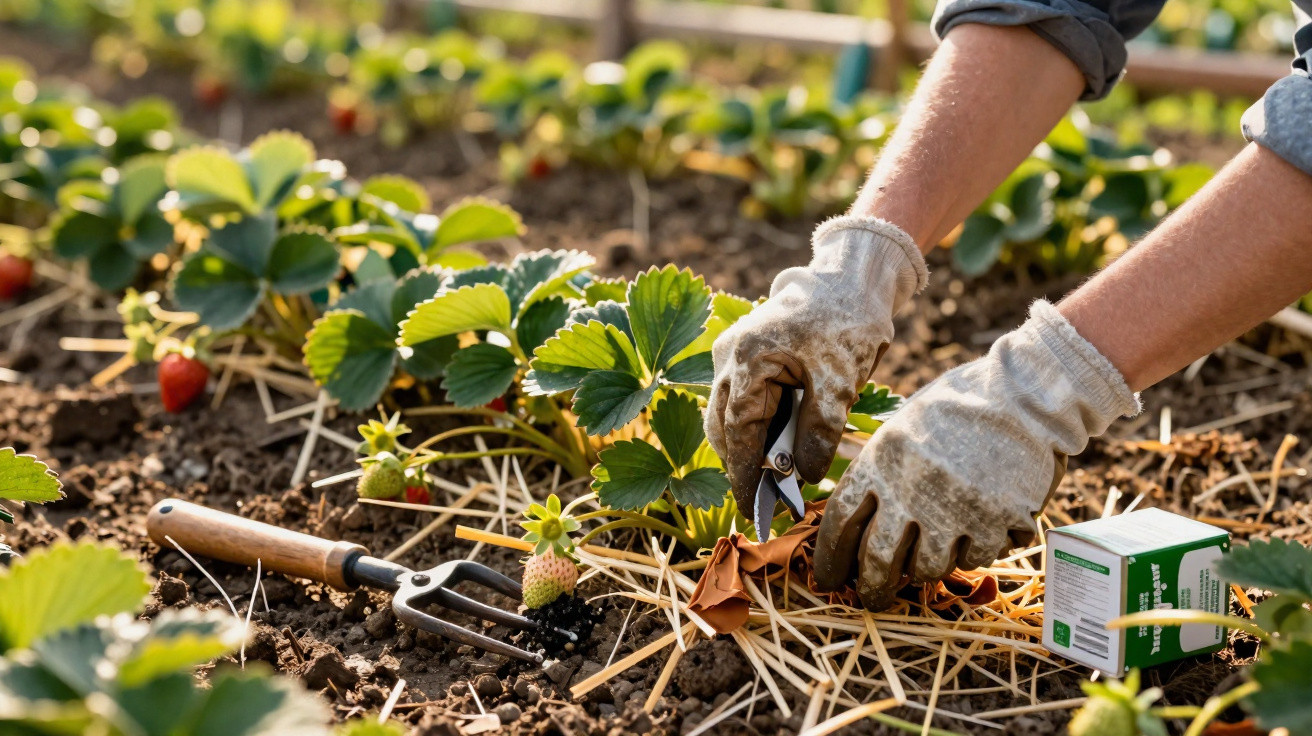
If you want to pick large, sweet, juicy strawberries in July, you need to take action now rather than at the height of summer. March is when the foundations for a generous harvest are laid. A brief, targeted maintenance session wakes the plants from their winter dormancy, protects them from disease and directs their energy exactly where it is wanted: into the fruit.
Why late March is the real starting signal for strawberry lovers
As soon as the sun starts warming the soil again, an unobtrusive but vital process begins in the bed. Strawberry plants put on new growth, the sap begins to rise, and far more is already happening beneath the surface than is immediately visible.
How to tell your strawberries are waking from winter
Look closely and you will spot small, fresh leaves emerging from the centre of each plant. Around them, there are often still brown, soggy or dried-out leaves from the previous year. This combination signals the ideal moment to reach for the secateurs.
“Anyone who acts in late March determines whether their strawberries put their energy into abundant fruit – or waste it on old foliage.”
If left to its own devices, the plant needlessly continues feeding old, surplus leaves. That weakens flowering and, later, fruit development. The result is fewer berries, smaller fruit and more disease.
What happens if you miss this window
Many amateur gardeners do not turn their attention to strawberries until May or June, when the white flowers have already appeared or even the first fruits are hanging. By then, it is effectively too late. The plant has already allocated its energy and cannot be easily “reprogrammed”.
Ignore this opportunity towards the end of March and you will often find that, although the plants look green and healthy, the harvest is disappointing: plenty of foliage, little flavour.
The key March task: winter pruning and a spring clean
Remove old foliage decisively – without being overcautious
The central trick sounds straightforward but has a major effect: remove the old leaves and retain the young ones. You will need:
- clean, sharp secateurs
- preferably, gloves
- a bucket or basket for the old foliage
Cut away every brown, spotted, curled or severely damaged leaf as close to the base as possible. Leave only the fresh, rich green leaves at the centre of the plant. Do not drop the dead leaves back onto the soil; put them straight into the compost or green-waste bin.
This seemingly harsh pruning does not drain the plant’s strength; it gives that strength back. No longer having to sustain old material, it can invest fully in its roots, flowers and fruit production.
More light and air, less rot
The spring clean has another often overlooked benefit: it opens up the centre of the plant to sunlight and airflow. That is precisely what offers reliable protection from fungal diseases such as grey mould.
“Exposing the centre of the plant keeps the leaves dry and well ventilated – and removes the conditions fungi need to survive.”
This is especially valuable in wet springs. Moisture dries more quickly, the fruit will not later sit in dense, damp foliage, and chemical sprays remain unnecessary.
Fuel for strawberry growth: preparing the soil properly
No nutrients, no XXL fruit
Pruning is followed by the second step: feeding. Strawberries are hungry plants. Anyone hoping for large, aromatic fruit needs to enrich the soil in good time.
Organic fertilisers are ideal, including:
- mature compost
- well-rotted farmyard manure
- shop-bought organic fertiliser for soft fruit
Give each plant a generous handful of compost, or use the recommended amount of berry fertiliser. Crucially, do not place fertiliser directly onto the centre of the plant; apply it around the surrounding area instead.
Loosen the soil – but only very gently
To ensure nutrients reach where they need to work, lightly loosen the soil. A small hand hoe or cultivator is sufficient. Scratch only 1 to 2 centimetres into the surface.
“Most strawberry roots grow very close to the surface – hoeing too deeply cuts through the root network and weakens the plant.”
This gentle use of the hoe has three benefits:
- weeds are removed before they become competition
- the soil absorbs water and fertiliser more effectively
- oxygen can reach the roots
Working too aggressively risks tearing roots and slowing growth. It is therefore better to hoe too little than too much.
A protective layer for sweet fruit: why mulch is essential for strawberries
Mulch keeps berries clean and soil fresh
Once the soil is ready, the next crucial stage is mulching. A thick layer of organic material around the plants delivers several benefits at once:
- the soil retains moisture for longer
- temperature fluctuations are moderated
- weeds have fewer opportunities to grow
- the fruit that develops later stays clean and dry
Suitable options include:
| Material | Benefit |
|---|---|
| Straw | Traditional, keeps plants dry effectively and is readily available |
| Hemp or flax shives | Loose, good for moisture regulation and relatively long-lasting |
| Wood-fibre mulch | Longer-term protection with a tidy appearance |
Important: do not press mulch directly into the centre of the plant. Spread it around the plant instead. The soil should be covered while the centre remains clear.
How to keep slugs and other pests at a distance
The first feeders arrive with the fresh growth too: slugs and other rodents that enjoy young shoots. A few simple measures can significantly reduce the damage:
- rough mulch, such as hemp, makes travel more difficult for slugs
- a ring of crushed eggshells around each plant acts as a sharp-edged barrier
- a thin layer of wood ash can provide an additional deterrent, provided it does not become wet
These methods can noticeably reduce slug pressure without immediately resorting to poison or expensive traps.
The four-step plan for a strawberry explosion in summer
How to organise your strawberry day in the garden
To turn strawberries into a “fruit machine”, work through this list in late March or early April:
- Cut old, diseased or brown foliage down close to the ground.
- Lightly loosen the soil around the plants without damaging the roots.
- Spread organic fertiliser or compost around the plants.
- Cover with a layer of mulch, leaving the centre of the plant clear.
“Half an hour of focused work in March can make the difference in July between a few strawberries and bowls filled to the brim.”
What happens in the bed over the coming weeks
After just a few days, the plants will look more vigorous. Fresh leaves reach towards the light and the clumps become denser. Within a few weeks, the first white flowers appear. Every one of them can later become a fruit – as long as the plant is not under nutrient or water stress.
Water regularly at this stage, do not hesitate during dry spells, and top up the mulch slightly if necessary to keep the turbo effect going.
Practical extra tips for even more flavour and yield
The right variety in the right spot
Even the best care plan achieves little if the site is unsuitable. Strawberries prefer:
- a warm position in full sun to partial shade
- humus-rich, slightly loose soil
- no waterlogging, but consistent moisture
For flavour, choose traditional garden varieties or aromatic alpine strawberries. For truly XXL fruit, modern garden varieties with large berries are particularly suitable. Compact trailing strawberries perform especially well in containers.
Use or limit runners intelligently
Strawberries produce numerous runners in summer. They can be:
- used for propagation if you want to create new beds
- consistently cut off if the plant’s energy should go into fruit
For especially large berries, remove most runners early. This leaves more energy for the flowers and fruit already present.
If, instead, you want to establish a new strip of strawberries, select the strongest runners and root them deliberately in small pots or a neighbouring bed. This renews your stock without having to buy new plants every time.
In this way, a short maintenance window in March becomes a tangible benefit for the whole season – and a simple bed turns into a dependable source of strawberry cake, jam and treats picked straight from the plant.
Comments
No comments yet. Be the first to comment!
Leave a Comment