
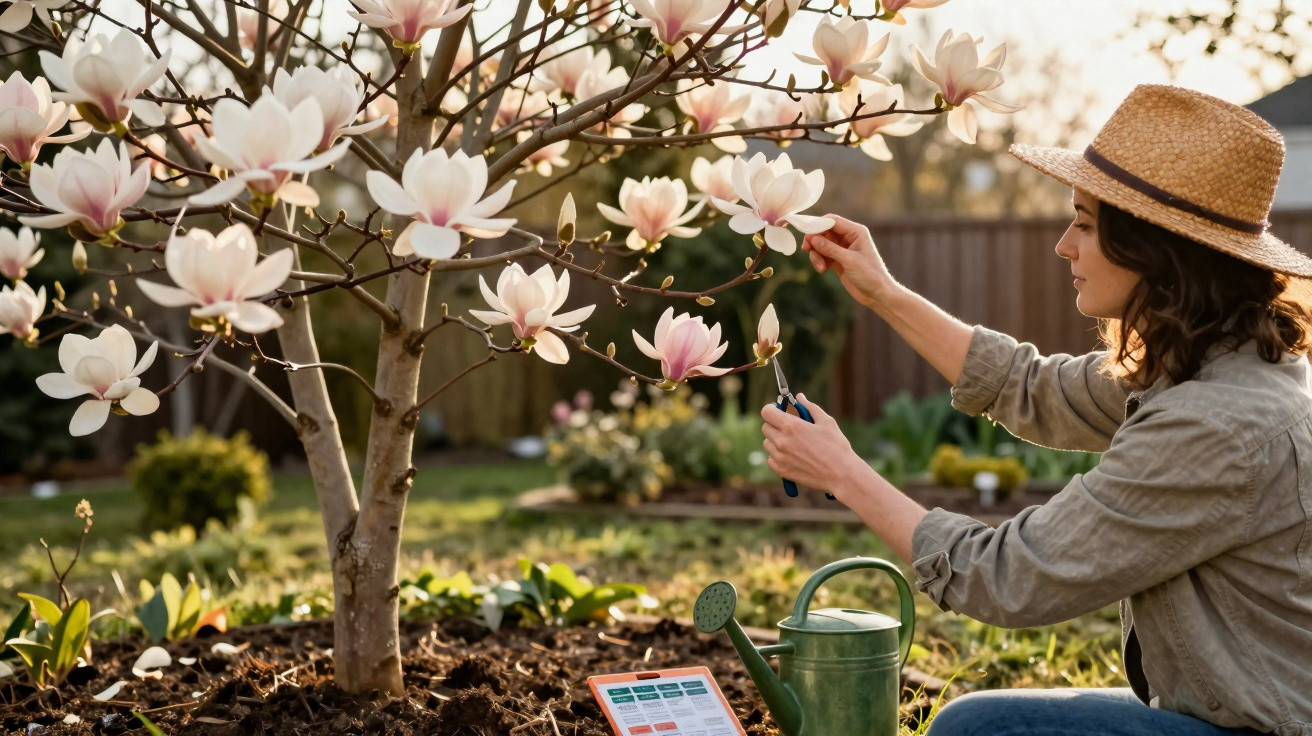
The morning is still cool as you step into the garden with a mug of coffee in hand. Your neighbour’s fence is glowing beneath a pink-and-white cloud: their magnolia puts on a small firework display every year. Yours? Just a scattering of flowers, more duty than spectacle. You move closer, run your hand over the gnarled bark and look for buds that never opened. Something is wrong; you can feel it in your gut.
We all know that moment: the plants beyond the fence look magnificent while our own remain stubbornly quiet. You wonder whether you have done something wrong, whether the soil is “poor”, or whether the tree is somehow offended. Then a quieter fear creeps in: could all that care actually have been too much? And the real question appears, hanging between the bare branches like a promise: why is your magnolia flowering so little?
When your magnolia stays quiet: what deprives the tree of flowers
Most magnolias look perfectly well behaved and fairly inconspicuous in summer. Spring is when they reveal what they can do – or fail to do. When only a few flowers emerge, the whole tree can suddenly seem forlorn, as though it has missed its moment on stage. This is often not down to chance, but to a quiet combination of position, weather and well-intended intervention – rather like a musician performing on the wrong stage.
Many gardeners find that a magnolia is still timid in its first year after planting. It may produce a few extra flowers in the second year and perhaps a small “wow” moment in the third. Then one spring, the stage is almost empty again. At an allotment in Cologne, an older woman once told me that her magnolia barely flowered for almost six years after being cut back severely. Her neighbours assumed it was “ill”. In fact, the tree had simply lost its developing flowers – removed with the pruning shears.
Magnolias form their flower buds well ahead of time, usually during the previous summer. Anyone who reaches confidently for the saw in autumn or winter will often remove precisely what they are most looking forward to. Frost damage can have the same result: on a sharply cold night in April, plump buds can freeze before they open. What remains are a few sheltered blooms in the centre of the crown, along with the impression that the tree simply “doesn’t feel like” flowering. In reality, it is simply biology.
More flowers on your magnolia: practical steps to take
The first step towards more flowers is unglamorous but highly effective: leave the tree alone. No shaping cuts and no attempts to make it “just a little prettier”. Magnolias are not box hedges. If pruning is necessary, do it only straight after flowering, sparingly and with just a few cuts to younger shoots. This largely protects the flower buds formed in summer for the following year. It also means the tree is no longer constantly busy healing wounds.
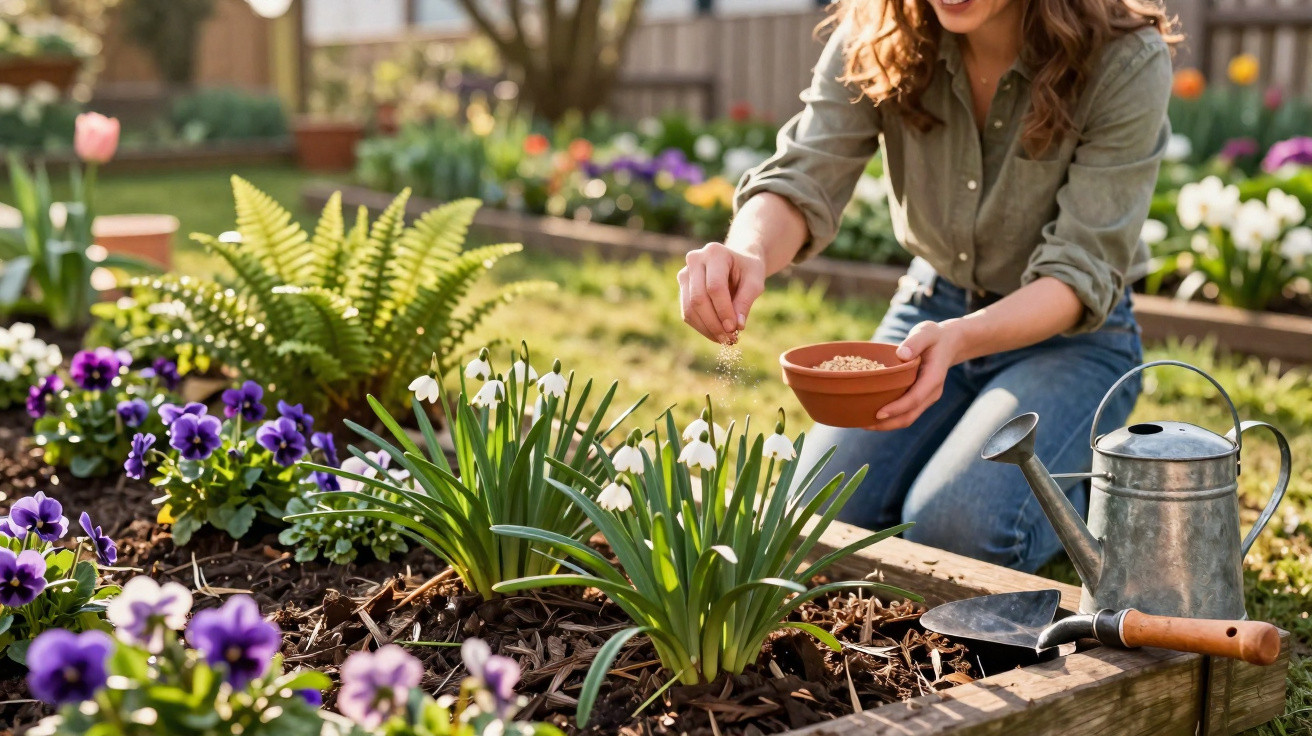
The second key factor lies quietly out of sight in the soil. Magnolias prefer slightly acidic, open soil that never dries out completely and never becomes as hard as concrete. Many spend years in compacted clay, squeezed between lawn feed and a well-trodden path. A wide ring of leaf compost or bark mulch around the trunk can work almost like therapy. Do not dig directly around the roots or keep turning over the soil: magnolia roots are shallow and sensitive. Let us be honest, nobody perfectly loosens the soil with a garden fork every weekend.
If a magnolia has plenty of leaves but very few flowers, the cause is often an excess of nitrogen – for instance from lawn fertiliser – combined with too little phosphorus or potassium. The tree then invests in foliage rather than flowering. A light, balanced feed in spring may help; a specialist fertiliser for flowering shrubs is preferable to “something from the garage”.
“Most magnolias do not fail because they lack love, but because there is too much overenthusiasm,” an arborist once told me. “A good location and leaving them in peace are often half the battle.”
A short mental checklist can help you assess your own tree more clearly:
- Is its position bright enough without receiving full midday sun all day?
- Was there a late frost in March/April that may have damaged the buds?
- Has the tree been pruned back heavily within the past 12–18 months?
- How does the soil feel: hard and compacted, or fairly loose and rich in humus?
- Is the lawn fertilised and mown right up to the trunk?
Between patience and control: what your magnolia is really telling you
Planting a magnolia brings a little slowness into the garden. Many varieties need years before reaching their full flowering potential. At a time when we are used to Prime delivery and instant results, that can feel almost cheeky. Yet this is where its understated beauty lies: a magnolia makes us think in seasons rather than days. It forgives quite a lot, but it does not like haste.
There are quiet gardens where an old magnolia has stood for decades, scarcely ever pruned. Its trunk leans and its crown is not perfectly shaped, yet every spring it appears to burst into bloom. Then there are newly landscaped townhouse gardens, where young magnolias are treated like decorative furniture: “tidied up” every two years, planted with compost from the garden centre, and surrounded by lawn right up to the trunk. The same label at the garden centre, but a completely different story beneath the soil. Plants ruthlessly remind us that appearance is rarely the whole truth.
If your magnolia flowers sparingly, it is not a personal failure. More often, it is an invitation to look more closely. Do less, but do it more thoughtfully. Keep an eye on frost. Feel the soil instead of merely looking at it. And perhaps, eventually, accept that this particular tree may never become an Instagram star, but will simply be a quiet companion in spring. Sometimes the value is not in 500 flowers, but in the five you truly notice.
| Key point | Detail | Benefit for the reader |
|---|---|---|
| Gentle pruning practice | Thin lightly only straight after flowering; avoid severe pruning in autumn/winter | Protects the developing flower buds and prevents years-long “flowering breaks” |
| Suitable position and soil | Bright spot, slightly acidic and open soil, with a mulched root area instead of hard lawn | Encourages bud formation and reduces stress caused by drought and compaction |
| Patience and restraint | Magnolias often flower reliably only after several years and react sensitively to over-intervention | Relieves pressure, prevents poor decisions and improves understanding of the plant |
FAQ:
- Question 1 At what age does a magnolia normally flower abundantly?
- Question 2 Can I still move a magnolia that hardly flowers?
- Question 3 Will severe pruning help produce more flowers?
- Question 4 How can I tell whether frost has damaged my flower buds?
- Question 5 Should I fertilise my magnolia regularly if it flowers very little?





Comments
No comments yet. Be the first to comment!
Leave a Comment