
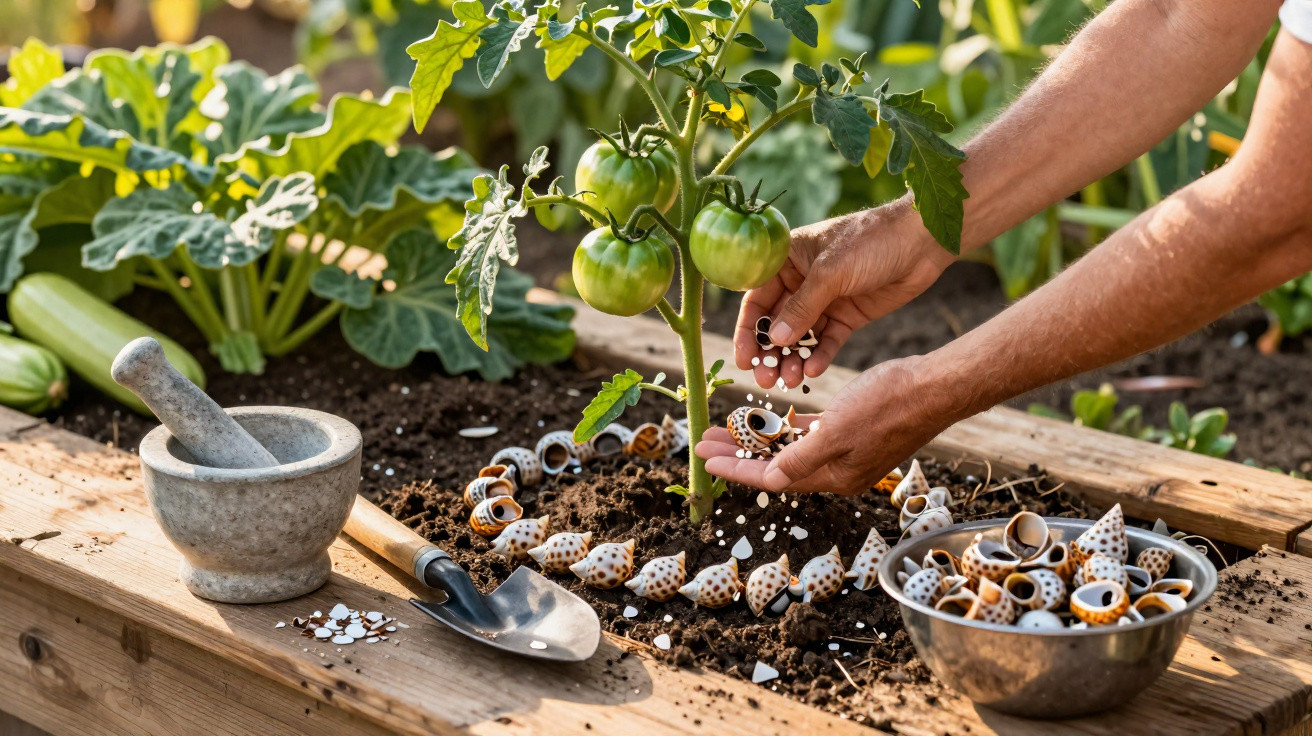
They are giving away a quiet treasure for the soil.
Among early sowings, young tomato plants and damp beds, they usually lie unnoticed: broken, empty snail shells. For most amateur gardeners, they are simply unattractive leftovers after rain or winter. In fact, they contain a highly effective fertiliser that can make a major difference in organic gardens – provided you know how to use it.
Why snail shells are far more than annoying garden waste
When people think of natural soil improvers, compost, manure, a little lime or wood ash tend to come to mind. Snail shells rarely do. Yet these small calcareous casings consist almost entirely of calcium carbonate, in a form that plants can absorb well.
“In the garden, empty snail shells act like a free, slow-release calcium reserve right at root level.”
Unlike coarse garden lime or thick eggshells, the fine pieces of snail shell can be worked into the soil much more easily. They spread between the soil crumbs, gradually break down and release calcium over weeks and months.
Calcium – the overlooked nutrient in the vegetable garden
Most people first associate plant fertiliser with nitrogen, phosphorus and potassium. Calcium often goes unnoticed, despite having a crucial role:
- it reinforces cell walls and makes plant tissue more robust
- it encourages strong root development
- it supports the activity of soil organisms
- it improves soil structure and crumb formation
The calcareous framework of snail shells delivers exactly these benefits. This mineral form dissolves more slowly than conventional garden lime, while remaining highly available to roots. It is therefore particularly well suited to spring growth, when young plants develop a real appetite for nutrients.
These plants benefit from the lime boost in snail shells
Certain vegetable crops and fruit trees respond especially noticeably when the soil contains enough calcium. When this building block is lacking, they develop fairly characteristic issues.
How to spot calcium deficiency in a bed
Common warning signs in the garden include:
- browning leaf edges and tips
- stunted or unevenly shaped fruit
- rotten patches at the blossom end, for example on tomatoes (blossom end rot)
- slow growth despite otherwise favourable conditions
These symptoms occur more often during hot weather or when watering is irregular. Water movement and nutrient uptake are then disrupted, meaning insufficient calcium reaches the fruit.
Tomatoes, courgettes and fruit trees: ideal candidates
The crops that generally gain the most are:
- tomatoes and peppers
- courgettes, pumpkins and cucumbers
- aubergines
- fruit trees such as apple, pear or plum
- berry bushes with a higher lime requirement, such as currants
Working coarsely crushed snail shells into the soil around these crops does more than support nutrient supply. The crumbly fragments also loosen the ground, create air pockets and provide a habitat for soil organisms.
Zero waste gardening: clever ways to reuse snail shells
At a time when composting, mulching and circular gardening are increasingly important, it makes perfect sense not to throw snail shells into the bin. With a few simple steps, they can instead become a valuable soil resource.
How to collect and prepare the shells properly
The best time to collect them is spring, following the first spells of rain. Many empty shells are then clearly visible on paths and in beds. It is important to:
- collect only shells that are genuinely empty and dry
- discard snail remains or slimy contents
- rinse them briefly with clean water
- leave them to dry on newspaper or kitchen roll
Anyone who spends time in the garden regularly can simply keep a small bucket or bucket lid ready and collect shells while watering or weeding. A surprising amount can build up within a few weeks.
Crushing them correctly: neither too fine nor too coarse
Their texture determines their effect. If the pieces are too large, they may remain unchanged in the bed for years. If they are too fine, the material acts like sharp lime and may affect the pH value. As a rule of thumb, pieces measuring three to five millimetres work well.
Practical methods include:
- putting snail shells into a cloth bag or an old freezer bag and crushing them with a rolling pin
- placing them in a sturdy bowl and pressing them down with the base of a glass
- laying them on a board and gently tapping them with a hammer
“The aim is a handful of small fragments, not a fine powder. This allows the shells to release their lime gradually while also improving soil structure.”
How much is sensible? Using snail shells without overdoing it
Natural fertilisers also need to be used in appropriate amounts and for the right purpose. Too much calcium can make soil more alkaline and block other nutrients.
A rough guide: 150 grams per square metre
For nutrient-hungry crops, around 150 grams of coarsely crushed snail shells per square metre is normally enough. This is approximately equivalent to:
| Amount of snail shells | Area of use |
|---|---|
| one well-filled handful | around one large tomato plant |
| two handfuls | a small bed of about half a square metre |
| one large bowl | an area of around two square metres |
The easiest method is to scatter the fragments around plants in spring, then work them one to two centimetres into the soil during the next cultivation. If preferred, the amount can be divided into two or three smaller applications over the season.
Limits and sensitive crops
Some plants prefer more acidic conditions and react sensitively to lime applications. These include:
- potatoes
- ericaceous plants such as blueberries
- rhododendrons and azaleas in ornamental gardens
Snail shells should be used only very sparingly, or not at all, in these areas. Anyone unsure can use a simple soil pH test from a garden centre to check how calcareous the bed already is.
Thinking in garden cycles: turning “waste” into better soil
Using snail shells automatically changes how many other household leftovers are viewed. Kitchen scraps and apparent waste suddenly become useful components of living, fertile garden soil.
Which leftovers combine well
Alongside snail shells, other materials also provide valuable nutrients:
- eggshells: also rich in calcium, but slower acting
- wood ash: supplies potassium and some lime; use sparingly
- compost: provides the soil and microorganisms with a broad range of nutrients
- dried banana skins: provide potassium for flowering and fruiting plants
The key is to match such additions to both soil type and crop. Heavy clay soil benefits more from structural improvers such as shells and fragments, while sandy soil needs extra organic matter from compost.
Why research institutions find snail shells interesting
For several years, agricultural researchers have been paying closer attention to mineral residues from farming and food production. Snail shells repeatedly emerge as an interesting material in this work.
Trials indicate that small lime fragments in soil can:
- improve crumb structure
- stimulate the activity of microorganisms
- reduce physiological disorders in fruit
- improve the yield and shelf life of sensitive crops
At the same time, manufacturers are experimenting with blends of different natural lime sources, for example in mineral mulch layers or as ingredients in organic fertilisers. For amateur gardeners, however, the simplest option remains the most appealing: collect, crush and work them in – with no extra cost and no chemicals.
Practical tips for everyday amateur gardening
Anyone wishing to begin straight away can establish a simple routine: collect all empty shells on the next walk around the garden, wash and dry them, then store them in a jar. Once a worthwhile quantity has accumulated, it is time to use the rolling pin.
Using them is especially helpful at these times:
- when planting tomatoes and peppers in larger pots or in the bed
- around newly planted young fruit trees
- before mulching with grass clippings or straw
This puts the lime exactly where roots can access it later, while keeping it largely protected from being washed away by rain. After one or two seasons, observant gardeners will notice that the soil forms better crumbs, stays looser and plants show fewer typical deficiency symptoms.

Comments
No comments yet. Be the first to comment!
Leave a Comment