
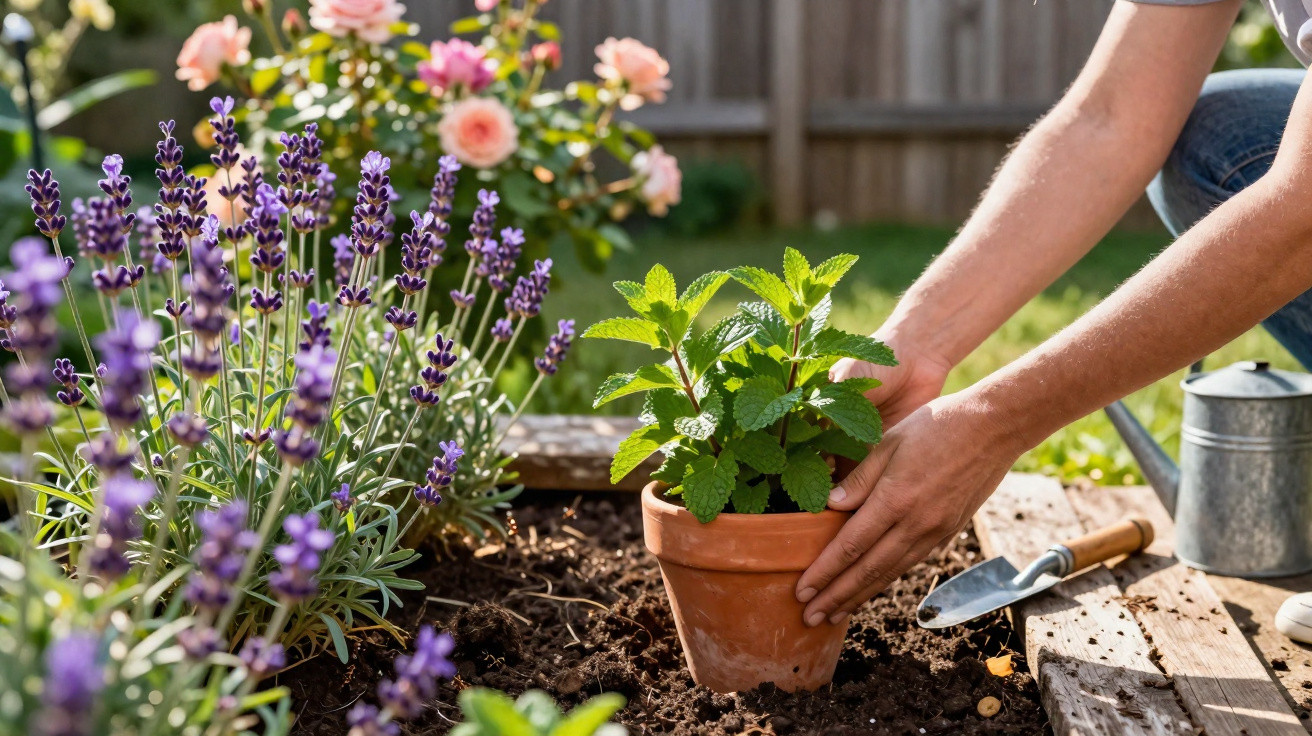
Ants are simply part of garden life, but attitudes soon change when they undermine lettuce roots or guard roses covered in aphids. Many amateur gardeners then instinctively reach for bait stations and sprays. Yet the presence of these insects can usually be reduced considerably by deliberately planting strongly scented plants that disrupt their navigation and keep them away from sensitive areas.
Why ants are so sensitive to strong scents
Ants organise their lives through smells. They create scent trails to mark food sources and show the route back to the nest. These delicate scented lines work like miniature roads. When an intense unfamiliar smell is introduced, it acts like a thick wall of fog: the ants lose their bearings, the trail is broken, and they turn away or seek a different route.
This is particularly apparent in gardens where aphids are abundant. Ants “milk” them for their sweet honeydew and actively defend their colonies. In doing so, they protect aphids from ladybirds and parasitic wasps, which is precisely why they can suddenly become a problem in a border.
Strongly aromatic herbs can confuse ants’ delicate scent trails and steer them away from beds, containers and rose bushes.
Plants containing essential oils are therefore useful natural allies. Rather than repelling ants in the manner of a conventional poison, they simply make certain places less appealing. Two plants stand out in particular: lavender and mint.
Lavender: a scented protective barrier for beds and roses
English lavender (Lavandula angustifolia) has long been a classic ornamental-garden plant. Its powerful fragrance is calming for people, but ants react very differently. They avoid areas where the scent becomes too strong and divert their routes towards the edges.
How to use lavender specifically against ants
- Border around the vegetable patch: A loose row of lavender along a bed edge forms a lasting scented barrier.
- Protection for roses: Planting lavender beneath or beside rose bushes can deter ants and, as a result, often slow the spread of aphid colonies.
- Lavender in a pot: Placing a pot on ant trails by a patio, entrance or balcony will often force the insects to change direction.
- Mobile protection: Small containers can be moved as needed to places where new ant routes are developing.
For a noticeable effect, lavender needs sun and relatively poor, free-draining soil. Waterlogging weakens the plants and also reduces their scent. Regularly cutting back faded flower spikes encourages fresh blooms and renewed fragrance.
Mint: powerful fragrance and flexible use
Mint (Mentha species) is among the easiest herbs to grow. It is popular in the kitchen, whereas ants are reluctant to tolerate its intense aroma. Peppermint and spearmint are especially suitable because their essential oils have a particularly strong scent.
Why mint is better grown in a pot
Mint spreads vigorously and can overwhelm other plants in a bed. For this very reason, it is best kept in pots, window boxes or larger containers. This offers several advantages:
- Good control: Its roots remain contained, keeping the bed manageable.
- A movable barrier: Pots can be positioned directly on ant routes or moved to key points, such as doorways and patio edges.
- Two uses in one: While mint disturbs ants, it also supplies fresh leaves for tea, salads or cocktails.
When several pots of mint are grouped closely together, they create a clearly noticeable blanket of fragrance. Ants will often avoid it and rebuild their routes to the side or further away. That is the aim: not to destroy every ant, but to make places containing sensitive plants unattractive.
Where lavender and mint have the greatest effect
Positioning determines how well the plants work. A single pot in the middle of the garden is less useful than carefully placing them at access and exit points.
| Garden area | Recommended plant | Practical tip |
|---|---|---|
| Vegetable bed | Lavender in a row, mint in pots | Plant lavender around the edge and place mint pots beside heavily affected rows. |
| Rose bed | Lavender | Position lavender plants between the roses to disrupt ants and aphids. |
| Patio / balcony | Lavender and mint in containers | Put containers directly beside ant trails and in front of thresholds. |
| House entrance | Mint in pots | Arrange several pots to the left and right of the entrance step. |
Herbs and perennials that enhance the effect
Lavender and mint provide a strong foundation, but other aromatic plants can strengthen the approach in the garden. Particularly suitable choices include:
- Rosemary: Loves sunny, dry locations and suits Mediterranean-style beds.
- Sage: Has a strong fragrance and can also be grown in beds and containers.
- Basil: Better suited to the warmer months and ideal in pots near the kitchen.
- Lemon balm: Mildly lemon-scented, robust and beneficial for bees.
- Tansy: Strong-smelling but toxic, so use it cautiously and not in family gardens where children are present.
Combining several of these herbs creates a type of aromatic protective belt. At the same time, pollinators such as bees and bumblebees benefit from their flowers, unlike with chemical ant treatments, which can quickly affect other insects as well.
Aphid control is essential
Ants frequently establish themselves where aphids are plentiful. Planting only lavender and mint while allowing aphids to multiply unchecked is unlikely to bring much relief. A combination of measures makes sense:
- Remove aphids from plants early by spraying them with water.
- Attract beneficial insects, for example with flowering herbs and single-flowered perennials.
- Avoid excessive nitrogen fertiliser, which encourages soft growth that is prone to aphids.
The less honeydew ants can find in a bed, the less worthwhile it is for them to remain there - and the more easily scented plants can redirect them.
How long does it take before the effect is visible?
Anyone planting new lavender shrubs needs some patience. The plants must first establish their roots and produce vigorous new growth before they release enough fragrance. Mint often works more quickly because it rapidly develops many aromatic leaves, even in a pot.
With good placement, a change can often be seen after a few days to several weeks: ant trails shift, colonies prefer to remain around the garden margins, and sensitive vegetable or ornamental areas are avoided.
Risks, care mistakes and useful combinations
Amateur gardeners should still keep a few points in mind. Mint tolerates very little drought stress and, in small containers, may need watering daily during summer. Conversely, waterlogging harms lavender; a drainage layer in the pot or sandy soil in the bed can help.
People with sensitive skin may occasionally react to essential oils or close contact with strongly scented plants. Gardening gloves help prevent irritation, especially when pruning. Tansy should not be planted where young children play, as every part of the plant is toxic.
An effective combination is created by pairing scented herbs with physical barriers: smooth metal strips on house walls, clean joints between patio slabs, and securely closed pet-food containers. This leaves ants with fewer attractive targets while also confronting them with scent zones they prefer to avoid.
Those who adapt their garden over the long term will notice a clear difference after some time: fewer ants around lettuces, fewer aphids on sensitive ornamental plants, and a more stable overall balance. Lavender and mint are not miracle solutions, but they are two straightforward, inexpensive and useful helpers that can be incorporated into almost any garden with little effort.



Comments
No comments yet. Be the first to comment!
Leave a Comment