
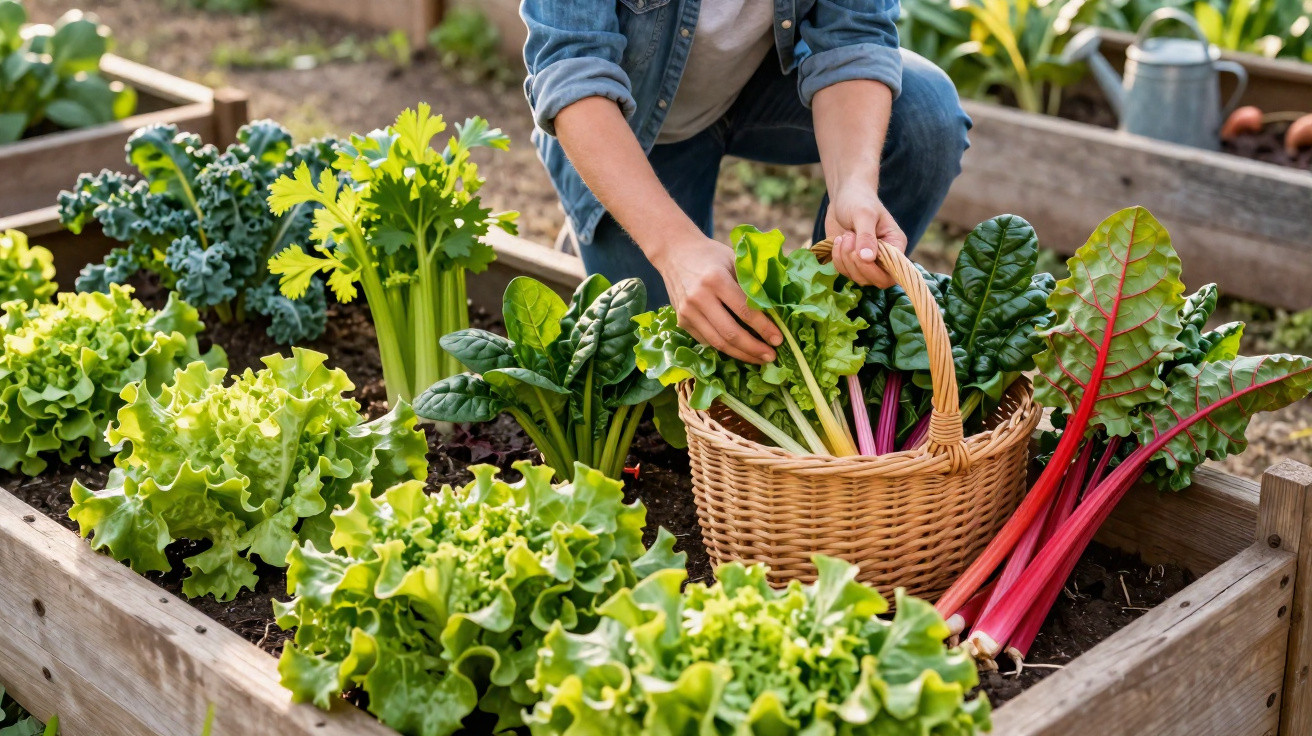
Anyone who plans wisely in spring can harvest fresh leaves for months – without enormous beds or expert knowledge, but with plenty of flavour.
Leafy vegetables are among the vegetable garden’s most overlooked stars. They grow quickly, provide an ongoing harvest and add colour and vitamins to the plate. Rather than waiting for a few large harvests, a well-planned selection of leafy vegetables supplies the kitchen with fresh produce week after week – from the first spring salad to the last cabbage in winter.
Why leafy vegetables make so much sense in the garden
Leafy vegetables are not harvested all at once. Instead, you pick leaves, stalks or ribs gradually while allowing the plant to continue growing. This creates a continuous supply without the need to sow again each time.
Leafy vegetables provide plenty of vitamins, fibre and minerals while being low in calories – and can be picked fresh almost every day.
They are particularly beneficial for anyone wanting to make their diet lighter, fresher and richer in vitamins. Most varieties offer plenty of:
- fibre to support healthy digestion
- vitamins A, C and K for the immune system and cell protection
- folate and other B vitamins
- calcium, magnesium and iron
There are practical benefits too: leafy vegetables can be grown in a small space, in a raised bed, window box or even a large pot. In the kitchen, they work well in salads, pan-fried dishes, soups, bakes, quiches and smoothies. They rarely become boring.
1. Salads – the straightforward classic for every corner of the bed
Leaf salads are an uncomplicated place to start. Lettuce, Batavia, endive, rocket, lamb’s lettuce or sugar loaf chicory: there is a wide choice, and cultivation is generally easy. Many varieties prefer the cooler conditions of spring and autumn, while heat-tolerant types can be harvested in summer.
The right rhythm matters:
- sow a short row or a strip of seed every 2–3 weeks
- avoid sowing too densely, so the heads have room to develop
- water regularly during dry spells to prevent the lettuce from bolting
If there is no space for full heads, choose cut-and-come-again or loose-leaf salads. Rather than harvesting the entire plant, take only the outer leaves. The centre will regrow and provide fresh leaves for weeks.
2. Chard – a resilient leaf-producing powerhouse with tender stalks
Chard (Swiss chard, leaf beet) may seem old-fashioned to many amateur gardeners, yet it is exceptionally practical. It grows from spring to autumn, tolerates light frosts and keeps producing new leaves when picked regularly.
In the garden, chard stands out for:
- a high yield from a small area
- minimal maintenance when grown in loose, nutrient-rich soil
- a range of colours, with stalks from white and yellow to red
When cooked in a frying pan, chard is reminiscent of spinach but has firmer stalks that retain a slight crunch. For a quick meal, a little oil, onion, garlic and a squeeze of lemon or some cream are enough. To win over children, finely chop the colourful stalks and mix them into pasta dishes or gratins.
3. Spinach – more demanding, but exceptionally worthwhile
Spinach is more sensitive than lettuce or chard, but it rewards the effort. It thrives in humus-rich soil that remains lightly moist at all times. If it lacks water or nutrients, it quickly flowers and its leaves become tough.
A few basic rules are helpful:
- select varieties for spring and autumn, using only heat-resistant types in summer
- prepare the soil before sowing with compost and a small amount of organic fertiliser
- water lightly more often instead of giving it occasional “heavy rain from a watering can”
Harvest from the outside in. If the heart is left intact, the plant will continue growing. Fresh spinach is not only delicious served traditionally with a fried egg. Small amounts eaten raw in salads or smoothies add extra vitamins.
4. Celery – bold flavour for cooking and raw vegetable platters
Celery is not a typical beginner’s vegetable, but gardeners who have grown it once often want to grow it again. The plants favour nutrient-rich soil with consistent moisture and react sensitively to drought stress.
The stalks are excellent in:
- soups and stews as an aromatic base
- salads, sliced finely
- raw vegetable platters served with dip
For especially tender stalks, earth up the plants slightly as they grow or temporarily wrap the lower stalks in opaque material. This keeps them paler and milder. Combined with apple, walnuts and a light yoghurt dressing, they make a fresh, crisp salad.
5. Leaf cabbage – a source of vitamins even in winter
Leaf cabbage includes forms such as kale, cavolo nero, and certain varieties of Savoy and Chinese cabbage. Many are genuine cold-weather specialists. Frost even makes some varieties milder in flavour.
Leaf cabbage fills the vitamin gap in late autumn and winter, when the rest of the garden is already taking a break.
Strong plants need:
- deeply loosened, well-fertilised soil
- an even water supply
- protection from cabbage white butterflies, for example with insect-proof vegetable netting
Leaf cabbage is more versatile in the kitchen than its reputation suggests. Whether made into crisp oven-baked “cabbage crisps”, served as a vegetable side dish, added to stews or used as a filling for strudels and quiches, it is rarely dull when you experiment with seasonings.
6. Sorrel – small leaves with a big impact
Sorrel does not make much of a visual impression in the bed, but in a pot it brings a surprisingly distinctive flavour. Its sharp, fresh acidity pairs perfectly with eggs, potatoes and fish.
The plants are happiest in partial shade and lightly moist soil. As sorrel is perennial, one plant is often enough for several years. Always cut only part of the leaves so the clump retains its strength.
A few leaves in:
- omelettes and scrambled eggs
- sauces for fish or potatoes
- creamy soups based on potatoes or leeks
are enough to noticeably alter the flavour. Too much sorrel can quickly become overpowering, so begin with a small quantity and increase it gradually.
7. Rhubarb – an exception with valuable stalks
Botanically, rhubarb is often mentioned alongside leafy vegetables, although in the kitchen its stalks are generally treated more like fruit. Only the fleshy stems are eaten; the leaves are inedible and should go on the compost heap.
Rhubarb appreciates deep, nutrient-rich soil and can remain in the same place for many years. Harvest sparingly during the first two years so that the plant can establish itself. Later, just a few crowns can produce impressive quantities.
Rhubarb has a clear acidity. Compote, cakes and crumbles therefore need sugar or sweet companions such as strawberries. Those who enjoy savoury dishes can try small cubes of rhubarb in chutneys, served alongside cheese or grilled food.
The ideal start: how to establish your first leafy vegetable beds
Timing is often the biggest mistake. Many amateur gardeners sow too early, while nights are still cold. The plants then stall or die, wasting valuable weeks. It is better to monitor soil temperature and the weather trend, and wait two weeks if necessary.
A simple formula for successful beds is:
- loosen the soil and remove the roots of weeds
- work in mature compost, but do not fertilise with anything too fresh
- create a finely crumbly surface, then sow or plant
- keep the rows free from weeds after seedlings emerge
- water preferably in the morning, allowing leaves to dry during the day
Simple aids such as horticultural fleece or small tunnels protect young plants from wind, cold and pests. Spinach, lettuce and cabbage in particular repay this early protection with stronger growth.
More variety in the bed, more excitement on the plate
Combining different leafy vegetables delivers not only visual variety but also different nutrient profiles. Dark-green varieties such as spinach and leaf cabbage often provide more of certain vitamins and plant compounds than paler leaves. The peppery or bitter notes of rocket, endive and sorrel aid digestion and add depth to dishes.
Everyday meals become more interesting when you mix them: a salad of lettuce, a few chard leaves, fine celery slices and a hint of sorrel is quick to prepare and feels very different from the classic “green bowl”. Leftovers can also be used up – spare leaves can go into the frying pan, a vegetable lasagne or a soup.
Health, enjoyment and savings combined
Leafy vegetables from your own garden do more than replace the quick grab for a plastic bag from the supermarket. They reduce packaging waste, save money and restore control over origin and growing methods. Those who fertilise sparingly, avoid chemical sprays and harvest regularly can feed themselves for a long time at relatively little cost.
At the same time, many amateur gardeners gain a greater awareness of seasonality and local growing. Anyone who sees spinach struggle in high summer but thrive in autumn suddenly understands the logic behind vegetable calendars very clearly. Over the years, this creates a vegetable garden that not only looks attractive but also reliably supplies the kitchen with fresh vitamins.



Comments
No comments yet. Be the first to comment!
Leave a Comment