
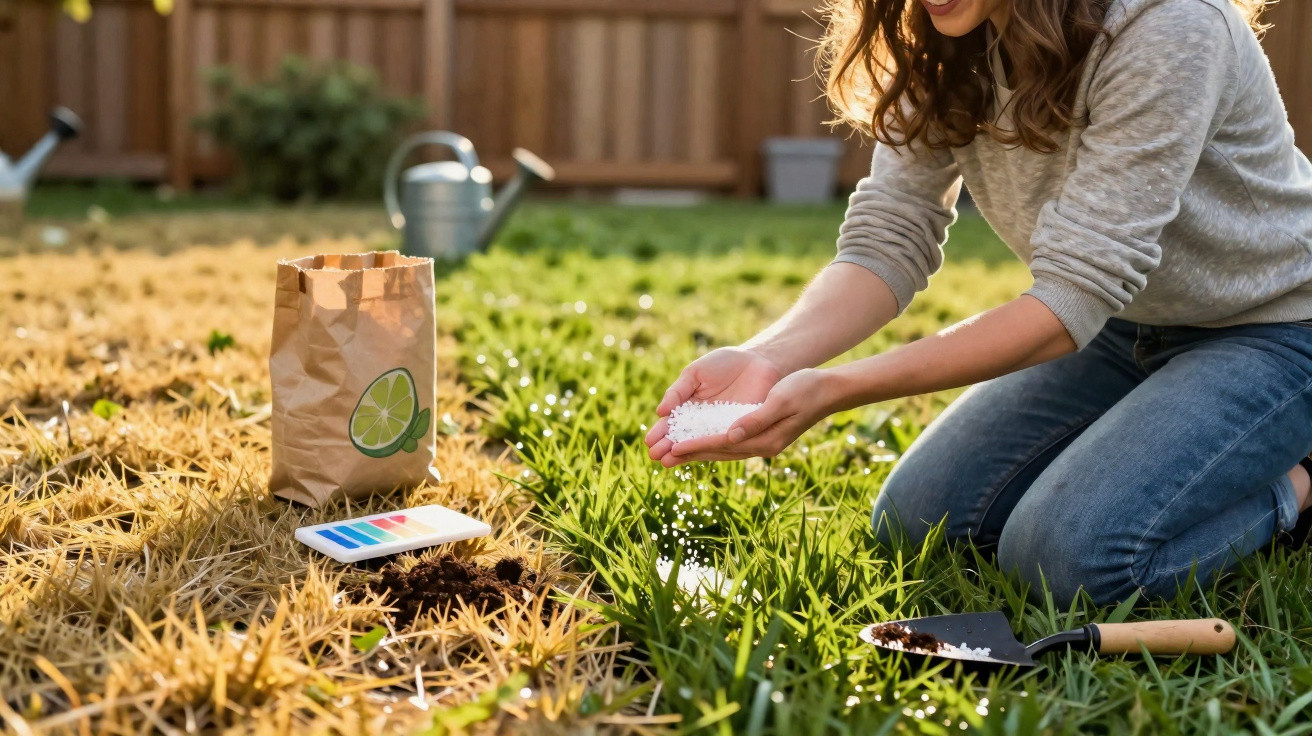
Instead of throwing on even more fertiliser, experts point to a simple soil trick.
Anyone standing in front of a pale, patchy lawn in spring will usually reach automatically for lawn fertiliser or a scarifier. Yet ornamental and sports turf specialists say the issue is often not a lack of nutrients at all, but the chemistry of the soil. A targeted adjustment to the pH value may be enough to turn a tired lawn into a richly green, resilient surface again.
Why lawns suddenly turn yellow
At first glance, a yellow lawn looks like a classic nutrient deficiency. In many cases, however, the underlying cause is overly acidic soil. The pH value determines whether the nutrients already present in the ground are available to the grass.
When the pH value falls too far, the soil can lock up important elements, including:
- Nitrogen – supports growth and fresh green colour
- Phosphorus – strengthens roots and shoots
- Potassium – improves resistance to disease and drought
The difficult part is that, even when home gardeners fertilise regularly, the lawn can still effectively starve because its roots can barely access these nutrients. The grass looks pale, grows thinly and gives way to moss and weeds.
“If the pH value is not at least close to the optimum range, every attempt at fertilising is wasted – the soil holds on to the nutrients rather than passing them on to the lawn.”
This is precisely where the soil trick recommended by lawn professionals for years comes in.
The simple soil trick: lime as a nutrient ‘opener’
Garden and lawn specialists describe lime as something of a reset button for tired lawns. It raises the pH value, returning the soil to a range in which nutrients become soluble again and can be taken up by roots.
Lawn services such as LawnPride stress that the lawn can only make proper use of the fertiliser already present once the pH value is right. In effect, lime releases the blockage and makes nitrogen, phosphorus and potassium accessible again. The result is not visible overnight, but it often appears within a few weeks: greener growth, denser turf and fewer bare patches.
“Among lawn professionals, lime is considered the underestimated key to strong, resilient green turf – cheaper than specialist fertilisers and, in many cases, more effective.”
Less moss and fewer weeds
Garden retailers such as Moowy refer to lawn lime as a natural soil improver. A slightly increased pH value creates conditions that grasses favour, while becoming noticeably less appealing to moss and many weeds.
As a result, the lawn regains the advantage. Areas that were previously covered by dense cushions of moss can once again be colonised by grass. Over time, this also reduces the need for constant scarifying.
Calcium or magnesium: which type of lime suits my soil?
Not all lime products are the same. Expert teams broadly distinguish between two common options for home gardens:
| Type | Characteristic | Suitable for |
|---|---|---|
| Calcium-based lime | Acts relatively quickly and raises the pH value promptly | Soils with no known magnesium deficiency |
| Dolomitic lime (with magnesium) | Also provides magnesium but works somewhat more slowly | Lawns where a magnesium deficiency is suspected, for example very pale blades |
The best option depends on the condition of the soil. Anyone wanting certainty can arrange a soil analysis through a garden centre or use a simple pH test from a DIY shop.
The right time to apply lime to a lawn
Success depends not only on the lime itself, but also on when it is used. Specialists recommend two periods each year when the soil is especially receptive to the adjustment:
- Spring: shortly before the lawn enters its intensive growth period
- Autumn: after the hottest period, when temperatures begin to fall again
During both windows, the ground is generally moist enough, temperatures are moderate and the grasses are active enough to benefit from the correction.
How to tell whether your soil is too acidic
Those who do not want a chemical garden analysis can look out for typical warning signs:
- Dense mats of moss in the lawn, particularly in partially shaded areas
- Yellow grass blades despite regular fertiliser applications
- Slow growth, with the lawn barely recovering after mowing
- A lot of clover or acid-loving weeds
If several of these signs apply, there is a strong case for a pH value that is too low. A rapid pH test bought in a shop can provide clarity within minutes.
Step by step: how to lime your lawn correctly
The actual workload is manageable. The key is applying the product evenly and giving your skin and eyes a little protection.
- Prepare the area: Mow the lawn short, then remove leaves and loose moss.
- Work out the quantity: Follow the manufacturer’s instructions and do not overdose by guesswork.
- Put on protection: Wear gloves and, ideally, a simple dust mask as well.
- Spread the lime: A hand spreader is sufficient for small areas; use a wheeled spreader for larger lawns.
- Allow it to work in: Rain or moderate watering will wash the lime into the soil.
“Too much lime can push the soil too far in the other direction. It is better to apply moderate amounts and make further adjustments at intervals of one to two years, rather than trying to ‘fix everything’ at once.”
Lawn care after liming: three simple habits
For the effect to remain visible over the long term, the lawn needs a few adjusted care routines. Garden professionals particularly recommend these three measures:
- Mow higher: Do not cut the lawn right down; leave it at 4–5 centimetres. The longer grass shades the soil and protects the roots.
- Water less often but more thoroughly: Water less frequently, but for long enough for moisture to penetrate deeper into the ground. This encourages deep roots and makes the lawn tougher.
- Mulch rather than remove everything: Leave some fine grass clippings behind. They decompose and provide organic nourishment directly where it is needed.
Anyone who combines these three elements with an adjusted pH value will need specialist products less often and benefit from a more stable, self-sustaining lawn.
Where lime reaches its limits
Despite all its benefits, lime cannot solve every lawn problem. If the grass is heavily worn by playing children and dogs, for example, or if compaction or waterlogging is involved, even perfect pH values will offer only limited help.
Typical issues where additional action is useful include:
- Compacted soil: Aeration and working sand into the ground can help water drain away more effectively.
- Waterlogging: Drainage or raising the area is needed, otherwise the root system will rot.
- Full shade: In deeply shaded corners, ground-cover plants or shade-tolerant lawn mixes often grow better than conventional ornamental turf.
Making adjustments in these areas improves the chances that the lime-improved soil can be used to its full potential.
Why the pH value is so often underestimated
Many home gardeners spend considerable sums on branded fertilisers, high-performance lawn seed mixes and robotic mowers without ever measuring the pH value. Yet a simple test costs little more than a small pack of fertiliser and provides a clear basis for deciding what to do.
Especially in areas with plenty of rainfall or very sandy soil, the pH value gradually shifts towards the acidic range over the years. Without corrective action, the lawn slips into a form of ongoing stress. Lime acts as an unglamorous but highly effective counterbalance here – not a miracle cure, but often a missing piece of the puzzle.
So, anyone who genuinely wants to transform a yellow, tired lawn should not think first about applying even more fertiliser. Instead, they should look beneath the grass blades, at the soil itself. A simple wheeled spreader, a dose of lime at the right time and a few adapted care routines are usually all that is needed to change the colour from faded yellow to strong green.






Comments
No comments yet. Be the first to comment!
Leave a Comment