
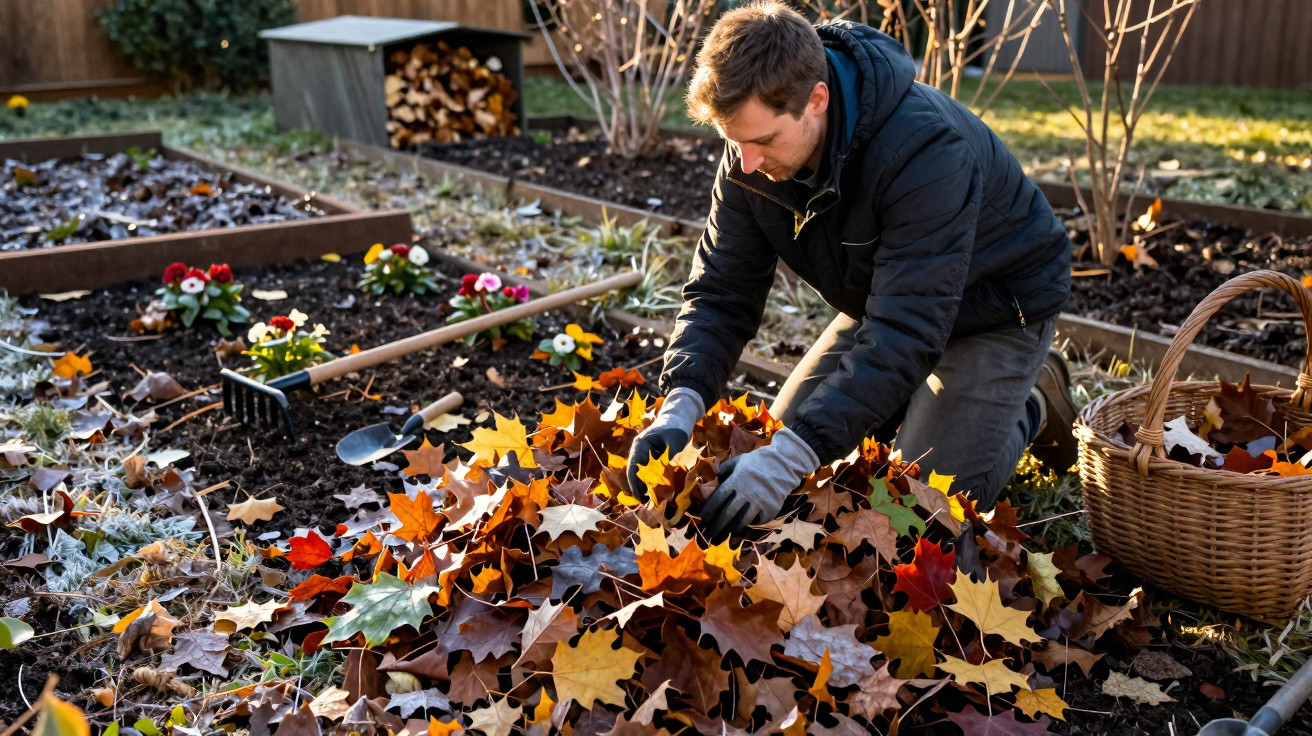
Many amateur gardeners buy costly fleece covers, plastic sheeting and specialist fertilisers to get their plants through the winter. Yet the most effective protective layer is usually already in the garden – and is commonly stuffed into bags and thrown away. Anyone who rethinks this and puts this green “waste” to purposeful use not only shields beds from frost, but also improves the soil for the long term.
How my winter garden changed from a problem area into a resilient haven
For years, my autumn garden routine was always the same: I carefully raked every leaf off the lawn, cut back perennials and cleared the beds until they looked “tidy”. Then, in January, I would stand there in disbelief at brown, soggy plant remains and frozen roots. This happened despite fleece covers and winter protection bought from the garden centre.
The turning point came when I realised that, in nature, soil never sits bare and exposed throughout winter. Only in our gardens do we force it into this unnatural state – simply because we want things to look orderly.
What I had considered annoying garden waste for years is actually frost protection, a moisture reservoir and slow-release fertiliser all in one.
Why a “tidy” garden surface leaves plants vulnerable to frost
Bare ground freezes more quickly
Uncovered soil acts like a person without a coat in a snowstorm: it loses heat rapidly. In the wild, the ground is always covered, whether by grass, herbs or a deep layer of fallen leaves.
When we clear every part of the garden in autumn, this is what happens:
- Rain washes nutrients down into deeper layers, where plant roots can barely reach them.
- Heavy rain breaks down the fine soil structure, causing the surface to cap and harden.
- Cold penetrates deeply, while water in the soil freezes and expands – effectively forcing apart sensitive roots.
Roses, hydrangeas and perennials, as well as young fruit trees, can respond with frost damage, plant losses and a poor start to spring.
Leaves are not rubbish – they are the garden’s winter blanket
What falls from trees in autumn is a highly concentrated resource: over many months, trees have drawn nutrients from the soil and stored them in their leaves. Rather than spreading this valuable material back across the ground, many people pack it into bags and take it to the tip.
In doing so, we break a natural cycle. Beneath a layer of leaves, the soil remains protected and alive. Microorganisms, fungi and earthworms gradually work the leaves into the ground – even during winter, provided the soil is not completely frozen.
The “down jacket” for roots: how leaves insulate against frost
Why a layer of leaves acts as insulation
The principle is straightforward: air insulates. A loosely spread covering of leaves contains many small pockets of air. These air cushions slow sharp drops in temperature and retain warmth in the soil.
In practical terms, this means:
- After a frosty night, soil beneath the leaves is frozen to a lesser depth.
- Roots are not stressed by sudden temperature changes.
- Newly planted specimens, container plants sunk into beds and sensitive perennials cope far better with cold spells.
A 5–10 cm layer of leaves works like free, breathable insulation for your beds.
Protection against winter drought – the overlooked risk
Many people think only about cold in winter, rather than drought. Cold, dry winds draw moisture from the soil. At the same time, roots can scarcely take up water from frozen ground, while leaves and needles continue to lose water through evaporation.
The result is that plants dry out – in the middle of winter. Evergreen shrubs, rhododendrons and conifers are particularly prone to this.
A leaf covering reduces precisely this risk. It limits evaporation from the soil surface, retains moisture around the roots for longer and protects against drying winds, without “suffocating” the soil.
Leaves as slow-release fertiliser: better soil year after year
How leaves become valuable humus
More happens beneath this protective layer than is visible at first glance. Fungi, bacteria, springtails and earthworms break down the organic material and turn it into humus.
Humus serves as both a sponge and a nutrient store:
- It holds water without turning the ground waterlogged.
- It stores nutrients like a reserve and releases them gradually to plants.
- It opens up heavy soils and gives sandy sites greater stability.
Those who mulch consistently with leaves over several years will notice that a spade enters the soil more easily, rainwater drains away more effectively and plants grow more vigorously.
Save on fertiliser with leaf matter from your own garden
Leaves contain minerals that trees have drawn from deeper soil layers throughout their lives: potassium, calcium, magnesium and trace elements. When the leaves remain on the property, these reserves remain within the cycle too.
Many gardeners report that, after several years of using leaves consistently, they need to buy considerably less:
- substantially less bagged soil for spring
- hardly any need for artificial fertiliser
- fewer soil-improving additives for heavy ground
Instead of car boots filled with plastic bags, there are simply wheelbarrows full of home-grown “gold”.
How to mulch correctly: protection without harming your plants
The right depth for beds and vegetable plots
Too much of a good thing can damage plants, while too little has scarcely any effect. It is therefore worth getting the depth right:
| Area | Recommended leaf layer | Note |
|---|---|---|
| Perennial beds, ornamental shrubs | 5–10 cm | Apply loosely and check new shoots in spring |
| Empty vegetable beds in winter | 15–20 cm | It can be generous; push some aside before sowing |
| Young plants, small cushion-forming perennials | max. 3–5 cm around them | Keep the crown clear and avoid waterlogging |
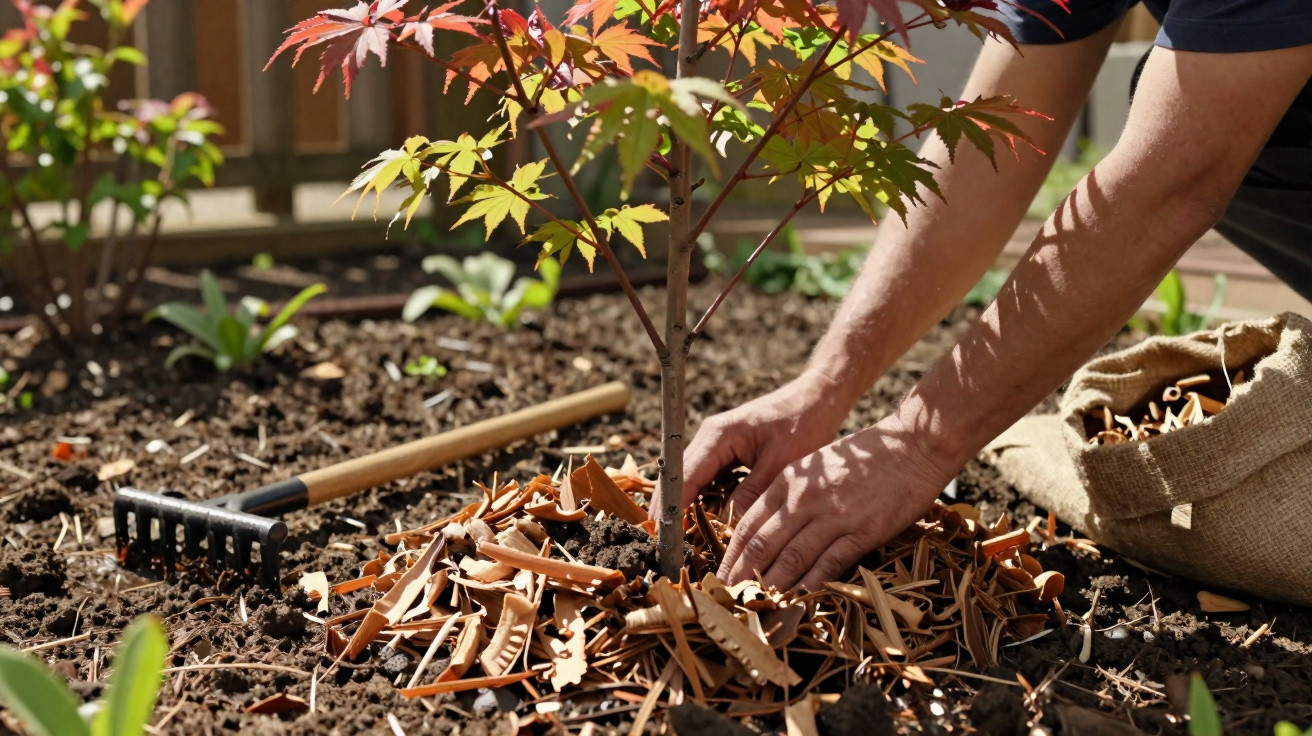
Most importantly, leave the area immediately around the base of each stem clear. Waterlogging around the crown encourages rot and fungal diseases.
How do you stop leaves from blowing away?
A common frustration is that painstakingly raked leaves are scattered across the neighbourhood after the first storm. A few simple measures will keep the layer where it belongs:
- Lightly moisten the leaves once they have been spread – water helps them bind together.
- Run a lawn mower over them and use the chopped material as mulch – smaller pieces stay in place more readily.
- Scatter a light layer of finished compost or fine grass clippings over the leaves.
- Lay a few lighter branches in a criss-cross pattern over the top, especially in exposed areas.
The more finely leaves are shredded, the more resistant they are to wind – and the faster they turn into humus.
When leaves are better kept off your beds as mulch
Sort out diseased leaves without exception
Not every leaf is suitable. Plant material showing visible disease should not go onto beds, otherwise you may carry problems over into the following year.
This includes, for example:
- rose leaves with black spots
- leaves from fruit trees with scab or unusual discolouration
- tomato debris from a year with severe fungal infection
Such material is better placed on a separate compost heap that gets hot, or disposed of with household waste. Healthy leaves from decididuous trees, perennials and shrubs, however, make ideal mulching material.
Special cases: walnut, oak and others
Some tree species contain tannins that can slow decomposition or inhibit seedlings. Larger quantities of walnut or oak leaves are therefore better used in robust areas beneath shrubs than directly on newly prepared vegetable beds.
If you are unsure, mix these leaves with other material, or compost them first and use them later as mature mulch.
Practical additions for winter-ready garden soil
Leaves alone are already highly effective, but combining them with further measures makes the winter garden even more resilient. A shallow layer of mature compost worked into the ground beneath the leaf covering provides additional nourishment for soil life. Anyone sowing green manure in late summer can leave the dead plants standing beneath the autumn leaves – creating a double layer of protection and food for the soil.
Container plants benefit too: larger pots can be sunk into a box or bed and packed generously with leaves all around. The soil freezes more slowly, roots suffer less and plants get off to a stronger start in spring.
Once you have seen how much more alive a garden feels after a winter beneath a blanket of leaves, you will reach for the rake far more calmly in autumn. Instead of “tidying up”, the aim becomes to leave this material exactly where it delivers the greatest benefit – directly on the soil.


Comments
No comments yet. Be the first to comment!
Leave a Comment