
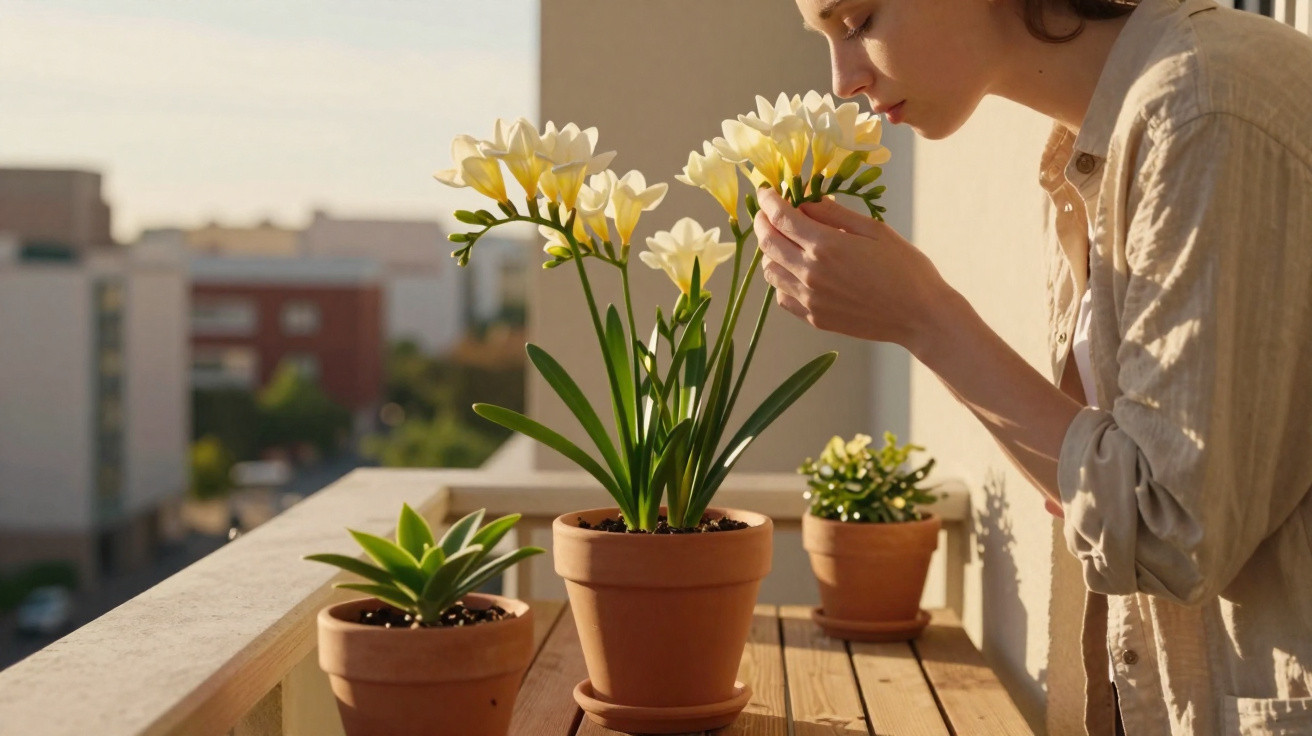
With the right flower, there is no need for an entire plant collection.
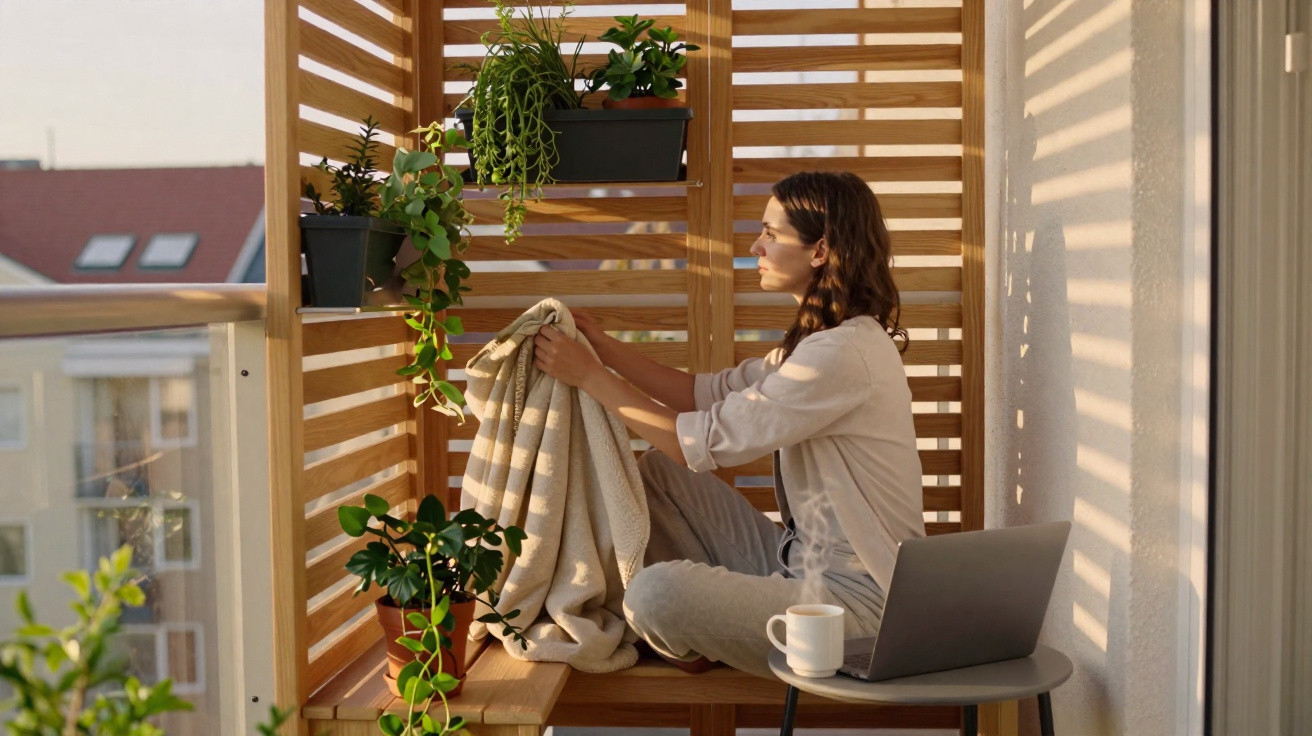
Many city dwellers know the problem: you picture a relaxed morning coffee or an evening glass of wine on the balcony, surrounded by floral fragrance - but end up with too many pots that need plenty of attention and still offer barely any scent. The good news is that a richly scented terrace can genuinely be created with just one type of plant, provided it is positioned cleverly and cared for properly.
Why one flower can scent an entire balcony
Rather than cramming lavender, jasmine, roses and other fragrant favourites into a limited space, more and more amateur gardeners are choosing a remarkably simple approach: growing one strongly scented bulb or corm plant in several pots. Freesias, botanically known as Freesia, are particularly impressive for this purpose.
Native to southern Africa, freesias have been used by the perfume industry for decades. Their fragrance is surprisingly layered, combining a subtle honey-like sweetness with a fresh citrus note. It is immediately noticeable without becoming overwhelming. This is exactly why freesias suit compact outdoor spaces where people spend time rather than simply pass through.
A few carefully positioned pots of freesias can dominate the scent of a whole balcony without turning it into a jungle of plants.
The plants produce long, graceful flowering stems bearing trumpet-shaped blooms arranged along one side of the flower spike. Colours range from white and yellow to pink, deep red and purple. The result is a powerful fragrance alongside an attractive display that works equally well in modern and traditional balcony schemes.
The ideal pot for maximum fragrance
If you want to grow freesias, do not cut corners on the pot. These flowers prefer depth rather than an extremely shallow container.
- Diameter: at least 20 to 30 centimetres
- Height: choose a slightly taller pot rather than a shallow one, so the roots have enough room
- Drainage holes: essential, as freesias do not tolerate waterlogging at all
A tailored potting mix is worthwhile, ensuring that water drains freely and the corms do not rot:
- approximately 50% high-quality potting compost
- approximately 25% sand or fine grit
- approximately 25% loose organic material, such as well-rotted compost or coconut fibre
A 15-centimetre-diameter pot will hold around five to seven corms. Plant them roughly three to five centimetres deep, pointed end upwards, leaving approximately five to six centimetres between each one. This creates a dense bouquet of flowers from a single container later on - perfect for achieving a strong scented effect with only a few pots.
When to plant freesias
Planting time depends largely on how cold the local winter climate is. Freesias are frost-sensitive, especially at temperatures below –3 to –4 degrees.
In milder regions
In places with very mild winters, where frost is rare or virtually absent, the corms can often remain in their pots. In these areas, they can be planted either:
- in early spring, once the danger of frost has passed, for fragrant summer flowering; or
- in autumn in a sheltered position, if the balcony or terrace is well protected from frost.
In frost-prone areas
Where severe frosts occur regularly, balcony gardeners should take the safer option:
- plant in spring as soon as no more frost is forecast
- expect flowering around ten to twelve weeks after planting
- lift the corms again in autumn and store them somewhere frost-free
For successful storage, use a cool, dry room at around four to ten degrees, such as a cellar or an unheated pantry. The corms must be kept dry with good air circulation, for example in a layer of newspaper or in a net.
Where freesias smell best on a balcony or terrace
Freesias thrive in bright conditions. The more sun they receive, the more flowers and fragrance they produce - as long as the pot is not allowed to dry out completely.
- Light requirements: at least six hours of direct sunshine each day
- Position: warm and sheltered from wind, ideally close to a wall
- Placement: beside the seating area or near the balcony or patio door
Putting the pots directly beside your preferred spot offers two benefits: the fragrance is noticeable straight away, and the plants do not end up neglected in some corner. A position close to a door is especially useful, as the scent drifts indoors whenever the door is opened.
One to three larger pots of freesias, positioned deliberately by the seating area and door, are often enough to fill the whole space with fragrance.
Freesia care: keeping plants reliably healthy
Freesias are not considered difficult to grow, but they respond sensitively to both excessive and insufficient watering. A few basic principles will keep the plants healthy.
Watering and feeding
- Keep the compost lightly moist, but never permanently wet.
- Let the top layer dry slightly between waterings.
- Apply a potassium-rich liquid feed every two weeks while buds are forming and during flowering.
Potassium particularly supports flower production and sturdy stems. Nitrogen-rich fertilisers may encourage plenty of foliage, but they reduce both fragrance and the abundance of blooms.
Supporting and cutting
Long, delicate stems can easily bend in windy conditions. Slim bamboo canes or metal supports will help without spoiling the overall appearance. Individual flowering stems can be cut for a vase without any problem - the balcony will lose very little fragrance, as further buds continue opening gradually.
Once flowering has finished, allow the foliage to yellow naturally. During this period, the plants store nutrients in their corms so they can grow again the following year. Only cut back the leaves, or lift the corms for storage, once the foliage is largely yellow.
How many pots does a typical balcony really need?
Depending on its size, even a standard city balcony often needs only a small number of containers:
- Mini balcony (2–3 m²): 1 large or 2 medium pots
- Standard balcony (4–6 m²): 2–3 larger pots, distributed between the door and seating area
- Small terrace (8–12 m²): 3–4 pots, combined with a few green, relatively neutral companion plants
Rather than setting out ten different scented plants, you can deliberately focus on this single species and vary the pot size, colour and positioning instead.
Which plants pair well with freesias without disrupting their fragrance
Anyone who does not want pots of freesias alone can combine them with understated companions that add visual interest without competing for attention through scent.
- Ornamental grasses in pots, such as fountain grass, for structure
- Evergreen, lightly scented plants such as box in containers
- Trailing plants such as ivy or small-flowered trailing petunias in unobtrusive colours
In a very confined space, intensely competing scents are less suitable, including strongly scented roses or pungent herbs placed directly beside freesias. These can overpower the delicate honey and citrus notes or create a “fragrance chaos”.
Risks, common mistakes and how to avoid them
People growing freesias in pots frequently encounter the same difficulties:
- Waterlogging: encourages corm rot. Solution: use free-draining compost, ensure good drainage holes and do not leave saucers permanently filled with water.
- A draughty position: causes flowering stems to snap and dries out pots extremely quickly. Better: choose a sheltered corner close to a wall.
- Too little light: results in long, weak shoots and few flowers. The only remedy is a substantially brighter position.
Anyone who keeps these points in mind will find freesias an impressively dependable choice for summer fragrance in a small space.
Who benefits most from growing freesias on a balcony?
These plants are especially suited to people with limited space who still value atmosphere: commuters wanting to unwind in the evening, families with a small city balcony, or older people who prefer planting that is manageable yet effective. Lifting and storing the corms creates a certain annual rhythm, making your balcony feel almost seasonally “staged”.
If you are already planning to redesign your balcony, freesias can be used as a fragrant focal point while the rest of the planting remains understated. With only a few simple steps, this creates a balcony that smells of summer without feeling like a maintenance job.
Comments
No comments yet. Be the first to comment!
Leave a Comment