
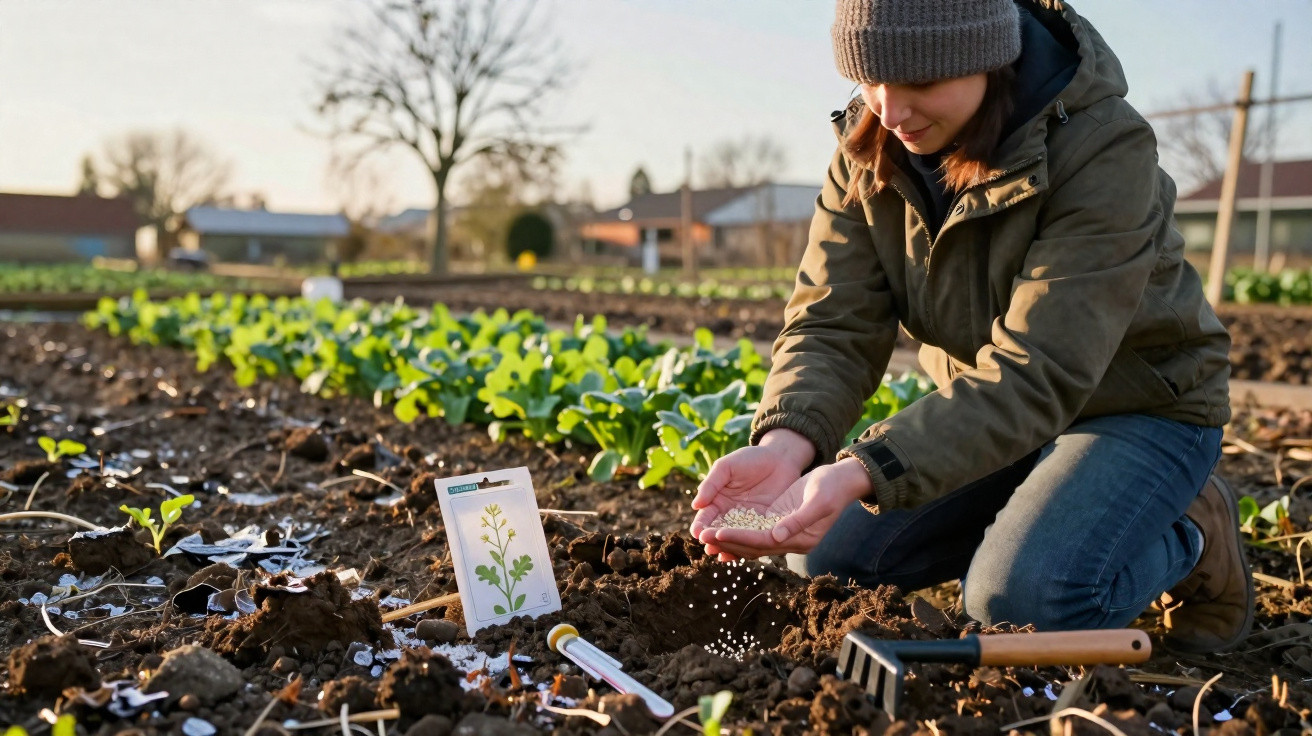
In February, the vegetable garden can appear frozen in time, with nothing seeming to move. Many gardeners wait for warmer days and leave the soil bare until then. Yet this is precisely what holds back the coming season. An old gardening technique makes active use of the cold period instead: one particular plant starts growing at only a few degrees above freezing, shields the earth and enriches it with nutrients at the same time – ideal for tomatoes, courgettes and more.
Why bare soil is a problem in winter
An empty brown plot may look tidy, but it actually puts the soil under considerable strain. Rain, wind and cold damage its structure. Fine crumbs become compacted into a crust, clay and loam clump together, and sandy soils dry out more quickly. At the same time, wild weeds seize every opportunity to spread.
- Rain washes away fine soil particles, causing valuable humus to be lost.
- Wind dries the surface and blows lighter soil away.
- Frost breaks up clods, but without plants there is no stability.
- Wild weeds make better use of bare ground than vegetable seeds do.
Anyone who leaves their soil unattended over winter begins spring with a tired, poorly structured bed. This is exactly where the winter green manure technique comes in.
The quiet helper: white mustard green manure in late winter
The plant experienced gardeners value is white mustard (Sinapis alba). It is used as a “green manure”, meaning it is not grown for eating but specifically to improve the soil.
“White mustard germinates at soil temperatures of around 5°C – weeks before conventional vegetables even begin to grow.”
While tomatoes and peppers need temperatures well above 10°C, white mustard only requires cool, moist soil. In many areas, it begins growing from mid-February onwards. It therefore makes use of a period when little else is happening – a major advantage.
How to get an early start with white mustard
As soon as the ground is no longer frozen, lightly loosen the bed and scatter the seed evenly over the surface. Work the seeds in shallowly with a rake or garden hoe; little more effort is needed. The remaining winter moisture does the rest.
Where other seeds might rot under these conditions, white mustard grows reliably. It takes advantage of the moisture and low temperatures, while avoiding competition with warmth-loving crops that will not be planted until later.
A green carpet in ten days instead of a weed-filled bed
One of the most striking qualities of this green manure is how quickly it develops. Within around ten days, a continuous green covering appears. Before long, the bed looks as though it has been covered with turf.
This dense growth delivers several benefits:
- Wild weeds receive hardly any light.
- Nutrients go to the crop rather than unwanted weeds.
- The soil stays covered, so rain is less able to form a crust on its surface.
- Temperature fluctuations at the surface are less severe.
“Sow mustard in late winter and you take away the weeds’ space in spring at an early stage – without chemicals and without hoeing.”
The soil remains clean and ready for planting. When vegetables are added later, far less weeding and preparation are needed.
Six weeks of timing: when to cut it back
The key to this method lies in getting the timing right. White mustard grows rapidly, soon produces yellow flowers and would then set seed. That is exactly what should be avoided in a vegetable garden. The aim is to “harvest” the crop at the right time, before it becomes woody and draws energy from the soil.
Around six weeks after sowing is the ideal point. The plants are tall and vigorous but still soft and succulent. Flower buds are visible, or the first flowers are beginning to open.
“Cutting at the right moment turns the green material into a natural nutrient booster with a high nitrogen content.”
Cut the stems using a scythe, sickle or brushcutter. Leave the cut material on the bed initially, or lightly incorporate it into the top layer of soil. This allows decomposition to begin directly in the bed.
Why flowering and seed formation are undesirable
If you act too late, the stems become hard and woody. The plants then direct their energy into producing seed and draw nutrients from the soil instead of making them available for future crops. Woody material also takes a long time to break down and keeps beds out of use.
By intervening in good time, you ensure that the plant remains quickly turn into humus and release nitrogen – exactly when young plants in spring are hungry for nutrients.
How mustard loosens and aerates the soil
Its benefits are not limited to the nutrient balance; it also improves soil structure. White mustard develops a strong taproot alongside a dense network of side roots. These penetrate deeper layers and create tiny channels through the ground.
The result is:
- heavy soil becomes looser and more aerated;
- water can soak in more easily rather than running off the surface;
- moisture remains available for longer in deeper layers;
- later vegetable crops find existing channels for their roots.
“The roots of white mustard work like millions of tiny drills – free soil cultivators that never get tired.”
When planting seedlings in March or April, the difference is immediately noticeable: the soil crumbles more easily, sticks less to spades and hands, and is much easier to work.
Up to 18 per cent higher yields: what trials show
The approach may sound like a simple gardening tip, but it has been supported by agronomic research for years. Trial series carried out between 2018 and 2022 show that using white mustard as winter green manure and incorporating it into the soil before full flowering increases yields of subsequent crops by an average of around 18 per cent.
The higher yields result from several effects working together:
- More readily available, organically bound nitrogen after decomposition.
- Improved soil structure, supporting root growth and water uptake.
- Significantly less pressure from wild weeds in spring.
For home gardeners, this means that a few simple jobs in February can have a positive effect on the entire growing season – with minimal seed costs.
How to use white mustard green manure step by step
Anyone wanting to test the method in their own bed can follow this straightforward plan:
| Step | Timing | Action |
|---|---|---|
| 1 | Mid-February | Lightly loosen the soil and break up large clods. |
| 2 | Immediately afterwards | Scatter mustard seed evenly and rake it in lightly. |
| 3 | After 10 days | Check germination and resow bare patches if necessary. |
| 4 | After 6 weeks | Mow or cut the plants shortly before full flowering. |
| 5 | Immediately afterwards | Lightly incorporate the green material or leave it in place as mulch. |
| 6 | 2–3 weeks later | Plant or sow spring crops. |
When this method is unsuitable and what to consider
Effective as white mustard is, it will not suit every garden. Anyone growing large quantities of brassicas such as cabbage, radishes, rocket or broccoli should take care: mustard belongs to the same plant family. Diseases such as clubroot can become more prevalent through green manure crops.
In gardens seriously affected by these issues, alternative green manures such as phacelia or certain clovers are more suitable. For most home vegetable beds, however, mustard remains a very simple and robust option.
It is also important to remove or incorporate the plants completely before they set seed. Otherwise, this helpful crop can quickly become an unwelcome permanent resident.
Why winter gardening deserves a different perspective
Walking through a garden in February, it is easy to see only rest and inactivity. White mustard green manure changes that view. Winter becomes a period of preparation, and the soil continues working throughout. The vegetable crops themselves benefit from it months later.
Even a trial bed of just a few square metres is enough to notice the difference: fewer weeds, looser soil and stronger plants. Many people who try it once plan their plots very differently afterwards – and rarely allow soil to remain bare again.




Comments
No comments yet. Be the first to comment!
Leave a Comment