
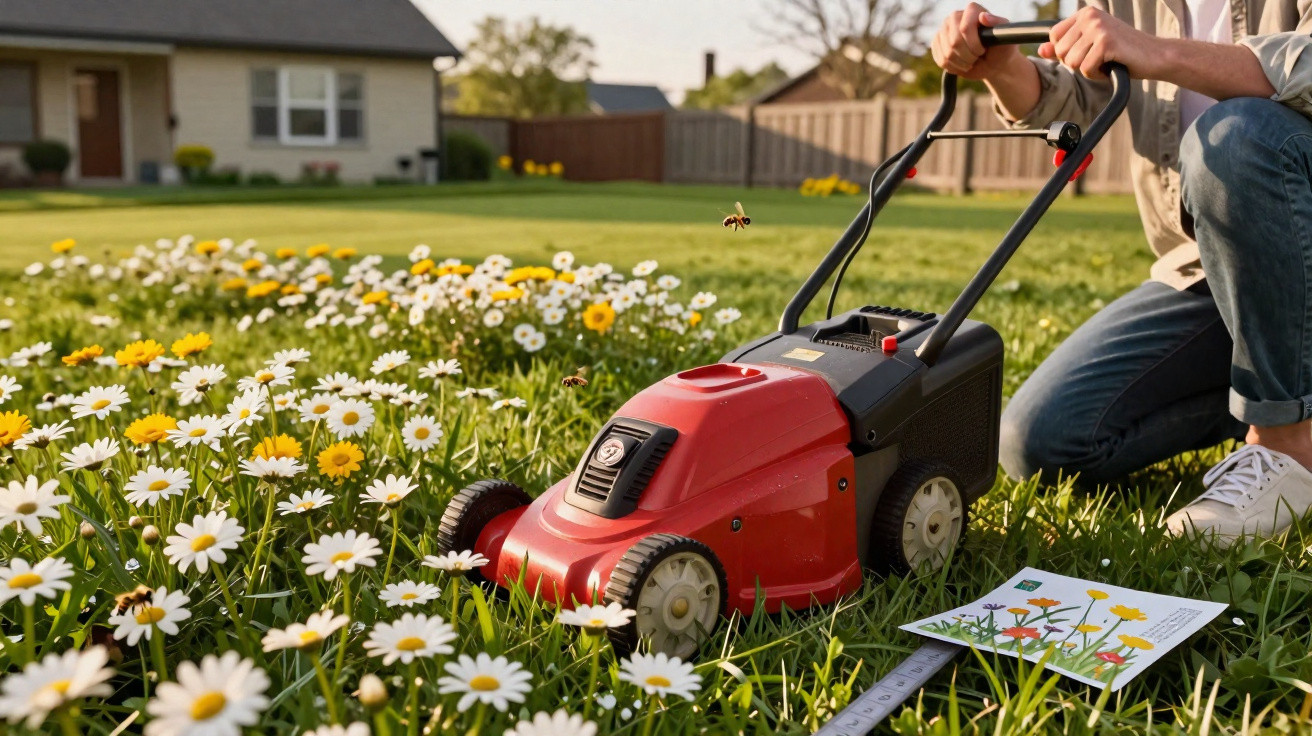
When you take the lawn mower out for its first run in spring, the same question often comes up: should those small white flowers be removed so that the lawn looks perfectly even? Experts say the opposite is the better approach. Daisies are not a sign of neglect; they are a strong indicator of a lively, resilient garden – provided you set the lawn mower correctly.
Why daisies are a bonus for your lawn
For years, daisies have been labelled “weeds” that do not belong in an immaculate green lawn. In fact, they can reveal a great deal about the condition of your soil. If they are growing in large numbers, this usually points to healthy ground that has not been over-fertilised.
“Daisies indicate that the soil is breathing and that the greenery is working as a natural ecosystem rather than an artificially maintained surface.”
Their presence suggests that the soil:
- is not overloaded with nitrogen;
- is not being stressed by harsh chemicals; and
- contains plenty of life below ground.
For family lawns, this flower offers another advantage: it withstands foot traffic remarkably well. Its low-growing rosette sits close to the ground, coping with football games, paddling pools and picnic blankets better than many a “premium lawn”, which can quickly turn yellow or develop bare patches.
At the same time, daisies create a living, low plant cover that shades the earth. This means the soil dries out more slowly on hot days. The lawn stays fresh for longer without you constantly having to reach for the garden hose.
Early flowers with a role: vital supplies for bees and more
Daisies often open their flowers very early in the year, sometimes before many shrubs and perennials have come back to life. For insects, this can be essential for survival.
“Anyone who leaves daisies in place is providing the first full plate of food for hungry pollinators after winter.”
They are particularly valuable for:
- wild bees, which emerge early and urgently need nectar;
- bumblebees, which are active even in cool temperatures; and
- butterflies, which need to replenish their energy after winter dormancy.
These creatures later visit tomato plants, fruit trees, berry bushes and herbs. By offering them food in your lawn, you indirectly improve the harvest in your own kitchen garden. A lawn dotted with colour therefore becomes the foundation of a functioning garden ecosystem.
The key lawn mower trick: raise the height, reduce the stress
Most damage to lawns is not caused by “weeds” at all, but by mowing incorrectly. The classic mistake is setting the first spring cut far too low to make everything appear neat and tidy. In doing so, many people cut off daisy flowers and buds before they even have a chance to appear.
Professionals take a different approach: they set a noticeably higher cutting height and leave more leaf growth behind.
“Those who allow their lawn to grow a little taller do not get laziness in return, but more flowers, deeper roots and less work.”
How to set your lawn mower correctly
- Set the cutting height to at least 6 to 8 centimetres.
- In spring, do not mow every week; leave longer intervals between cuts.
- Leave some areas completely untouched, such as beneath trees, along edges or in one corner of the lawn.
The higher cut brings several benefits at once:
- Lawn leaves can absorb more light and remain vigorous.
- Daisies can reach the flowering stage and provide nectar.
- The soil remains shaded for longer, reducing evaporation.
- Roots grow further into the ground, making the lawn more resistant to periods of heat.
This creates a cycle that benefits you twice over: less petrol or electricity for the mower, less need for watering, and a lawn that copes better with stress.
Why pulling out daisies is not a good idea
Out of habit, many people reach for a weed puller, knife or even chemicals as soon as flowers appear in the lawn. The effort is considerable, the result is short-lived, and the toughest plants usually survive anyway.
“Anyone who removes daisies from the ground is taking away a free, hard-wearing ‘ground-cover module’ – and making room for genuinely troublesome weeds.”
Their roots are surprisingly firmly anchored. Digging up each plant individually takes time and patience. Rather than fighting nature, it makes more sense to give it some room: daisies fill gaps that might otherwise be dominated by clover, thistles or plantain.
Helping daisies self-seed
If you would like to increase the white carpet across your lawn, there is no need to look for packets of seed. The plants will reproduce by themselves, as long as you do not mow away the crucial moment.
- Give the plants a two- to three-week break from mowing in late spring.
- Allow the flowers to fade and form seed first.
- Consistently avoid selective weedkillers.
- Do not use nitrogen-rich quick-release fertilisers that encourage only a “turbo lawn”.
If the soil is very hard and compacted, light cultivation can help: one pass with a scarifier or making holes with a garden fork is generally enough. The seeds can then make better contact with the soil, germinate more easily and gradually fill bare areas.
Less golf course, more meadow: a change of garden style
The hyper-perfect, closely clipped “English” lawn is becoming less appealing to many garden owners. It demands water, time and money, and in high summer it often looks more like a scorched carpet than living greenery.
“Anyone who welcomes daisies is consciously choosing a more natural, more relaxed garden style.”
The combination of rich green grass and white speckles noticeably changes the atmosphere of a garden. The view feels calmer, the garden appears larger, and the overall effect is closer to a small meadow than a sports pitch. Children pick posies, bees buzz around, and the lawn suddenly tells stories instead of merely being “functional”.
There is also a psychological benefit: choosing not to mow down to the last millimetre takes the pressure off. The garden becomes less of a project and more of a place to breathe. Instead of constantly trying to catch up, you work with nature and accept that living spaces will not look identical everywhere.
Everyday tips for a daisy lawn
A simple plan helps keep your lawn both usable and rich in species:
- Mark out one area as a “play lawn” and another as a “flowering area”.
- Mow paths a little shorter and leave the spaces between them taller, so the layout looks intentional.
- Let border strips beside hedges or fences grow more freely.
- Water less often but thoroughly, encouraging roots to grow downwards.
Daisies generally tolerate frequent trampling well, but it is still worth checking heavily used spots more regularly. Where the soil becomes bare, scatter a few grass seeds; the small white flowers will usually return there by themselves later on.
What else you should know about daisies
The plant’s botanical name is Bellis perennis, and it belongs to the daisy family. “Perennis” means “perennial”, so it remains in the same place for many years. That explains why it reliably reappears in lawns, even after severe winters or dry summers.
Daisy flowers are not only there to look at. Many people use small quantities raw in salads or as decoration on open sandwiches. Anyone with children will know the classic pastime of weaving chains and wreaths. In this way, the lawn becomes a play area, an insect buffet and an attractive feature all at once.
Anyone willing to set the mower a little higher and slightly rethink their idea of a “perfect” lawn gains far more than they lose: less stress, lower costs and a living garden that displays small white stars in the grass for almost the whole year.

Comments
No comments yet. Be the first to comment!
Leave a Comment