
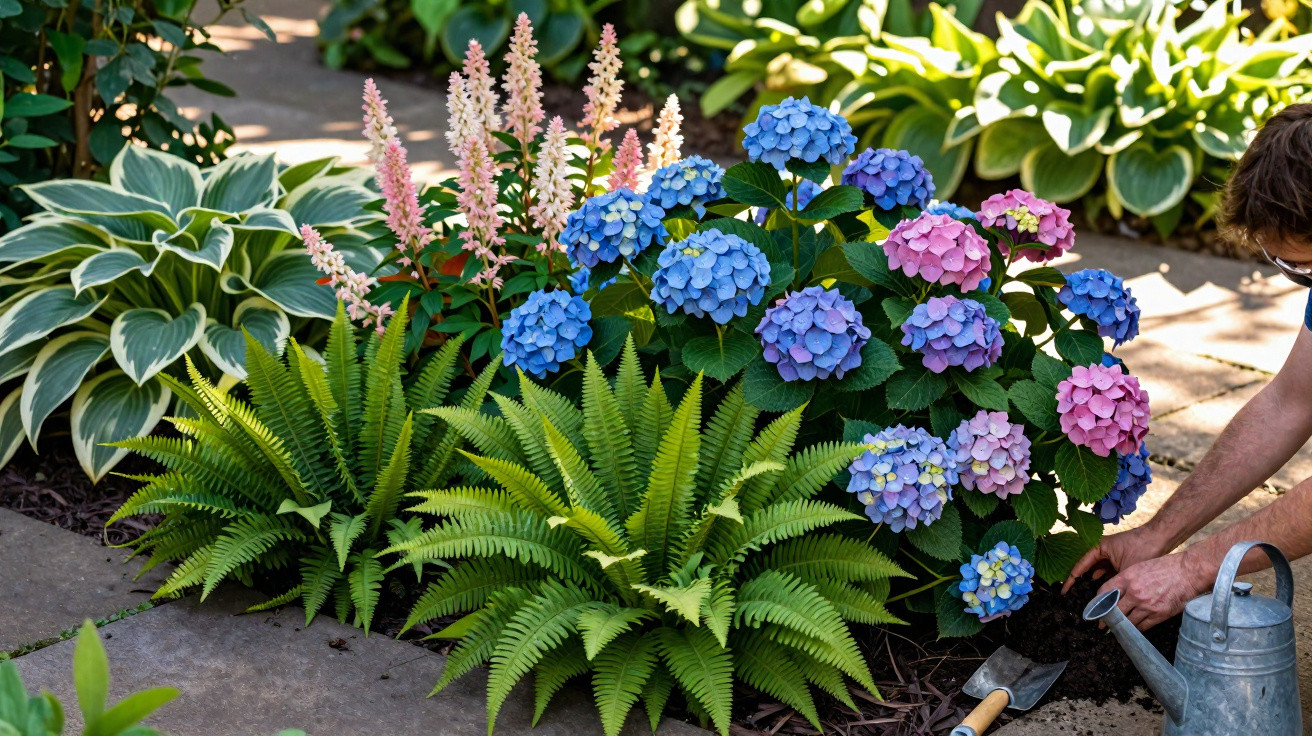
Hydrangeas are often saved not by reaching for the watering can, but by choosing the right planting companions.
Many amateur gardeners become frustrated with their hydrangeas: catalogues show lavish balls of flowers, yet in their own borders the blooms droop after the first hot day. Rather than watering and feeding ever more heavily, it is worth looking at what grows immediately beside the shrubs. Three widely available perennials can support hydrangeas, improve the soil and noticeably extend the flowering season.
Why hydrangeas need strong companions in the border
Hydrangeas originate in relatively cool, moist areas with humus-rich soil. They prefer slightly acidic ground, plenty of organic matter, consistent moisture and a site in dappled shade or partial shade. In many gardens, however, they receive too much sun, too little humus and, above all, are left entirely alone on bare soil.
That is precisely what causes problems. Exposed soil warms up considerably, loses moisture quickly and practically invites weeds to establish themselves. Every heatwave then puts the shallow hydrangea roots under strain. Suitable companion plants create a kind of natural protective canopy for the shrubs.
Well-chosen neighbouring plants create a cooler, more humid microclimate around hydrangeas and significantly reduce heat stress.
Three perennials are especially useful here:
- fern varieties
- astilbes
- hostas
All three enjoy conditions similar to those favoured by hydrangeas, are readily available from garden centres and are considered robust. Together, they form a system that retains water, filters sunlight and protects the soil surface from weeds.
Ferns – living mulch for thirsty hydrangeas
Ferns can appear rather understated in a border, but they play an important supporting role. Their fronds spread across the ground like a loose carpet, creating what is effectively “living mulch”.
This delivers several benefits at once:
- The soil surface remains shaded and heats up more slowly.
- Less water evaporates, so watering intervals can be longer.
- Weeds have far fewer opportunities to spread.
- Hydrangea roots remain in a consistently moist, sheltered area.
Those with a shadier border also benefit from the visual result: fern fronds add depth and texture among hydrangea shrubs. Varieties with finely divided foliage look particularly effective in front of bold hydrangea flowers.
The advantages are clearest during hot summers. While freely exposed hydrangea blocks often look limp by midday, plants with a carpet of ferns around their root area cope better with the hottest part of the day.
Astilbes extend the flowering season in the hydrangea border
Astilbes are almost ideal partners for hydrangeas. They favour fertile, humus-rich, moist soil and grow best in partial shade – exactly the conditions hydrangeas prefer.
Their main strength lies in their flowers:
- dense, candle-like flower plumes in white, pink, red or violet
- a flowering period that often overlaps with hydrangea blooms
- flowers that last well and considerably prolong the colour display in the border
As the first hydrangea flowers gradually turn green or dry out, many astilbes are still in full bloom. This keeps the planted area looking attractive for noticeably longer. At the same time, the perennials cover the ground, retain moisture and leave less room for unwanted weeds.
In a hydrangea border, astilbes are not merely splashes of colour; they also work in the background by shading the soil and helping to maintain even soil moisture.
It is important never to allow astilbes to dry out completely. A thorough watering once a week, together with a thick layer of bark mulch or leaf compost worked into the soil, creates equally good conditions for hydrangeas and astilbes.
Hostas – shade providers and a protective belt against heat
The third element in this protective system for hydrangeas is the hosta. This perennial produces large leaves, often with decorative markings, which stand over the ground like small umbrellas. Planted in groups, they form a real barrier against the harshest afternoon sun.
For hydrangeas, this has several effects:
- The sensitive root zone stays shaded for longer.
- Solar heat does not reach the base of the plant directly.
- Temperature fluctuations over the course of the day are less severe.
There is also an interesting side effect: slugs favour hosta leaves over many other plants. Combining the two can redirect some of the slug frustration away from hydrangea foliage and towards the hostas. Protection is still needed, but the feeding damage is distributed differently.
Hostas are available in countless varieties, from almost white leaves to green-and-yellow patterns and deep blue shades. Combined with pink, blue or white hydrangeas, they can create a highly harmonious, almost painterly effect.
A simple planting plan around hydrangeas
Anyone without experience of perennial borders can follow a straightforward layout. It works just as well for beds beside house walls as it does for larger borders or small front gardens.
| Position | Plant | Role |
|---|---|---|
| Centre | Hydrangeas | Flowering focal point, basic framework of the border |
| Around the centre | Hostas | Sun protection, shade provider, structural plant |
| Background / gaps | Fern varieties | Living mulch, moisture retention |
| Brighter sides / foreground | Astilbes | Colour accents, longer flowering, ground cover |
Spacing is very important. Hydrangeas need air circulation and room to grow, otherwise the risk of fungal diseases increases. As a broad guide, leave at least 80 to 120 centimetres between two hydrangeas, depending on the variety. Plant hostas staggered in front, allowing 40 to 60 centimetres between them. Ferns and astilbes can then fill the spaces without crowding the shrubs too closely.
Care mistakes that weaken hydrangeas despite good neighbours
Even with ideal companions, hydrangeas remain demanding plants. A few common mistakes should be avoided:
- Constant waterlogging: Soil should be moist but never boggy. Plan drainage in heavy soils.
- Full midday sun: Plants, especially in south- and west-facing positions, quickly reach their stress limit. An east-facing site or dappled shade beneath trees is better.
- Soil that is too nutrient-poor: Pure sand or ground containing builders’ rubble is unsuitable. Improve it generously with compost, bark humus or specialist hydrangea compost.
- Hard pruning at the wrong time: Many varieties flower on the previous year’s wood. Cutting everything back in spring means losing the flowers.
Ferns, astilbes and hostas can reduce maintenance somewhat, as watering routines and weed pressure become easier to manage. Hydrangeas still require attention, however.
How climate and location affect the trio
The success of this combination depends greatly on the site and climate. In very hot regions with clay soil, a thick mulch layer of leaves or bark compost is worthwhile so that astilbes and hostas can cope well with summer. In cooler, wetter areas, an open soil structure helps to prevent waterlogging.
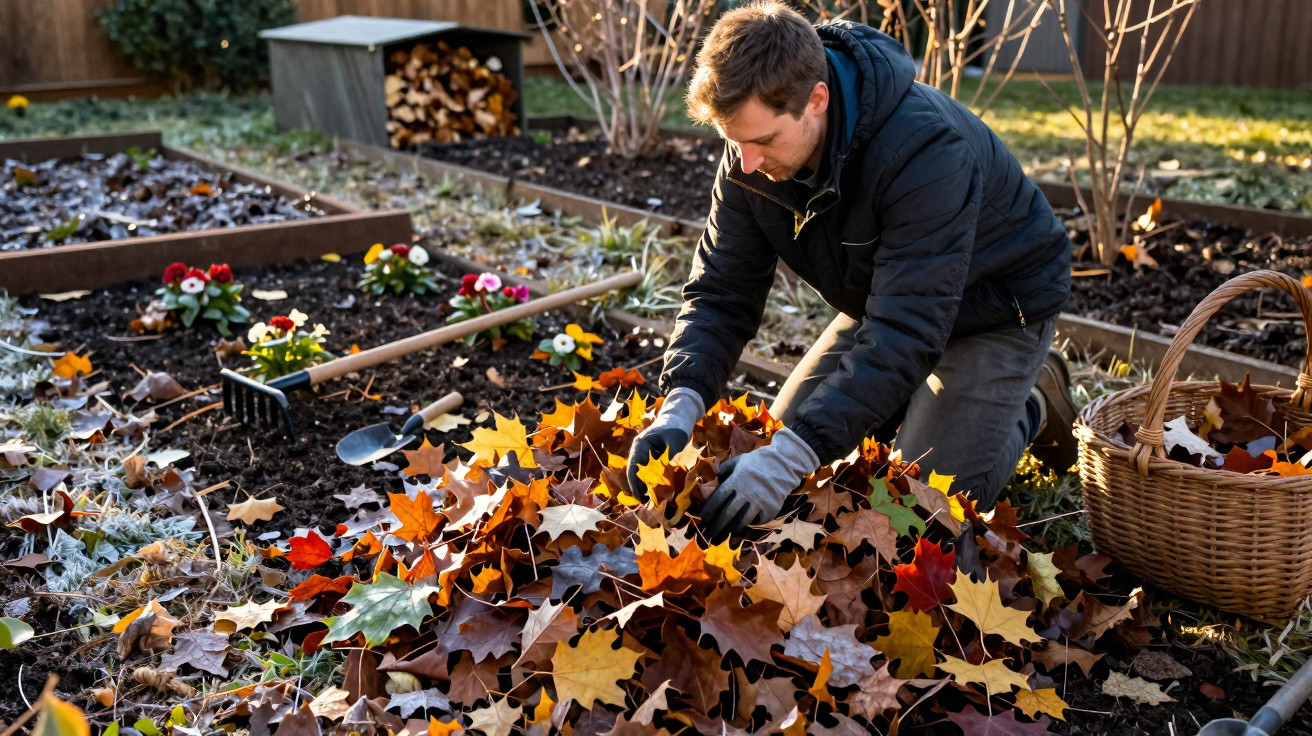
For sandy soils, mix in plenty of compost, well-rotted manure or planting compost when planting. An annual layer of leaves in autumn also acts as a slow-release fertiliser and keeps the soil open. In this way, all four main players – hydrangeas, ferns, astilbes and hostas – benefit at the same time.
Practical examples for small and large gardens
In a terraced-house garden with only a few metres of depth, a row of hydrangeas along the fence is often enough, with a loose chain of hostas in front and two groups of astilbes at the sides. Individual clumps of ferns can be planted between them to form a visual transition towards the lawn.
In larger gardens, a curved border can divide the lawn from the patio. Hydrangeas provide the backdrop, astilbes create banners of colour, ferns draw the eye into the distance, and large-leaved hostas add calm green areas between them. Those using blue-flowering hydrangeas can deliberately combine them with white-flowering astilbes and blue-green hostas – the result looks particularly cool and elegant.
If you are unsure which varieties genuinely work together, the simplest guide is the labelling at the garden centre: perennials marked as suitable for “partial shade, moist soil” are in a similar category and will often complement the trio described here.
The result is a border that does not merely look impressive in photographs, but also offers practical benefits: less watering stress, fewer scorched leaves and hydrangeas that last noticeably longer – year after year.
Comments
No comments yet. Be the first to comment!
Leave a Comment