
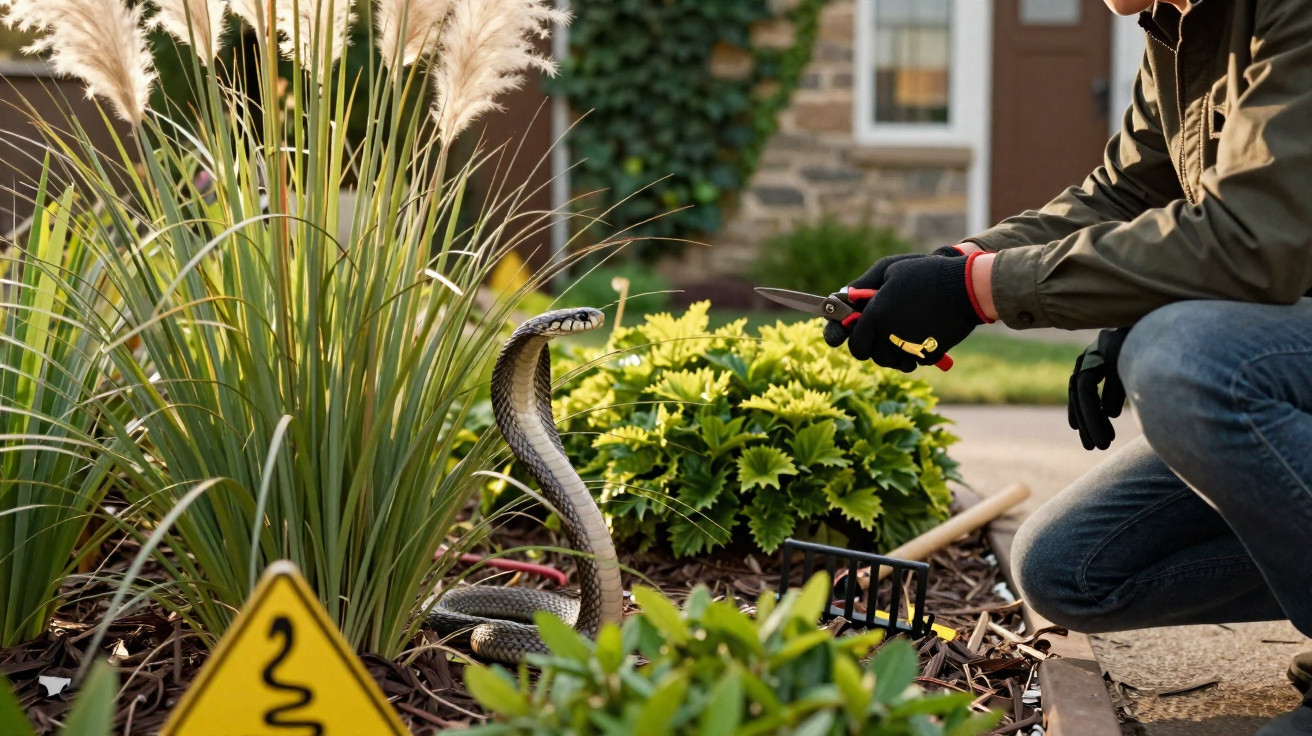
When temperatures begin to rise again after winter, it is not only the lawn that comes back to life. Native venomous snakes become active too – and certain plants right beside the house can seem like an invitation. Anyone who values their garden should understand which plants snakes are especially likely to use for cover and how the risk around the home can be reduced substantially.
Why snakes suddenly appear in the garden from mid-March
As soon as the ground reaches around 12 to 15 degrees during the day, many snakes emerge from their winter refuges. In lower-lying areas, this often happens around the middle of March. At that point, they are mainly looking for two things: warmth and shelter.
“Snakes are cold-blooded and seek out places that warm up well while also concealing them from predators.”
Typical domestic gardens often provide exactly this combination: densely planted beds, ground cover, low walls, patio edges and rock gardens. No plant has a magical pull on snakes, but some create conditions that are close to perfect for them.
The three types of plant snakes particularly like to use
1. Pampas grass: decorative – and an ideal refuge
Striking pampas grass, with its tall, feathery flower plumes, features in many front gardens, often planted alone as a focal point or in ornamental borders. It develops into a huge, dense, straw-like clump whose interior is rarely seen by people.
This is precisely why snakes find it so appealing:
- Its leaves create an exceptionally dense, almost impenetrable base.
- Heat builds up inside the clump, even after the sun has gone down.
- Very little can be seen from outside, so the plant acts as a secure screen.
- Insects, small rodents and lizards often gather nearby, providing ideal prey.
Many gardeners are unaware that some regions classify pampas grass as an invasive, non-native species and restrict its planting. Alongside the ecological issue, there is another consideration: anyone who would rather not have snakes immediately beside the patio should think carefully about whether this plant is really the right feature next to a seating area.
2. Dense ground cover: a green carpet that provides camouflage
Ground-cover plants are regarded as easy to maintain, useful for suppressing weeds and neat-looking throughout the year. However, many create a concealed maze at ground level that people rarely notice. Snakes are particularly comfortable in these conditions.
Especially problematic are very compact, almost fully closed carpets of planting, including:
- creeping juniper varieties with dense needles;
- broad-spreading ornamental shrubs growing close to the ground;
- low, cushion-forming perennials with heavily branched shoots;
- overgrown mixes of several ground-cover plants left untrimmed.
A network of hollow spaces develops between the stems, retaining moisture and warmth. From above, it simply appears to be an innocent green expanse, but underneath is a sheltered passage where snakes can move without disturbance.
3. Ivy-like and creeping plants around walls and stonework
Climbing or creeping plants trailing across stones, walls and steps create further hiding places. South-facing spots, where sunlight falls on the stone for long periods, are particularly attractive.
Common problem areas include:
- planted dry-stone walls with numerous gaps;
- rock gardens with loosely layered slabs and crevices;
- patio edges where plants hang over steps;
- old walls with damaged areas that create cavities behind them.
“Stones retain heat, while plants provide shade and camouflage – creating a small microclimate perfectly suited to snakes’ needs.”
What garden owners should do before mid-March
Adapting the garden in good time makes snakes less likely to settle immediately beside the house. In many cases, this can be done without drastic changes.
Create a clear zone at ground level
One simple but effective measure is to clear the base of shrubs and ground-cover plants. Specialists recommend leaving roughly 15 to 20 centimetres between the ground and the lowest shoots.
In practice, this means:
- tying up or lightly cutting back hanging branches;
- removing old leaves beneath shrubs;
- carefully thinning tangled plant carpets.
Snakes feel less secure where light reaches the ground. They tend to avoid places where birds or hedgehogs can spot them easily.
Check stone features and walls
Anyone with a south-facing patio next to a stone wall or rock garden should inspect these areas particularly carefully. Such combinations heat up strongly and remain warm well into the evening.
Useful measures include:
- resetting loose stones and closing cavities;
- clearing old plant material from between stones;
- cutting back or relocating heavily overgrown plants;
- avoiding dense cushion plants directly beside entrances.
A typical risk scenario is a sunny patio with a low wall in front of it and plants trailing over the top. The stones hold warmth while the shoots form a tunnel-like route. Tidying this area early in the year removes that protected passage for snakes.
Rethink mulch and ground coverings
Thick layers of bark mulch or chipped wood act like an insulating blanket. The gaps between the pieces can provide suitable hiding places.
“Light-coloured mineral coverings such as gravel or grit generally warm up less and offer hardly any gaps – a clear disadvantage for snakes.”
Particularly around paths, seating areas and play spaces used by children and pets, replacing organic material with mineral covering can reduce the risk significantly.
Legal position and what to do if you encounter a snake
Native snake species are protected in many European countries. Wild animals must not be caught or killed, and their refuges must not be destroyed. The recommended approach is to guide their habitat rather than fight the animal.
For everyday gardening, this means:
- adapting the area around the house instead of pursuing snakes;
- deliberately creating retreat areas in more remote parts of the property;
- keeping leaf piles and wood stacks away from the patio.
If an encounter does happen, remain calm. Keep your distance, step back slowly and leave the animal an escape route. Snakes generally only attack when they feel threatened or have no way out.
If an animal remains near house entrances or heavily used areas for an extended period, local fire services, wildlife conservation groups or relevant authorities can advise on the appropriate action.
How children, pets and keen gardeners can protect themselves
A few routine precautions can greatly reduce the risk of bites without anyone needing to live in constant fear.
- During spring and summer, wear sturdy shoes rather than sandals in the garden.
- Use gardening gloves when reaching into dense vegetation or beneath stones.
- Explain to children that they must not touch or corner unfamiliar animals.
- Keep dogs on a lead where they like to jump into dense bushes.
A quick check of concealed corners before starting garden work is often enough to prevent unwelcome surprises.
Why fewer hiding places by the house does not mean being hostile to snakes
Many garden owners want to provide for wildlife while also avoiding snakes resting directly outside the living room. These aims can be reconciled by deliberately separating different zones of the garden.
One practical option is to create a “wilder area” at the far end of the property: a pile of wood, stones and leaves that can serve as winter accommodation for hedgehogs, amphibians, insects – and potentially snakes. If it is at least 20 metres from the patio and house entrance, activity shifts towards that area. The space close to the home can remain tidier and easier to oversee.
Reducing particular plants directly beside the house, such as very dense pampas grass, extremely compact ground cover or heavily overgrown wall crevices, also lowers the risk considerably – without giving up a lively, species-rich garden.

Comments
No comments yet. Be the first to comment!
Leave a Comment