
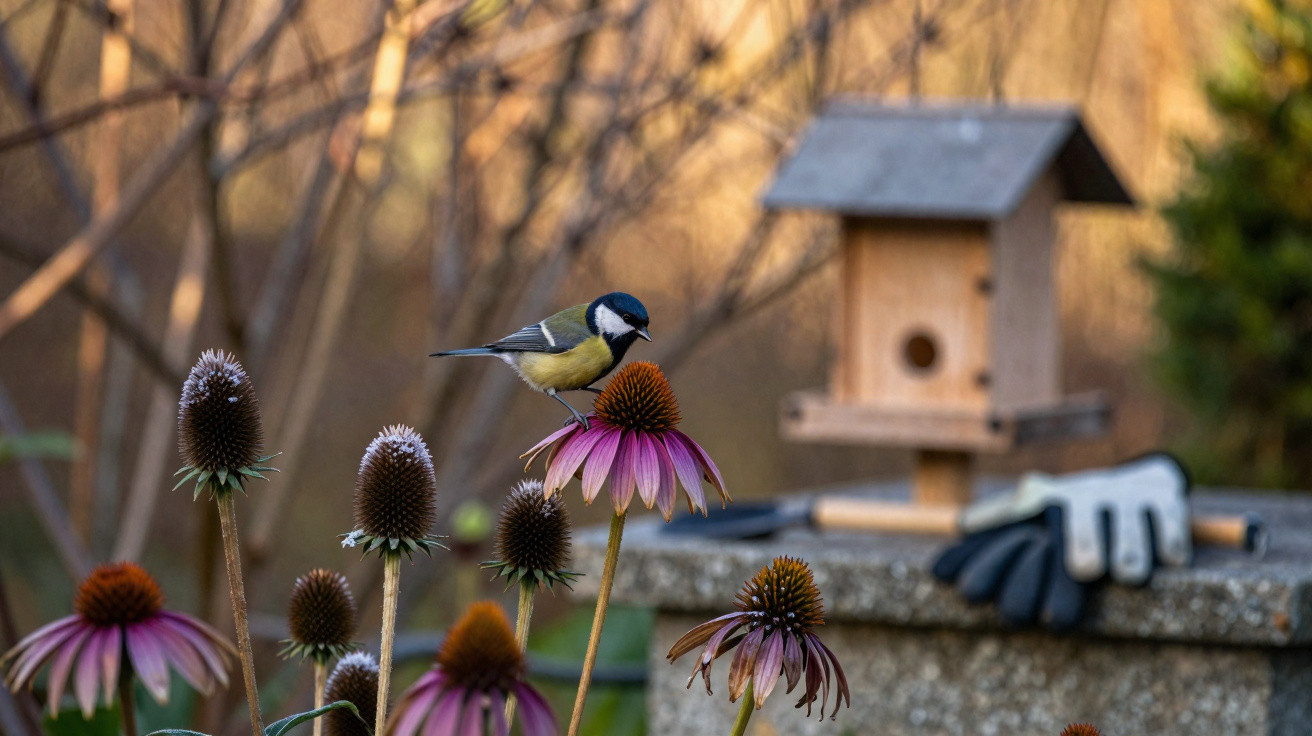
It need not be that way. A nearly forgotten perennial can turn bare borders into a lively buffet for birds.
Many amateur gardeners fill bird feeders in winter, yet wonder why only the occasional tit or other songbird visits. The answer starts not in December but in spring: planting the right perennial now creates a natural food source that keeps working through winter, without constant refilling or dirty feeders.
Why spring planting creates a bird-rich winter garden
The crucial planting window runs from mid-March to the end of April. By then, the ground is no longer frozen but still holds plenty of moisture. Perennials planted during this period have time to develop deep roots before the first heatwave arrives.
Waiting until the weather is properly warm makes life far harder for the plant. It then has to grow, flower and cope with dry spells at the same time. This drains its energy and can reduce flowering – leaving fewer seeds for birds later in the year.
“Planting in spring determines whether the garden is quiet in winter – or whether tits, finches and other visitors are constantly active.”
The aim is not to replace conventional bird feeders entirely. A more sensible approach combines naturally available garden food with supplementary feeding on exceptionally cold days. One particularly tough perennial plays the leading role here.
Purple coneflower: why Echinacea is so valuable for birds
The perennial in question is purple coneflower, botanically known as Echinacea purpurea. Although it is grown as an ornamental in many gardens, its importance to birds is often overlooked.
Its key feature is the flower centre. Once flowering has finished, it develops into a firm, dark-brown cone. This seedhead contains countless tiny fruits, known as achenes. Inside are oil-rich seeds packed with fats and proteins. Small songbirds need precisely this energy in winter to maintain their body temperature.
Tits, goldfinches and greenfinches particularly benefit from this nutritious food source. They pick the seeds directly from the dried flowerheads. The sturdy stems also provide a perch at a safe height – an advantage over food scattered on the ground, where mice and rats can easily take it.
- Fats and proteins: ideal for getting through cold nights
- Strong stems: a safe landing place for lightweight songbirds
- Long-lasting seedheads: seeds remain available for weeks
- Little maintenance: once established, the perennial largely looks after itself
Purple coneflower belongs to the daisy family, tolerates temperatures of minus 20 degrees and below, and can remain in the same position for ten years or more when cared for properly. Each spent flowerhead becomes a small “snack dispenser” for winter – giving one plant benefits across two seasons.
How to plant Echinacea correctly: timing, position and quantity
The best time for planting is from mid-March until the end of April, once severe overnight frosts are no longer expected. At this point, the soil retains residual moisture while warming a little more each day. This enables the plants to establish deep roots before the summer sun becomes intense.
Choosing the right garden position
Echinacea thrives in full sun. A location receiving at least six hours of direct sunlight daily is ideal. Planting it near a patio or within view of a window is worthwhile, as it lets you watch the bird activity later on.
The soil needs to drain freely. This perennial does not cope well with waterlogging, particularly in winter. Heavy clay soil benefits from a straightforward improvement before planting.
Planting Echinacea step by step
- Loosen the planting area to a depth of around 20 centimetres.
- In heavy soil, mix in two handfuls of sand and one handful of fine gravel.
- Briefly immerse the plant in water until no more air bubbles rise.
- Plant it at exactly the depth it sat in its pot – neither deeper nor higher.
- Water thoroughly so that the soil settles around the rootball.
Allow 40 to 50 centimetres between plants in a border. For a dense and attractive perennial strip, plant up to five specimens per square metre. During the first summer, watering is only needed during prolonged dry periods. Once established, the deeply rooted plants usually manage without additional watering.
“Leaving every stem standing in autumn automatically creates a bird buffet for several months – free of charge, right outside the living-room window.”
The most important rule: do not cut back spent flowerheads
In autumn, many gardeners reach for the secateurs and meticulously tidy their perennial borders. From a bird’s perspective, this is the worst possible choice. Every removed seedhead takes away hundreds of seeds that could provide valuable winter food.
Instead, leave the dry stems in place throughout winter. The seeds keep surprisingly well in the open air and rarely go mouldy. Their elevated position also makes them difficult for rodents to reach.
This creates a secure feeding place for birds. Even in windy conditions, they can cling to the sturdy stems and feed undisturbed. You can watch the activity comfortably from indoors without continually adding fresh food.
A natural food source instead of a problematic bird feeder
Bird feeders have their advantages, but they also involve risks. Leftovers exposed to rain can quickly spoil, while dirty feeders can encourage the spread of disease. Excess food left on the ground can easily attract rats and mice.
Bird conservation organisations therefore recommend creating natural food sources in the garden. Seedheads, berry-bearing shrubs and insect-rich areas all help birds feed in a way that is as natural as possible. Purple coneflower fits this approach perfectly: there is nothing to clean, nothing to refill and no clumping seed mixes.
Combining Echinacea sensibly with bird feeders
- Use bird feeders only on frosty and snowy days, rather than continuously.
- Remove old food remains regularly and clean the feeding station.
- Position feeders some distance from natural food plants to reduce stress among birds.
- Allow other seed-producing plants, such as sunflowers or thistles, to grow in the garden as well.
A perennial border containing Echinacea then acts as a lasting basic food supply. Bird feeders become emergency provision during extreme weather. Birds can choose for themselves where they feed.
Benefits for insects, appearance and health
Purple coneflower offers more than food for birds. In summer, its large purple flowers attract numerous wild bees, bumblebees and butterflies. Anyone wanting more life in the garden gets a double benefit: buzzing in summer and fluttering in winter.
The perennial is also visually appealing. Its vivid colours work well with grasses, Rudbeckia or sage. In naturalistic borders, Echinacea can be paired with native species such as greater knapweed or yarrow. The result is a varied habitat that provides structure for many months.
Many people also know purple coneflower from pharmacy shelves. Extracts from the plant appear in some cold remedies. For garden use, its toughness matters most: diseases and pests rarely cause the perennial problems, making it an appealing option for beginners too.
Practical tips: turning a border into a bird magnet
Anyone wishing to see a clear effect in the garden should plant more than a single specimen. A small strip or group of five to seven perennials is more noticeable to birds and produces more seed.
It works even better when other features are visible nearby: a dense shrub for shelter, a small water basin or a low hedge. Birds feel safer when they can quickly reach cover if necessary.
- Plant several perennials in loose groups rather than as isolated specimens.
- Provide hedges or shrubs nearby for protection.
- Avoid using insecticides in the surrounding area, so there are enough insects for young birds.
- Leave some autumn leaves where they fall, as they contain additional small creatures that can serve as food.
With just a few well-planned measures, a previously quiet border becomes a year-round habitat. It flowers in summer and supplies seeds in winter – while tits, finches and other birds provide free entertainment outside the window.
Comments
No comments yet. Be the first to comment!
Leave a Comment