
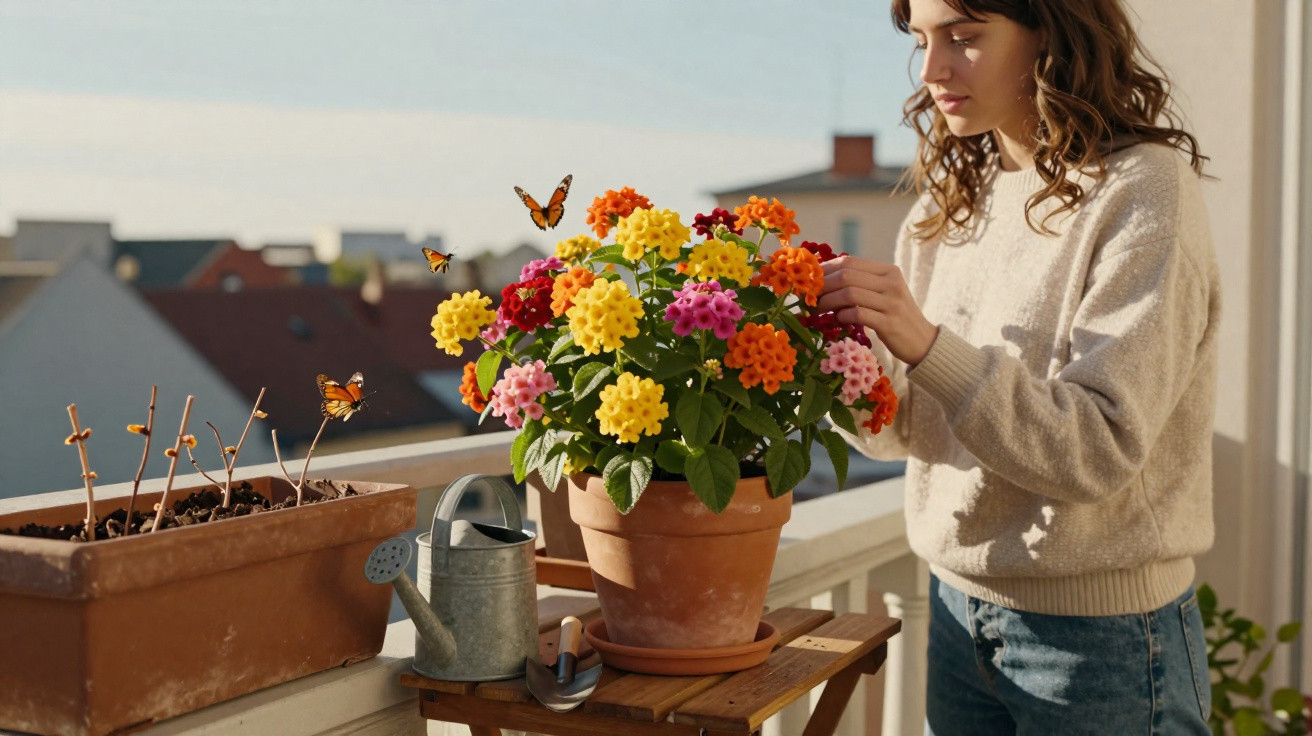
Lantana camara is a little-known ornamental plant that flowers not merely through summer, but almost continuously in every season. Long after other flowers have finished, this shrub still produces buds, blooms and berries – outshining many popular garden plants in the process.
A flower that simply never stops blooming
Most ornamental plants follow a familiar rhythm: a vigorous start in spring, a rush of flowers in summer, then a gradual finish in autumn. Lantana does not follow that pattern. It keeps producing fresh flower heads whether it is spring, high summer or a mild winter.
Each rounded flower cluster is made up of numerous tiny individual flowers that open in succession. As the earliest blooms begin to fade, new buds emerge behind them. The result is a rolling carpet of flowers with no obvious break.
Lantana camara provides colourful flower balls in almost every month – without complicated care or major demands.
Its range of colours is particularly striking: rich yellow, orange, pink, red and purple may all appear on the same plant at once. Some varieties even change colour as they flower, for example from yellow to orange and then red. The effect can look as though several plants have been combined in one pot.
A winter advantage: it carries on when others give up
The key difference from typical seasonal flowers becomes apparent during the colder half of the year. Many balcony plants enter a dormant period or die back completely. Although Lantana slows its growth in cold conditions, it can continue flowering for an impressively long time when it receives enough light and moderate temperatures.
In mild areas, its colourful clusters can remain visible for almost the entire year. In cooler parts of the country, the plant brings unexpected splashes of colour in a sheltered winter position while everything outside looks grey.
Lantana also compares well with classic spring plants. Bulb plants such as snowdrops often need time to establish themselves and may not flower at all in their first year. By contrast, Lantana gets going very quickly after planting, making it ideal for impatient amateur gardeners.
Undemanding, robust and ideal for the lazy gardener
Anyone with limited time for gardening is well served by Lantana. The plant has become established in tropical regions of the Americas and Africa, where it has learned to manage with very little. It also benefits from this resilience in the home garden or on a balcony.
Easy care like few other ornamental plants
In everyday care, Lantana proves exceptionally undemanding:
- Watering: Needed only during prolonged dry spells; waterlogging must be avoided at all costs.
- Soil: Ordinary garden soil is sufficient, although good drainage is particularly important.
- Feeding: An occasional liquid feed encourages growth and flowering, but it is not essential.
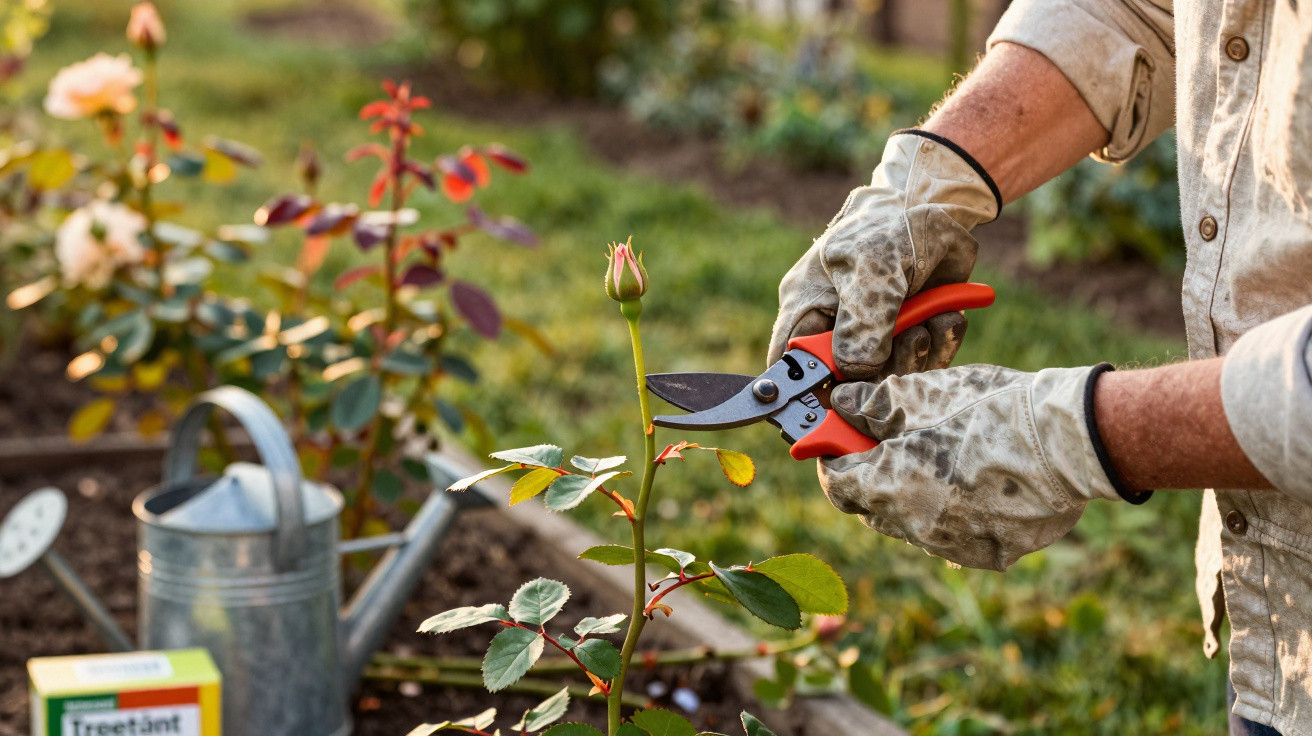
- Pruning: Light trimming shapes the plant and encourages fresh shoots.
- Health: Its natural toughness means it is largely spared many pests and fungal diseases.
While other flowering plants need constant deadheading, staking or protection from aphids, Lantana manages with very little intervention. Spent flower clusters can even be left on the plant, as fresh blooms quickly cover them.
Maximum flowering impact with minimal effort – Lantana is the definition of the “lazy gardener’s plant” for balconies and gardens.
The best position: sunshine pays off
The more light it receives, the more colour it delivers – and this rule applies especially strongly to Lantana. A position in full sun produces dense cushions of blooms and intensely bright shades. It will continue growing in partial shade, but it flowers noticeably less freely and its colours appear paler.
Lantana is therefore an excellent choice for window boxes, sunny patios or beds beside a warm house wall. Those with only an east- or west-facing balcony can still try it, although they should expect slightly less flowering power.
Lantana in pots: a year-round bloomer in cooler regions
Lantana cannot tolerate frost. In places with cold winters, it is therefore commonly grown in pots. The approach is straightforward: keep the plant outdoors in summer, then move it indoors or into a conservatory for winter, placing it somewhere cool and bright.
Practical advice for growing in containers:
- Choose a pot with drainage holes and add a layer of expanded clay or gravel at the bottom.
- Use free-draining compost, such as potting compost mixed with a little sand.
- Water regularly during summer, but never allow the roots to stand permanently in water.
- Bring the plant indoors before the first night frosts; 8–15 degrees and plenty of light are ideal.
- Trim it lightly in late winter so that it begins the new season compact, vigorous and ready to flower.
Anyone following these points can often keep their Lantana for several consecutive years. Each year, it becomes stronger, more branched and more impressive.
A magnet for butterflies, bees and birds
Lantana does more than please the eye; it also supports garden wildlife. Its almost uninterrupted flowering provides food for pollinators even when few other plants are in bloom. In dry summers especially, when many other plants pause, butterflies can be seen crowding around its brightly coloured flower clusters.
Bees also make use of this nectar source, particularly in sunny built-up areas with few wild plants. After flowering, Lantana produces dark berries that attract various bird species. In this way, the plant combines ornamental value with an ecological role.
Lantana turns even the smallest balcony into a mini oasis for butterflies, wild bees and birds.
For anyone already growing perennials such as Asiatic lilies, Lantana makes an ideal companion. While the lilies take centre stage for particular weeks, Lantana fills the gaps before and after their main flowering period. This creates a continuous flowering calendar without the need to keep planting new additions.
Using Lantana in the garden: ground cover, hedge or colourful accent
Lantana offers a surprisingly broad range of design options. Depending on the variety and how it is pruned, it can be used in different ways:
| Use | Characteristic |
|---|---|
| Ground cover | Spreads low and quickly covers bare areas |
| Low flowering hedge | With regular trimming, ideal beside paths or patios |
| Container plant | Can be positioned flexibly and suits small balconies too |
| Colourful accent in a bed | Planted among perennials, it extends the flowering season in the bed |
Thanks to its rapid growth, Lantana fills gaps in beds in a short time. However, gardeners who do not keep this growth in check may find it covering neighbouring plants. Pruning once or twice a year restrains this tendency while also encouraging more branching and even more flowers.
What to know about Lantana
Despite all its advantages, garden enthusiasts should bear a few points in mind:
- In very warm countries, Lantana is sometimes considered highly invasive and may displace native species. This is considerably less of a concern in Central Europe because of winter cold.
- Leaves and unripe berries are described by many sources as mildly toxic, especially to pets and small children. Anyone wishing to be cautious should keep pots out of reach.
- The plant copes better with drought than with excessive water – it is better to water too little once than too much all the time.
For beginners, a small trial is worthwhile: one pot on a balcony or beside the front door is enough to get a feel for its growth, watering needs and pruning. Many amateur gardeners then expand their collection with more colours because they no longer want to be without its continuous flowering.
Why this “unknown” flower deserves more attention
While exotic orchids and delicate houseplants are explained at length in gardening guides, Lantana often receives only a passing mention. Yet it represents the exact opposite: minimal care with maximum impact. Anyone who has repotted a Monstera or spent months keeping a sensitive orchid happy will notice the difference straight away.
For people with little time, beginners without gardening experience, or owners of small city balconies, Lantana offers a simple route to more colour and life in everyday surroundings. A sunny spot, a sufficiently large pot and some water are enough – the plant does almost everything else by itself.
At a time when many people are looking for plants that are both easy to care for and ecologically meaningful, Lantana fits the trend remarkably well. It shows that continuous flowering, wildlife friendliness and convenience need not be mutually exclusive, but can ideally go hand in hand.

Comments
No comments yet. Be the first to comment!
Leave a Comment