
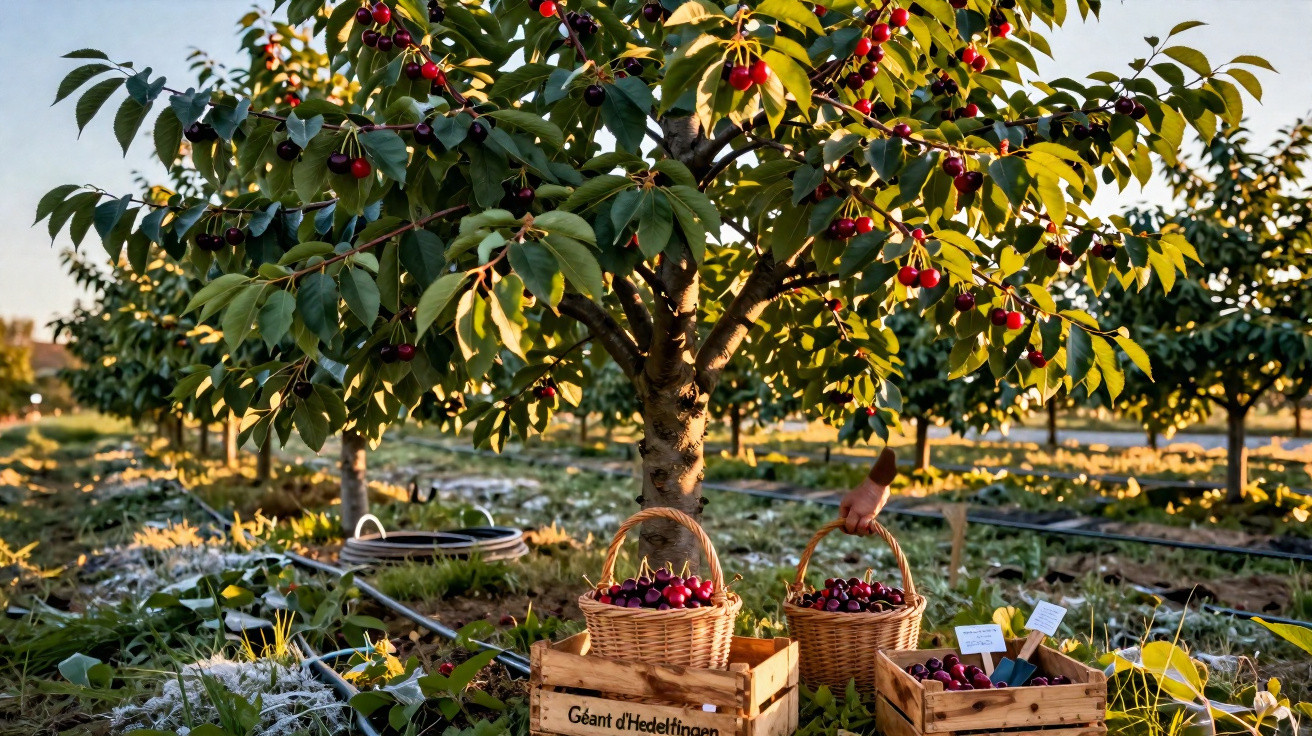
If you have ever looked out at frozen cherry blossom on an April morning, you will know the feeling: an entire summer’s dream can be ruined overnight. One year, a frosty night destroys the flowers; the next, a downpour splits fruit that is nearly ripe. Add the work of ladders, spraying and pruning, and your cherry tree can eventually feel more like a burden than a pleasure. Then an almost forgotten 19th-century variety, bred in Germany and as tough as a veteran orchard tree, suddenly reawakens your enthusiasm for cherries.
The nearly forgotten variety that fills baskets
Known as ‘Géant d’Hedelfingen’, this variety originally came from a district of Stuttgart. It is a bigarreau sweet cherry (Prunus avium) selected around 1850. Although it became established in traditional meadow orchards, it later disappeared from many home gardens.
The tree has moderately vigorous growth, usually reaching 4 to 6 metres in height and around 3 to 5 metres across. It develops a well-structured crown with strong main branches and gracefully drooping fruiting shoots. Its characteristically steady growth is a particular benefit: it is neither a “monster tree” that immediately casts shade everywhere nor as short-lived as some modern extreme-bred varieties.
By mid-July at the latest, this cherry tree reveals its potential. Its fruit turns dark red to almost black and is large, firm-fleshed, very juicy and distinctly sweet. The cherries are equally suitable for eating straight from the tree or making compote, jam, cherry cake and preserved cherries. Many gardeners familiar with the variety describe it as a “classic family cherry tree” - heavy-cropping, versatile and dependable.
A single tree can give the impression that you have planted a small cherry orchard in miniature.
Why this cherry tree is so exceptionally productive
Its abundant harvests are largely due to a distinctive way of producing blossom. The tree forms so-called “May clusters”: compact groups of flower buds that continue to remain active in the same place. These blossom clusters can stay fruitful for up to four years.
Gardeners who harvest carefully, leaving these clusters intact and simply snipping or gently twisting off the fruit stalks, can enjoy heavy bunches from the same branches for several years in succession.
- May clusters remain productive for around four years
- the same branch can deliver repeated heavy harvests
- considerably less pruning is required
- ideal for anyone who does not want to keep carrying ladders and saws around
This makes the tree feel almost self-sufficient: plant it properly once, give it regular basic care and harvest gently, and it becomes a dependable source of fruit year after year rather than a plant that constantly needs attention.
Late frost? This cherry tree simply flowers later
The variety’s second major advantage appears much earlier in the season. Whereas many common cherry varieties blossom very early, ‘Géant d’Hedelfingen’ waits a little longer. Depending on the region, flowering generally starts from late March and continues into April. As a result, it avoids many of the severe spring frosts that repeatedly decimate other varieties.
It is also notably winter-hardy. The tree copes well with temperatures down to around -15°C. This makes it remarkably robust in areas with harsher springs, at higher altitudes or in the generally wetter north.
Late-flowering, cold-resistant and long-lived - this cherry variety seems made for the temperamental climate of our region.
Protection from heavy rain and extreme heat
The tree continues to show its strengths in summer. Many gardeners know the issue: one or two days of heavy rain arrive shortly before harvest, and some of the sweet cherries simply split. This old Hedelfingen variety has a considerably tougher fruit skin, which is less likely to crack even when rain is heavy before picking.
It is also considered comparatively tolerant of common cherry diseases and pests. Brown rot and leaf spot diseases occur far less often on a major scale, and the variety can be grown successfully in natural, chemical-free gardens. For anyone hoping to garden with as few sprays as possible, this is a tangible advantage.
The secret ace in the fruit garden: a strong pollinator
Another often overlooked benefit is that this cherry tree is an excellent pollinator for other varieties. It produces plentiful blossom, has fertile pollen, and is readily visited by insects. Planting further sweet cherry trees nearby can visibly increase their yields.
The variety works particularly well alongside established tree favourites such as:
- ‘Burlat’ (very early sweet cherry)
- ‘Napoleon’ (old yellow bigarreau cherry)
- ‘Moreau’ (sweet dessert and culinary cherry)
- ‘Van’ (widely grown, aromatic sweet cherry)
When two or three different trees stand 10 to 15 metres apart, the likelihood of abundant fruit set rises significantly again. This turns an otherwise solitary tree into a valuable team player in the home fruit garden.
How to plant this frost-resistant tree for record harvests
The best planting window runs from November to March, provided the ground is frost-free. Many gardeners prefer planting towards the end of winter, when the soil begins to warm and the young tree can get growing straight away.
Choose a location with as much sun as possible; a warm south- or south-west-facing position is ideal. Some shelter from the wind, provided by a hedge or house wall for example, is also helpful. The soil must be deep, loose and capable of retaining water without becoming waterlogged.
| Site factor | Recommendation |
|---|---|
| Light | full sun, at least six hours daily |
| Soil | medium-heavy, humus-rich and well-drained |
| pH value | close to neutral (slightly acidic to mildly alkaline) |
| Wind | a sheltered site where possible, without cold wind channels |
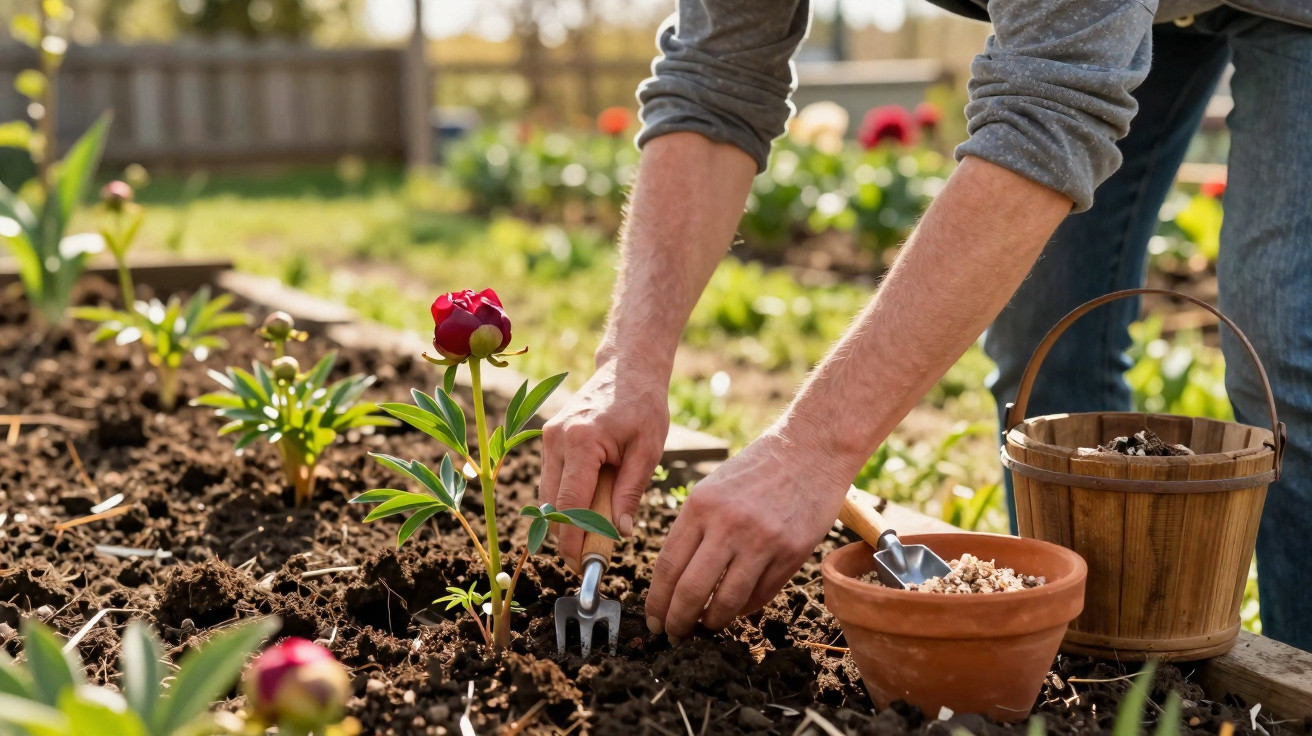
For planting, a hole measuring roughly 60 by 60 centimetres is sufficient, provided it is dug deeply enough to loosen the soil thoroughly. The excavated soil can be mixed with well-rotted compost. Water generously after planting, then apply a layer of mulch. A sturdy stake will support the young tree during its first few years.
Standard, half-standard or compact-growing: which suits your garden?
In a large garden, the tree can show its full potential as a standard. Grafted onto a vigorous rootstock such as wild cherry, it develops into a long-lived, impressive fruit tree typical of traditional meadow orchards.
For smaller gardens, it is worth seeking out less vigorous rootstocks. They restrict growth, keep the final height more manageable and make harvesting possible without a tall ladder. Many nurseries now offer this variety as half-standards or bush trees, with some also suitable for espalier training.
A few thorough waterings during the first summers, together with an annual application of compost in late winter, will normally keep the tree healthy. Pruning needs remain moderate: remove old and dead wood, thin the crown slightly and take out overcrowded shoots - in most cases, nothing more is needed.
Practical tips: getting the very best from the tree
Three everyday points determine the size of the harvest:
- harvest gently so that the May clusters remain intact
- provide enough water during dry early summers
- plant a second cherry tree nearby for pollination
Particularly in the first few years, it pays to water deeply at intervals during prolonged dry spells rather than applying small amounts all the time. This encourages roots to grow further down into the soil, helping the tree tolerate periods of heat more effectively.
If you would rather not let birds take the main share of the crop, place a wide-mesh net over the crown, or protect individual sections of branches, no later than shortly before the fruit ripens. You will never completely prevent blackbirds from taking a certain “share”, but good timing and netting will leave plenty for the kitchen.
Why this old variety is perfectly suited to the present day
Climate change is bringing unpredictable springs, more extreme weather and greater pressure on many fruit varieties. ‘Géant d’Hedelfingen’ combines late flowering, resilience, high yields and straightforward care - qualities that fit modern gardens, where many people want fresh fruit without constant spraying and pruning.
Anyone planning to plant a cherry tree now should seriously consider this old German variety, especially if their garden has already suffered repeated frost-related cherry crop losses. With a little patience in its first years, it can become a tree that outlasts generations and rewards you with full baskets in July.
Comments
No comments yet. Be the first to comment!
Leave a Comment