

Many amateur gardeners wonder each year why their neighbours’ peonies produce full, lavish flowers while their own perennials look rather meagre. The answer lies less in having “green fingers” than in hitting a precise window: with one targeted task completed by 31 March at the latest, you can lay the groundwork for spectacularly large blooms.
Why late March determines the size of your peonies
Peonies need winter cold to form buds properly in the first place. Around six weeks at temperatures of about 4°C is enough for the flower buds inside the plant to develop. Tree peonies can even tolerate temperatures of -15 to -20°C, while herbaceous peonies withstand roughly -10°C.
Less troublesome than severe cold are repeated freezes followed by thaws. These spells can lift the upper root zone, dry out the plant and put it under stress. Although a winter covering of mulch or bark material helps keep the soil stable, it must be adjusted at the right time; otherwise, the soil remains too cold and the plant struggles to get going.
“In the final days of March, a short window opens in which you can set the course for huge peony flowers with very little effort.”
This is precisely the crucial point: as peonies emerge from winter dormancy, they respond especially strongly to targeted nutrients and soil care. If you miss this period, there is very little you can do later in the year to affect the size of the flowers.
The key task: loosen the soil and feed correctly
The method centres on two steps which, together, take no more than ten minutes per plant: gently loosening the soil surface and applying a balanced spring fertiliser.
Step-by-step method
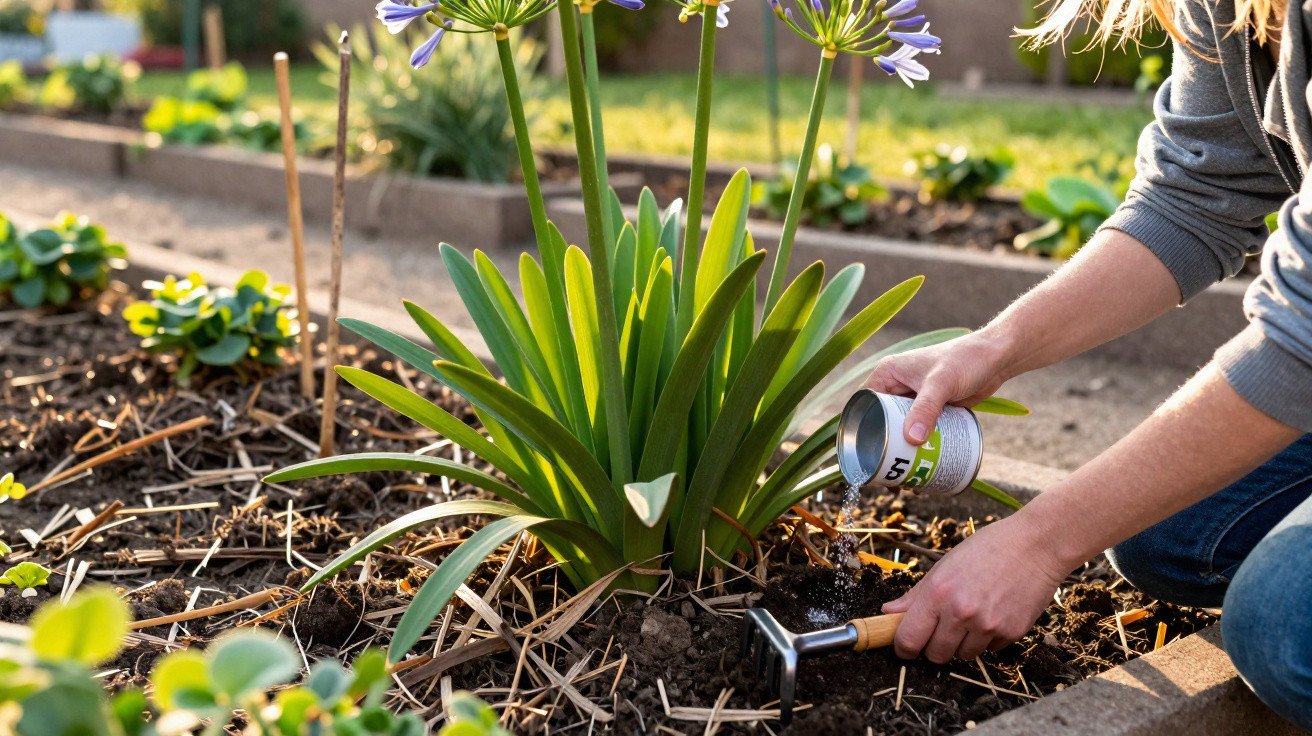
- Push the mulch slightly aside around the plant, within a radius of roughly 20 cm.
- Carefully loosen the top 3 to 5 cm of soil using a small hand cultivator.
- Work in an organic fertiliser combining fast-acting and slow-release ingredients.
- Water lightly so that the soil and nutrients settle.
- If desired, lightly work in a little wood ash to improve stem strength.
The depth of cultivation is important: peonies have fleshy roots that sit very close to the surface. Digging more deeply damages them and causes stress, forcing the plant to direct energy into repair and produce fewer or smaller buds.
The nutrients peonies really need now
An organic blend of readily available nitrogen and a slow-release phosphorus component has proved effective. Many gardeners choose dried animal-based ingredients because they feed steadily over several weeks and encourage soil organisms.
“Around 50 grams of an organic duo per plant is enough to start leaf growth while also forming powerful buds.”
The fast-acting element ensures that the foliage emerges quickly. Phosphorus released gradually supports the developing flower buds for several weeks. This creates what later appears in May and June as “giant blooms”.
After feeding, about one litre of water per perennial is usually enough to moisten the soil and activate soil organisms. The area should be only lightly damp, not waterlogged.
Wood ash, mulch and mistakes: what makes the difference now
Anyone with a fireplace or stove can use small amounts of cold, sieved wood ash. It adds potassium to the soil, strengthening cell walls and making the stems sturdier. As a result, heavy flowers are less likely to snap in a summer thunderstorm.
Important: use only ash from untreated wood, apply it sparingly and mix it well into the surface. Thick layers of ash alter the pH level too drastically.
The most common mistakes at this stage
- Digging too deeply: Driving a spade 15 cm into the soil around a peony cuts through fine roots. This leads to stress and buds that fail.
- Too much nitrogen: Overfed plants make plenty of foliage but few flowers. The perennial may look impressive, yet it will be reluctant to bloom.
- Handling mulch incorrectly: A thick, wet layer of mulch directly against the crown encourages rot and fungal diseases such as grey mould.
Mulch should be 5 to 10 cm deep in winter to soften temperature fluctuations. Once the first red shoots become visible in spring, part of the layer should be removed. The soil needs to warm up without drying out.
“Well-managed peonies can produce flower cups measuring 15 to 20 centimetres across in May and June – the difference starts with the spring timing.”
How to adapt the method for your border and containers
Not every garden has the same conditions. Young plants, container-grown specimens and exposed locations need slight adjustments so that peonies are not overwhelmed.
Treat young peonies gently
Plants that have been in the ground for only one or two years are more sensitive to heavy fertiliser applications. In this case, a smaller amount of the organic duo is sufficient, while the protective mulch layer should remain a little more generous so that the still-shallow root zone does not dry out or suffer frost damage.
With young plants, it is better to build strength gradually than to force giant blooms at all costs. In the first few years, the aim is a robust root system; the large flowers will follow naturally.
Caring for peonies in pots
Peonies in containers suffer more from frost and heat because the growing medium cools down and warms up more quickly. In late winter, move the pot to a sheltered house wall, ideally raising it slightly so that excess water can drain away.
The loosening and feeding process is similar, but must be carried out with particular care: scratch only the very surface and measure the fertiliser precisely, since the restricted volume in a pot cannot buffer nutrient surges as effectively. Use slightly less water after feeding because containers become waterlogged more quickly.
What if your peonies are still struggling?
If the flowers remain disappointing despite the spring routine, check the basic conditions: peonies need at least four to five hours of sunshine each day. In too much shade, they tend to produce leaves rather than flowers.
Planting depth is another frequent cause. Herbaceous peonies need their growth points to sit only a few centimetres below the surface. If they are planted too deeply, they may fail to establish properly for years. In such cases, careful lifting and replanting in autumn is the only solution.
A consistently excessive nitrogen supply can also be an issue, for example when lawn fertiliser reaches the border or very fresh compost is used. Restraint is worthwhile here: moderate quantities of organic fertiliser for flowering plants have proved effective, whereas nitrogen-only feeds upset the plant’s balance.
Extra tips for particularly impressive peony borders
To display peonies to their best advantage, choose companion plants with similar needs that flower at different times. Long-lived perennials such as cranesbill or lady’s mantle fill gaps once the peonies have finished flowering, preventing the border from looking bare.
It is also worth considering the soil itself: a crumbly, humus-rich, well-drained growing medium benefits not only peonies but many other perennials as well. Regularly incorporating mature compost across the bed – but not directly around the crowns – improves the structure and creates ideal conditions for vigorous plants.
| Aspect | For strong peony blooms |
|---|---|
| Timing | By 31 March at the latest, as shoots begin to emerge |
| Soil cultivation | Loosen only 3–5 cm deep, very carefully |
| Feeding | Organic blend with fast and slow action, applied in moderate amounts |
| Mulch | Protective in winter, partly removed in spring |
| Water | Water lightly; avoid waterlogging |
Anyone who makes purposeful use of this brief window at the end of winter will be richly rewarded in May. That is when peonies reveal their potential – provided someone gave them the crucial boost at the end of March.



Comments
No comments yet. Be the first to comment!
Leave a Comment