
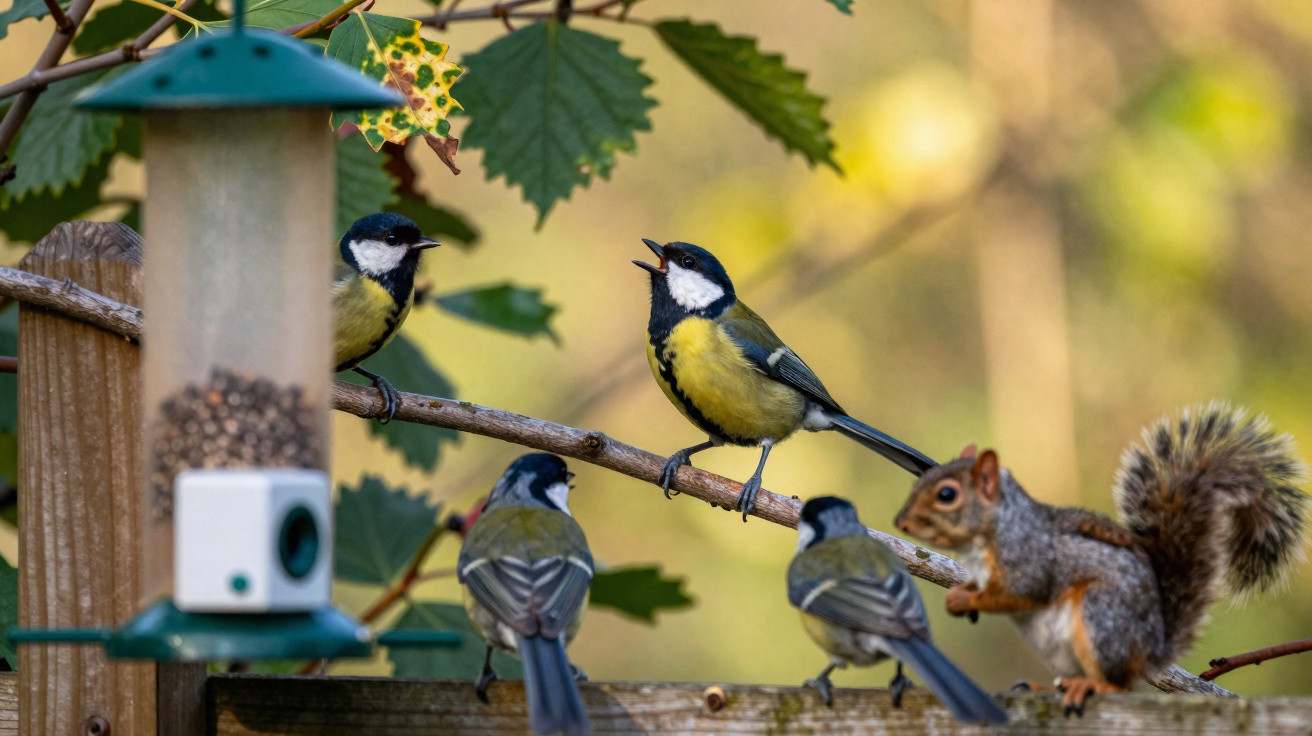
There is far more to this small bird than meets the eye.
Anyone who looks more closely will realise that the tit is not merely a cute regular at the bird feeder. It responds extremely sensitively to changes on the doorstep, from pesticide use to the fragmentation of hedges and trees. This makes it a living barometer of the ecological health of your own garden.
What tits reveal about the quality of your garden
Tits are regarded as indicator species. In other words, their presence, numbers and behaviour reflect the conditions within their habitat. A stable or growing tit population in a garden will usually point to a reasonably balanced miniature ecosystem.
“Where tits choose to stay, it is often not only the feeding spot that is right – food chains, shelter and nesting sites still function reasonably well there.”
If they suddenly disappear despite normally being common in the area, this may be a warning sign. Several mutually reinforcing factors are often responsible: fewer insects, bare gardens, aggressive pest control, heavy traffic or sealed surfaces.
Insect hunters with demanding habitat needs
Tits hunt vast quantities of insects, caterpillars and spiders, particularly in spring and during the breeding season. They require:
- plenty of aphids and caterpillars on trees and shrubs
- untidy corners with spider webs, dead wood and fallen leaves
- hedges rather than sterile fencing
- old trees or nest boxes with cavities
If a garden no longer provides these things, these small songbirds will stay away or rear fewer young. This very response makes them such a useful indicator for home gardeners.
Why tits are considered an “ecological barometer”
Tits are widespread, easy to observe and quick to respond to change. Experts therefore often use them to assess trends in landscapes and built-up areas. Homeowners benefit because they can notice many of these reactions in everyday life.
Short generations, rapid signals
Tits have short breeding cycles and often raise several broods. This leaves them sensitive to changes in the food supply. If insect numbers decline after an intensive spraying period or an exceptionally dry spring, this is often visible in the same year through:
- a later start to breeding
- smaller clutches
- fewer fledged young birds
Anyone watching their garden over several years can identify these patterns. One year with few tits may simply be bad luck, but several poor years in succession are a clear warning that living conditions are deteriorating.
Sensitive responses to chemicals in the garden
Many insecticides affect not only pests but also the caterpillars and beetles that tits feed to their young. There are also gradual effects: when certain insect species disappear, vital nutrients are missing and the young develop less well.
“A ‘tidy’ garden without aphids, caterpillars and spiders is not a paradise for tits, but a drought zone.”
By avoiding chemical products, leaving wild plants to grow and tolerating piles of leaves, you are effectively creating a well-stocked larder for birds.
How to make your garden tit-friendly
For tits to use a garden as a good habitat, they need a combination of food, protection and nesting opportunities. The key is that not every corner needs to look “tidy” – quite the opposite.
Food: from a caterpillar buffet to sunflower seeds
During the breeding season, tits need mainly animal food. Seeds and grains play a greater part in winter. A good mix in the garden supports both phases:
- Deciduous and fruit trees with aphids and caterpillars
- Flowering shrubs that attract insects
- Wildflowers instead of purely ornamental lawns
- Feeding stations with sunflower seeds, oats and fat balls for tits (unsalted and without plastic netting)
Anyone feeding birds continuously should do so as hygienically as possible, clean feeders regularly and dispose of mouldy food to prevent disease from spreading.
Shelter and nesting places
Many tit species use tree holes, gaps in buildings or purpose-made nest boxes. The ideal features are:
- nest boxes with an appropriately sized entrance hole (around 28–32 mm, depending on the species)
- several semi-dense sections of hedge as refuges
- deadwood trunks or sections of trunk in which natural holes can develop over time
If several boxes are put up, they should not be hung directly beside one another in order to avoid stress and competition.
What your observations can specifically mean
Many garden owners notice whether tits are present, but do not know how to interpret what they see. The following table offers a broad guide:
| Observation in the garden | Possible ecological interpretation |
|---|---|
| Several pairs of tits, with busy flight activity in spring | Good insect base, suitable breeding sites, structurally diverse garden |
| Seen only at the feeder in winter | The region is generally suitable, but local breeding sites or hedge structures are lacking |
| Hardly any tits, with many sealed surfaces in the neighbourhood | Fragmented habitats, little food, considerable disturbance |
| Decline over just a few years after redesigning the garden | Too much sealing, pruning of old trees, reduction of wild corners |
Why Europe’s decline in birds also affects your garden
Across many parts of Europe, populations of numerous songbird species have fallen sharply. Species in agricultural landscapes in particular have sometimes lost more than half their individuals. Even if tits are not immediately at risk of disappearing, they experience the same pressures: fewer insects, monocultures and dense development.
A private garden can become an important refuge, provided it does not resemble a car park with ornamental shrubs. Every additional tree, hedge and square metre of wild plants helps create small-scale islands for wildlife.
“Anyone who keeps an eye on their tits receives direct feedback on whether their own garden is habitat or merely scenery.”
Practical tips for everyday life with tits
Even small changes can reveal how the birds adapt their behaviour:
- make the first lawn cut of the year later, so that insects have places to retreat
- do not “treat” every aphid infestation – tits will repay you with fewer caterpillars in the vegetable patch
- avoid wet food in winter, as it spoils more quickly
- provide drinking and bathing opportunities, especially during dry summers
Involving the neighbourhood as well, for example through shared planting activities or by exchanging wildflower seed, strengthens the effect. A single wildlife-friendly garden surrounded by sealed ground quickly reaches its limits; a small network of near-natural plots, by contrast, can make entire neighbourhoods attractive to tits and other species again.
How children and families can learn from tits in the garden
The bird in the front garden is ideal for introducing children to species knowledge and ecological relationships. Simple observation tasks help them recognise patterns: When do the birds arrive? Which calls can be distinguished? How do they respond to changes in the weather?
Questions such as these sharpen awareness of natural processes. At the same time, adults become more conscious that their own garden is not an isolated space, but part of a larger system. The tit thus becomes both an indicator of problems and an incentive to design habitats more thoughtfully on the doorstep.

Comments
No comments yet. Be the first to comment!
Leave a Comment