
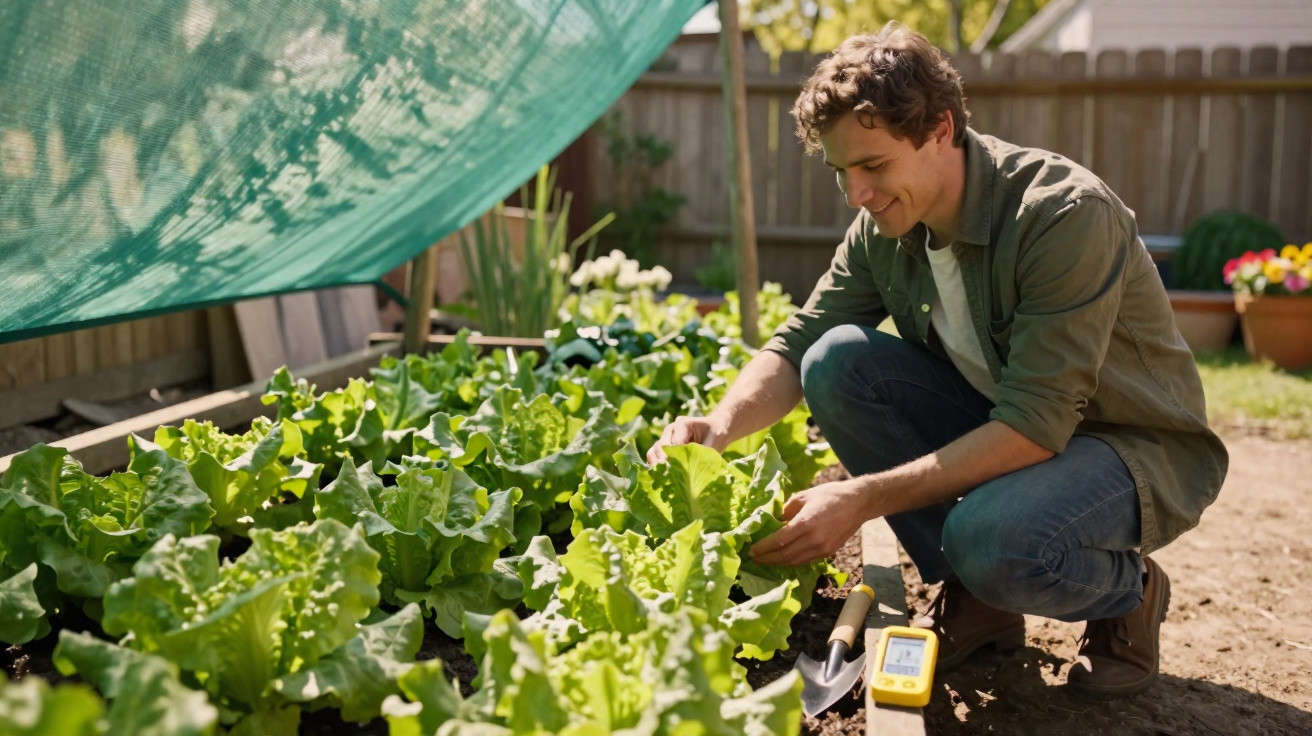
Many home gardeners plant Buttercrunch lettuce eagerly, expecting soft, buttery leaves, only to find themselves faced with limp, bland or bitter heads. The variety is often not the issue; the amount of light is simply wrong. How much sun Buttercrunch can genuinely handle depends greatly on the season, temperature and growing position.
How much sun Buttercrunch lettuce ideally needs
Buttercrunch is a heading lettuce that does not thrive in constant shade or relentless full sun. The usual gardening rule of thumb is:
“Four to six hours of direct sun a day will normally produce sturdy Buttercrunch lettuce plants and flavoursome leaves.”
This makes the variety one of the vegetables that favours partial shade. A position with morning sunshine and afternoon shade works especially well as temperatures rise. It protects the leaves and limits stress responses such as bolting and bitterness.
The season determines the amount of sun
Buttercrunch can receive considerably more sunlight in spring and autumn than at the height of summer. In cool to mild conditions, extra sunshine acts almost like a growth booster.
| Season | Recommended hours of sun per day | Best light exposure | Typical temperature range |
|---|---|---|---|
| Early spring | 6–8 hours | Full sun is well tolerated | 7–18 °C |
| Late spring | 5–6 hours | Morning sun preferred | 13–24 °C |
| Summer | 4–5 hours | Morning sun only | above 24 °C |
| Autumn | 6–7 hours | Full sun is well tolerated | 10–21 °C |
While temperatures remain between roughly 7 and 21 °C, Buttercrunch can cope with as much as eight hours of sun. Once the thermometer starts approaching high-summer levels, less direct light becomes essential: excessive heat combined with blazing sunshine quickly causes stress and loss of flavour.
Warning signs: how lettuce reveals unsuitable light conditions
Buttercrunch communicates its needs quite clearly through its leaves. A quick daily check makes it possible to spot trouble early.
Too little sun: pale, leggy plants
When lettuce receives substantially fewer than four hours of sunshine, these familiar symptoms can appear:
- Long, thin stems: the lettuce stretches towards the light source rather than forming a compact rosette.
- Pale or yellowish leaves: the plant makes too little chlorophyll, causing photosynthesis to slow down.
- Slow growth: heads remain small and yields fall sharply.
- More disease: weaker plants and poorer air circulation increase the likelihood of fungal problems.
If these symptoms appear, move the plants to a better site or at least introduce reflective surfaces and more indirect light.
Too much sun: scorched edges and a bitter taste
The opposite problem usually occurs in late spring or summer, when restaurants are already promoting summer salads and garden temperatures soar.
Common signs of excessive sunlight include:
- Brown, dry leaf edges: known as “tip burn”, particularly on hot days.
- Bolting: the lettuce quickly sends up a flowering stem instead of developing a substantial head.
- Bitter leaves: heat stress alters the plant’s composition and its delicate sweetness disappears.
- Midday wilting despite damp soil: the plant loses water faster than it can replace it.
“If Buttercrunch is drooping at midday even though the soil is damp, it is usually not a watering problem but a light and heat problem.”
The best garden position for Buttercrunch
Choosing the right spot can prevent many difficulties from the outset. Light does not fall uniformly across a garden; even a small plot contains different microclimates.
Spring and autumn: more sun is fine
In northern areas and places with cooler conditions, more exposed sites can also suit Buttercrunch in spring and autumn:
- East-facing beds: ideal because they receive gentle morning sunshine before being shaded from midday onwards by a house, hedge or trees.
- South-facing positions: suitable in moderate temperatures when making the most of available sunlight is beneficial.
Those who sow in succession can replant these areas with fresh lettuce over several weeks, extending the harvest period.
Summer: use shade without putting plants in the dark
During summer, Buttercrunch performs best in partially shaded positions:
- North sides of walls, fences or sheds: the bed is shaded during the afternoon while still receiving sufficient morning light.
- Spaces behind perennials or shrubs: taller plants filter the light and reduce the intensity of midday heat.
Container gardeners have an advantage: pots set on wheeled stands or lightweight saucers can be moved out of the sun quickly when a heatwave is forecast.
Ways to control sunlight deliberately
Not every garden offers ideal conditions, but a few measures can make the light much easier to manage.
Shade netting and natural shade providers
An adjustable shade net stretched over a bed works like sunglasses for lettuce in summer. Versions that block around 30 to 50 per cent of the light are recommended. They can be placed easily over a frame made from bamboo canes or PVC pipes.
Gardeners who prefer to use plants can rely on vegetable combinations. Taller crops such as runner beans, sugar snap peas, sweetcorn or tomatoes can shield Buttercrunch when planted south of the lettuce rows. This creates moving partial shade that protects the leaves during the hottest part of the day.
Mulch, reflected light and thoughtful planning
A light-coloured ground cover can help in two ways: it keeps the soil cooler and reflects diffused light back towards the lower leaves. Pale organic mulch or dedicated reflective sheeting are both options.
Anyone redesigning their garden can achieve a great deal with the following approaches:
- Arrange beds so sensitive crops receive sun in the morning rather than at midday.
- Move lettuce rows regularly, using different parts of the garden according to the season.
- Deliberately create small shaded areas with taller vegetables.
- Observe and note the temperature pattern and position of the sun for several days.
How good light noticeably affects flavour
The correct amount of sunshine has a direct impact on quality and flavour. With ideal light, Buttercrunch produces firm yet tender heads with an almost buttery texture. The leaves stay juicy, gently sweet and mild, and can be picked either as a whole head or one leaf at a time.
“Combining four to six hours of sun with moderate temperatures will usually produce restaurant-quality lettuce.”
Harvest timing also matters: early in the morning, once the plants have recovered overnight and replenished their water reserves, leaves are at their crispest. Immediately after a hot afternoon, they are often more limp and keep less well in the fridge.
Practical advice for beginners and impatient gardeners
For anyone growing Buttercrunch for the first time, a straightforward trial is worthwhile: use two small beds or containers with differing levels of sunshine. Make one relatively sunny with morning light and the other noticeably shadier. Within a few weeks, the direct comparison will clearly show which position works best in your own garden.
It is also useful to monitor peak temperatures. A simple outdoor thermometer is enough. If daytime readings regularly rise above around 27 °C, sensitive lettuces should receive extra shade by then at the latest. Organising this in time means fewer disappointments later with bolted, bitter heads.
Buttercrunch is sensitive, but it rewards gardeners who manage light and temperature carefully with remarkably delicate leaves. Anyone who achieves the balance of four to six hours of daylight, a cooler site during hot spells and reliable watering can turn an ordinary lettuce into a small home-grown delicacy.


Comments
No comments yet. Be the first to comment!
Leave a Comment