
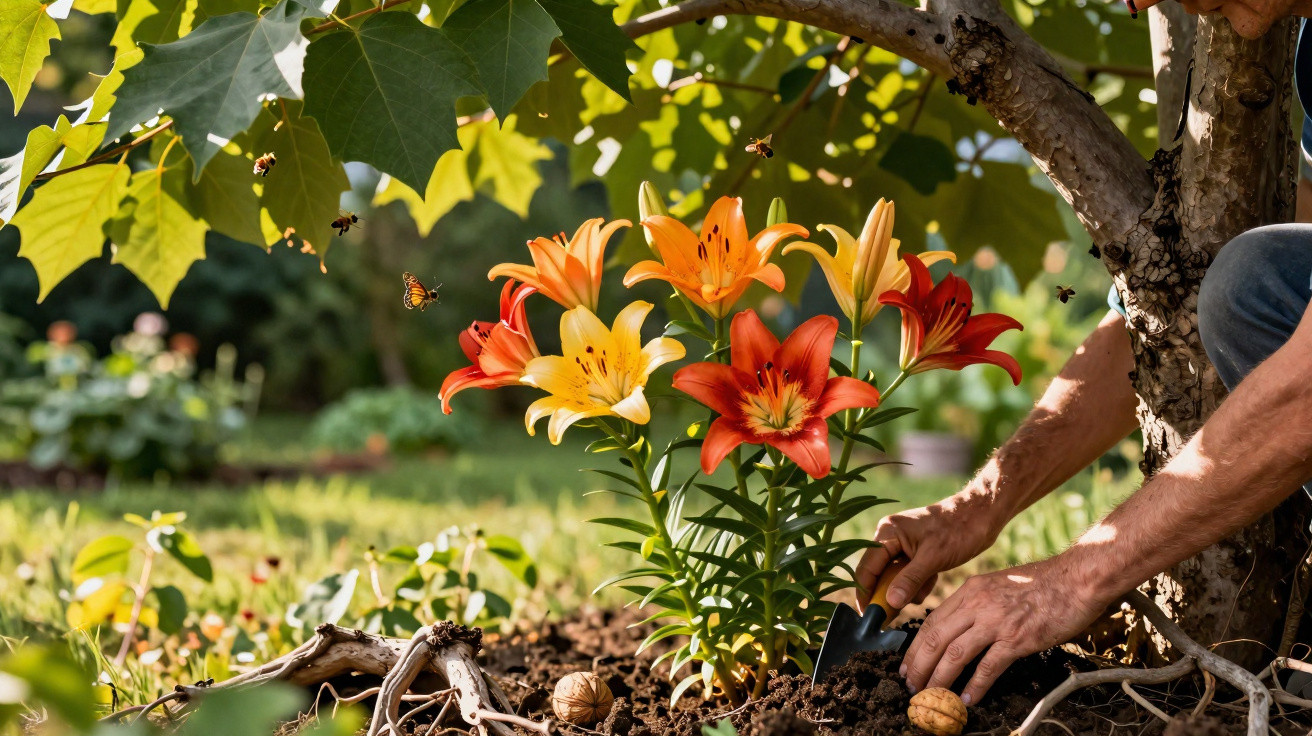
An invisible toxin can stunt many plants, yet one ornamental plant copes with it with remarkable ease.
Anyone with an old walnut tree in the garden will know the problem: many perennials struggle, some simply die, and beds develop bare patches. Poor care is not to blame, but a naturally occurring toxin in the soil. It becomes particularly interesting when seemingly delicate ornamental plants, such as Asiatic lilies, prove unexpectedly resilient in this challenging setting.
What juglone does in the garden
Black walnut trees release juglone through their roots, leaves and husks. It acts as the tree’s defence mechanism, preventing competing plants from becoming established in its root zone. The toxin accumulates in the soil around the trunk, generally within a radius of 15 to 18 metres, with the highest concentration beneath the canopy drip line.
For many plants, this creates severe stress. They absorb juglone through their roots; shoots initially become limp, leaves then turn yellow and later brown, and the plant often dies completely within a short time.
“Juglone acts like an invisible exclusion zone: anything that reacts sensitively has little chance of survival in the walnut tree’s root area.”
Its effects vary considerably between species. Some plants remain entirely unaffected, others grow at only half their usual vigour, while others collapse altogether. Anyone who understands these differences can plan beds beneath walnut trees sensibly instead of facing the same frustration every year.
| Tolerance level | Typical symptoms | Likelihood of survival |
|---|---|---|
| High tolerance | No visible damage | 95–100 % |
| Moderate tolerance | Slight yellowing, weaker growth | 60–80 % |
| Sensitive | Severe wilting, leaf loss | 10–30 % |
| Very sensitive | Rapid total failure | 0–5 % |
The time of year also matters. Exposure is greatest during the growing period, when there are many fresh leaves and roots are growing strongly. Rotting leaves and husks continue to release juglone for months. Soil moisture, pH and soil life, in turn, affect how long the substance remains active.
How Asiatic lilies respond to juglone
This is where things become especially interesting: Asiatic lilies are among the surprisingly robust species. Reports from gardens with mature walnut trees repeatedly show the same pattern: while sensitive perennials disappear after one or two years, Asiatic lilies continue flowering cheerfully.
“Asiatic lilies clearly belong to the group of juglone-tolerant plants – many amateur gardeners plant them directly in the walnut tree’s root zone.”
The bulbs produce strong roots, which apparently either absorb less juglone or neutralise it quickly within the plant tissue. Experts suspect two protective mechanisms:
- Enzymes that convert juglone into less harmful substances
- Cell structures that greatly restrict the toxin’s entry
Whether it is a combination of both has not yet been fully established. What is clear, however, is that Asiatic lilies perform very well under real garden conditions. They readily reach 60 to 120 centimetres in height, develop sturdy stems and produce their characteristic vivid flower colours without displaying noticeable signs of damage.
Many gardeners report that their lilies remain reliable beneath walnut canopies for several years, even multiplying slowly and needing division only occasionally. This is strong evidence of genuinely stable tolerance rather than a chance success.
Choosing a site: where the lilies truly thrive
Despite their toughness, Asiatic lilies should not simply be placed anywhere in the walnut tree’s shade. A few basic rules deliver much better results:
- Light: At least partial shade; ideally, morning sun and light shade in the afternoon.
- Soil: Well drained and never permanently waterlogged, preferably humus-rich rather than heavy clay.
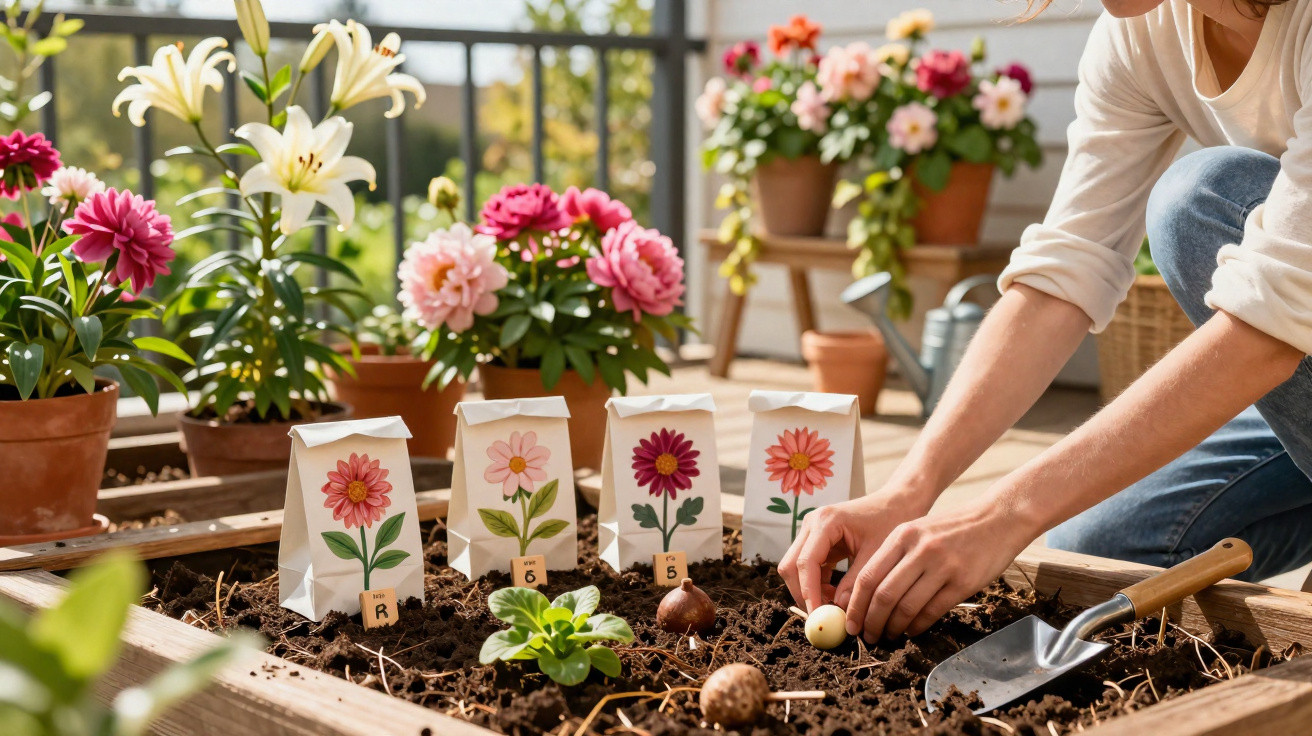
- Planting depth: Six to eight centimetres of soil above the bulb is a useful guide.
- Mulch: Bark mulch or leaves from other trees, but not fresh walnut leaves or husks.
- Water: Keep the soil evenly moist during dry spells without drowning the bulb.
Where a walnut tree has an exceptionally dense root system, one simple technique can help: dig a slightly larger planting hole and fill it with good garden soil or compost, giving the lilies a “starter container” within the ground. This makes it easier for them to establish themselves against the walnut’s vigorous roots.
Which plants suit Asiatic lilies beneath walnut trees
A single lily stem does not make an attractive bed. Under trees affected by juglone, it makes sense to combine several tolerant species. Asiatic lilies fit visually into mixed perennial and bulb planting particularly well.
Suitable companions in the walnut tree area include, from experience:
- Daffodils for spring flowering
- Ornamental alliums for the period between spring and summer
- Daylilies, which offer similar resilience
- Fern species that cope well with partial shade
- Tough herbs such as oregano or thyme in brighter spots
This makes it possible to stagger flowering over several months: first daffodils, then alliums, followed by Asiatic lilies with their strong colours. Even a difficult site beneath a spreading walnut tree can therefore look lively and appealing.
How insects benefit from Asiatic lilies
The question of value for pollinators is receiving increasing attention. Asiatic lilies provide nectar and pollen and are visited by bees and hoverflies, but compared with native wild perennials they are not the first choice for many species. Anyone wishing to improve the ecological value of the area beneath the walnut tree should therefore add proven juglone-tolerant flowering plants with high insect value, such as certain wild perennials or herbs that cope well with juglone.
Care beneath the walnut tree: little effort, great effect
Throughout the gardening year, Asiatic lilies in the walnut tree area do not require special treatment. A few routines are worthwhile, however:
- Remove faded flowers promptly so that the bulb conserves energy.
- Cut back the stems only once the foliage has completely died back and turned brown.
- Lift and divide overcrowded clumps every three to four years.
- Work in a thin layer of mature compost in spring to support nutrient supply.
Compost made from walnut leaves should be avoided completely. The material may still contain relevant amounts of juglone and place unnecessary additional stress on the bed. Walnut garden waste is best collected separately and used only after a very long period of thorough decomposition.
How to assess juglone more accurately in everyday gardening
Juglone may seem threatening, but it becomes less daunting with some background knowledge. It is not distributed evenly through the soil. Dense root areas near the trunk are the most critical, while exposure is generally lower at greater distances or on sloping ground. Rain, soil organisms and time gradually break down the substance – only directly beneath the tree is it continuously replenished.
Anyone moving into a home with an old walnut tree can trial robust bulb plants and perennials at different points around it. This provides a fairly clear picture of where tolerant species such as Asiatic lilies grow without difficulty and where even they show visible weakness.
Typical mistakes at walnut tree sites
Many problems are caused less by juglone itself than by poor combinations of conditions. Common pitfalls include:
- Heavy, compacted soil without drainage
- Permanently deep shade with no breaks in the canopy
- Overfeeding with nitrogen-rich fertiliser, which produces soft, vulnerable foliage
- Dense planting that ignores the walnut tree’s root space
Anyone who keeps these factors in mind can balance the tree’s natural toxicity far more effectively. Asiatic lilies play a key role here: they demonstrate that a vigorous walnut tree and a colourful perennial bed do not have to be mutually exclusive.
For many amateur gardeners, the experiment is worthwhile: plant a few bulbs in autumn or early spring, choose a considered position with light and free-draining soil, and the formerly “dead” area beneath the walnut tree can become a surprisingly stable flowering zone where juglone no longer has the final say.

Comments
No comments yet. Be the first to comment!
Leave a Comment