
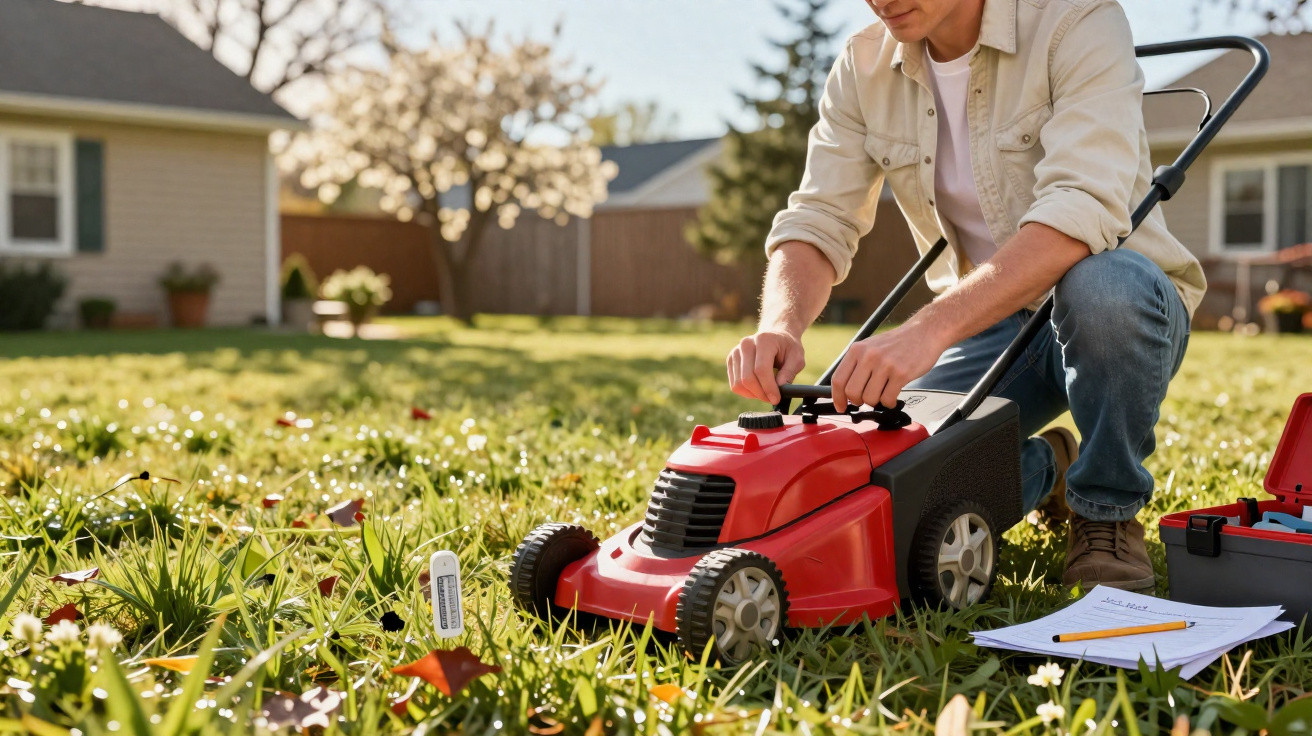
Spring is appearing, the sun is coming out, T-shirt weather is getting closer – and there is a tempting hum from the garden shed: it is time for the first outing with the lawn mower. However, anyone who acts too hastily and cuts the lawn down to a summer-like “carpet” can set the turf back for months. A few straightforward rules will prevent this and help create a denser, greener and tougher lawn.
Why the first cut in spring shapes the whole season
During winter, a lawn greatly reduces its metabolism. The blades may look long and untidy, but they still serve an important purpose: they provide energy reserves and protect the roots from cold. Immediately after winter, the grass relies on these reserves.
Cutting too early and too severely deprives the lawn of the energy it needs to produce strong new shoots. As a result, the surface can remain patchy, the blades become stunted, and weeds and moss quickly gain the upper hand.
The first cut in spring is not a styling appointment; it is a training session that builds up your lawn.
The crucial factor is that the lawn has actually resumed active growth. Proper growth only begins once daytime temperatures remain consistently in double figures and the soil is no longer icy cold. Gardening experts use two simple benchmarks:
- Daytime temperatures consistently above around 10°C
- A soil temperature of at least 6 to 7°C
Before then, the plant is effectively operating in emergency mode. Using the machine at that stage means literally cutting into its energy reserves.
The most common mistake: mowing too early and far too short
The same thing happens again and again: as soon as the ground has dried out a little, the lawn mower is set to its summer height and the whole lawn is cut back drastically. This is precisely where the greatest risk to lawn health lies.
Problem 1: Using a lawn mower on wet or frozen ground
When the soil is still waterlogged or even frozen in places, the mower’s wheels and weight act like a roller. The ground becomes compacted, making it harder for air and water to reach the roots. At the same time, young, delicate blades are pressed flat or torn out altogether.
Typical consequences of mowing too early include:
- yellowish or brown patches after mowing
- small bare areas where moss later spreads
- deep wheel tracks in the soil, particularly from heavy mowers
Problem 2: Cutting too short weakens the roots
The second major mistake is to trim the lawn immediately to an “English golf course” finish. In spring, this can be disastrous. A simple rule of thumb is never to remove more than one third of the blade height in a single cut.
For example, if the grass is 9 centimetres tall, cut it back to no less than 6 centimetres rather than 3. A final height of 5 to 7 centimetres is ideal for the first few mowing sessions. This leaves enough leaf area for photosynthesis and energy storage. The lawn also lightly shades the soil, so it dries out less quickly.
Anyone who trims their lawn to “matchstick length” in spring forces it into permanent stress that can cost it the entire season.
A cut that is too short often results in:
- shallow, weak roots
- soil drying out quickly on sunny days
- increased weed pressure because light reaches the soil
The right lawn mower setting: start high and lower it gradually
For the year’s first trim, the highest or second-highest cutting setting on the lawn mower is the safest option. Many machines offer several settings. Rather than focusing rigidly on millimetres, look at the lawn after the first metre: are the blades still visibly upright and springy, or does everything look scalped?
Gardening professionals advise taking a cautious approach at the start of spring, then adjusting the mowing height down slowly as the season progresses. As summer advances and the lawn grows more vigorously, it can be cut shorter at times – provided it is healthy and dense.
One frequently overlooked detail is blade sharpness. Blunt blades tear grass rather than making a clean cut. This creates ragged tips that soon turn brown and look scorched.
- Check the blades before the season and have them sharpened if necessary.
- Look for frayed, pale tips after mowing.
- If blades show obvious tears, it is better to pause and have the mower blade serviced.
These signs show when it is the right time to mow
Rather than relying on a date in the calendar, let the lawn itself provide the signal. Several signs are easy to identify without specialist equipment.
Visual and weather-related signs
- The lawn looks clearly green again rather than grey-green.
- Fresh new shoots are visible among the older blades.
- The grass has reached a height of around 8 to 10 centimetres.
- No overnight frost is forecast for the coming days.
- The ground feels firm underfoot rather than giving way like a sponge.
Once the lawn no longer squelches when you walk on it and your foot does not sink in, an important step towards the first cut has been achieved.
A short checklist before the first mowing round
If you are unsure, work through this quick checklist:
- Lift the lawn by hand: does the grass feel springy rather than soggy?
- Place your palm on the soil: does it feel cool rather than icy cold?
- Check the weather app: are daytime temperatures above 10°C, with no frost forecast?
- Measure the grass height: has it reached roughly 8 to 10 centimetres?
- Set the cutting height so that 5 to 7 centimetres of grass remain.
How the right approach pays off in the long term
Giving your lawn this gentle start in spring brings benefits throughout the summer. The grass develops a denser root system, making it less vulnerable to dry spells. Water and nutrients are used more efficiently, while the lawn looks more even and richer in colour.
Maintenance demands fall at the same time: a strong, closed lawn leaves little room for weeds, and moss finds it harder to spread. Bare patches need reseeding less often, and the surface copes far better even during periods of heat.
Practical additions: combining scarifying, feeding and mowing
Many gardeners want to complete everything at once in spring: scarify, feed and mow. A coordinated approach is more sensible. The lawn should first get going properly so that it can cope with measures such as scarifying. One possible order is:
- carry out the first gentle mowing round at the right temperature
- wait a few days and observe growth
- once growth is stable, scarify lightly if there is a lot of moss
- then feed moderately so the lawn can recover quickly
This gradually produces a resilient turf that can comfortably withstand playing children, garden furniture and summer days.
Why a slightly longer lawn is often the better option
Many people associate a “tidy garden” with an extremely closely cropped lawn. For the health of the turf, however, the opposite is usually true. Slightly longer blades shield the soil from direct sunshine, allowing moisture to stay in the ground for longer. This saves both water and money.
There is also a visual benefit: a well-maintained lawn at 5 to 7 centimetres often appears fuller and more premium than a surface cut extremely short, where every uneven area becomes immediately visible. Those who let go of the idea of minimum height are often rewarded with a garden that is noticeably easier to maintain and more relaxing to enjoy.
In the end, one moment in spring determines the direction of the season: approach the first cut with patience and good judgement, and the lawn will develop over the year into a strong green surface rather than becoming a constant concern marked by brown patches and thin growth.





Comments
No comments yet. Be the first to comment!
Leave a Comment