
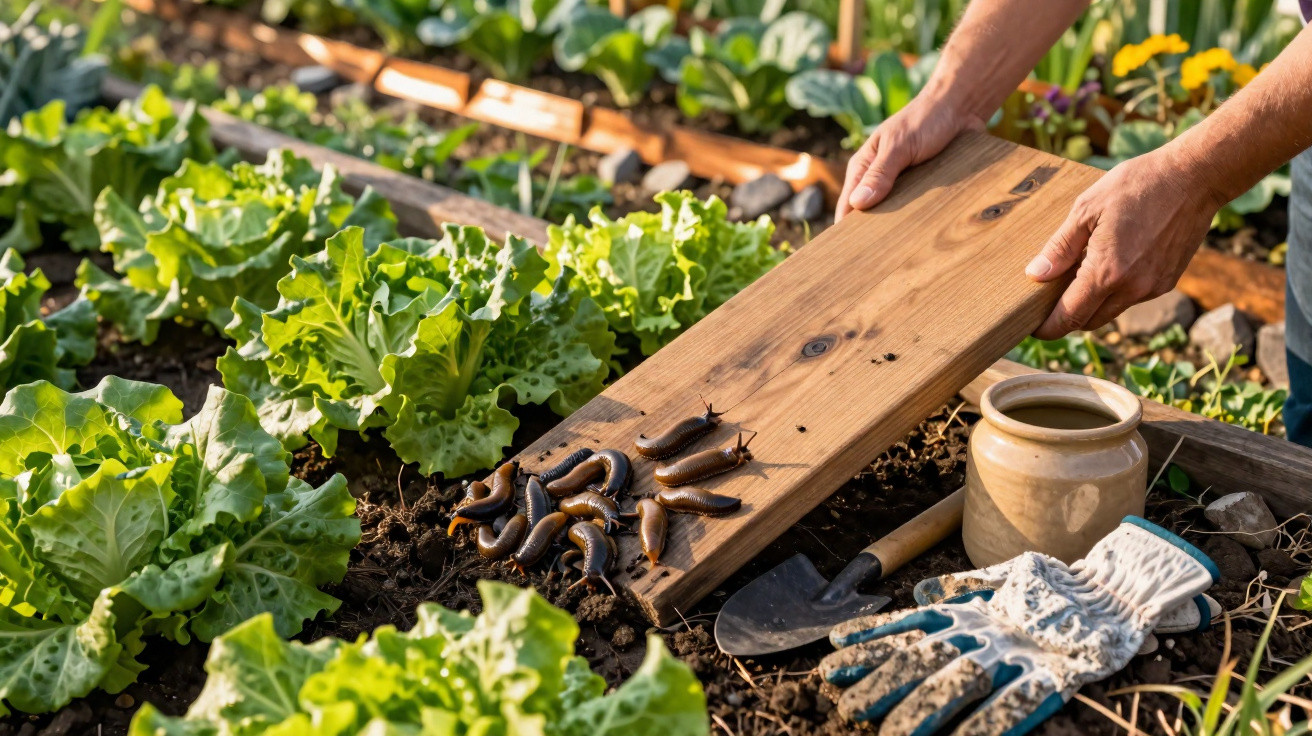
Many amateur gardeners wake up in dismay: young lettuces have been eaten, and bean stems have been snipped off.
The answer lies in a simple wooden board.
Anyone with their own vegetable bed knows this quiet disaster after a damp night. The tender seedlings have vanished, leaving only slime trails and chewed stems. Rather than reaching for the poison shelf at the garden centre again, more and more gardeners are using a surprisingly straightforward approach: a strategically positioned piece of untreated wood can replace costly chemicals and works remarkably reliably.
Why slugs are so attracted to wood
Slugs are not monsters; they are highly specialised molluscs. Their entire bodies consist of delicate tissue covered in mucus. Without constant moisture, they effectively dry out and die. This is precisely why they are mainly active at night, when the soil and plants are wet, and hide in cool, dark places during the day.
A plain board placed on the ground exploits this vulnerability very effectively. Wood absorbs water and releases it gradually. Beneath an untreated board, a miniature spa-like climate develops:
- shaded and protected from light
- consistently damp, without being soaking wet
- relatively stable in temperature
This is exactly what a slug seeks in the early morning. Rather than spreading throughout the garden, it gathers beneath the inviting shelter – where the gardener is waiting.
“Overnight, a simple board becomes a free slug hotel – with humans handling check-out in the morning.”
Which wood works – and which does not
Not every piece of wood is equally suitable for this method. The essential requirement is that the material is untreated and absorbent. Varnished floorboards, coated furniture panels and chipboard are of little use, as they repel water or may contain harmful substances.
Suitable pieces of wood at a glance
- old solid-wood boards, such as spruce, fir or pine
- offcuts of timber beams or shuttering boards
- untreated shelving boards or planks
- thick wooden battens, or several laid next to each other if necessary
Before putting a board down, carry out a quick check. If the surface feels natural and slightly rough, with no varnish or visible coating, it will generally be suitable. Heavily decayed wood can work too, although it often breaks down sooner.
How to trap slugs with boards: step by step
With a little practice, this method can become part of a morning gardening routine. The key steps are easy to remember.
- Choose the location: Place boards directly along bed edges, beside rows of lettuce, around strawberry plants or in newly planted areas. These are the places where slugs are most likely to seek cover.
- Moisten the soil: Water the ground beneath the intended spot thoroughly in the evening, or dampen it with a watering can.
- Dampen the underside of the board: Briefly pour water over it or spray it with a hose attachment.
- Lay the board flat: Position it as close to the soil as possible, without large gaps underneath. A small stone used as a spacer at one edge is enough to make lifting it in the morning easier.
- Check in the morning: Early in the day, before it becomes too hot, carefully lift the board. Most slugs will then be clustered tightly beneath the wood.
- Collect the slugs: Use gloves, a small trowel or sticks to pick them up and remove them from the vegetable garden.
Gardeners have debated what to do with collected slugs for years. Some take them a long way away to woodland edges, while others kill them quickly, for example with a decisive cut or hot water. Anyone who takes animal welfare seriously should at least ensure that suffering is kept as brief as possible, rather than leaving the animals to die in closed buckets.
Why a board is a genuine alternative to slug pellets
Many gardeners still instinctively turn to slug pellets. Products containing active ingredients such as metal compounds are rightly criticised. Even products approved for organic growing carry risks.
If a toad, hedgehog or bird eats poisoned slugs, the active ingredient can continue through the food chain. Pets such as dogs and cats also repeatedly get into pellets that have been put out. Introduced slug species may react differently from what is expected, while native species and other animals suffer.
“A board does not fight slugs chemically – it makes their habits predictable and takes advantage of them.”
The wooden-board method uses no poison at all, protects soil life, compost worms, hedgehogs and toads, and costs virtually nothing. Many amateur gardeners already have suitable boards in the cellar or garage. The only “price” is a little time in the morning and a degree of squeamishness when collecting them.
Understanding your garden better with boards
Wooden boards are more than traps; they are also diagnostic tools. Places where particularly large numbers of slugs are hiding reveal a great deal about the garden:
- areas where the soil stays permanently damp
- dense, poorly ventilated corners offering plenty of hiding places
- spots where plants were heavily eaten the previous year
Careful observation over several days reveals patterns. You may find that a particular bed edge is especially affected because there is dense weed growth or thick mulch there. Or perhaps an old stack of boards nearby has long served as a slug hotel without you noticing it.
These observations can inform long-term measures: altering the layout of paths, selectively thinning out corners and adapting watering habits. The better you understand the animals’ routes and preferences, the more precisely you can reduce pressure on vulnerable crops.
How boards, barriers and beneficial wildlife work together
Wood alone cannot always bring severe slug years fully under control. The method becomes particularly effective when it forms part of a wider package of measures.
Proven combinations for everyday gardening
- Mineral barriers: Scatter rough materials such as sharp grit, coarse sand or crushed shell around especially vulnerable beds. The abrasive surface irritates the slugs’ soft undersides.
- Encourage beneficial wildlife: Hedgehogs, toads, ground beetles and birds eat slugs. They need shelters such as piles of twigs, stone banks, leaf piles and areas free from poison.
- Water strategically: Water in the morning rather than the evening. The soil dries out somewhat before nightfall, making the garden less inviting for nocturnal slug forays.
- Adapt plant choices: Start highly vulnerable crops, such as young lettuce, beneath horticultural fleece, in pots or in raised beds, and plant them out only once they are sturdier.
- Rotate the boards: Move wooden boards slightly and regularly to create new collection points and reduce the population step by step.
What else gardeners should know
Many slug species have always lived in our gardens and are part of the ecosystem. The main problem is large outbreaks of slugs, including introduced species with few natural predators. The aim should therefore be to manage numbers, rather than eradicate every individual.
Using boards deliberately intervenes in this balance, but in a controlled and manageable way. It offers a sound compromise between successful harvests and consideration for other garden inhabitants. Children can even learn playfully through this approach how garden cycles work and why every measure has consequences.
Boards are also practical because they can be used for years. Over time they become darker, cracked and slightly rotten, yet this can actually make them more attractive to slugs because more moisture can penetrate the wood. Only once the timber falls apart does it go onto the compost heap and become soil again – completing the cycle.
Anyone starting with their first boards in spring can intercept much of the slug surge early in the year. Lettuce, beans and strawberries will then no longer be a nightly buffet for hungry slimy visitors, but end up where they belong: on the plate.
Comments
No comments yet. Be the first to comment!
Leave a Comment