
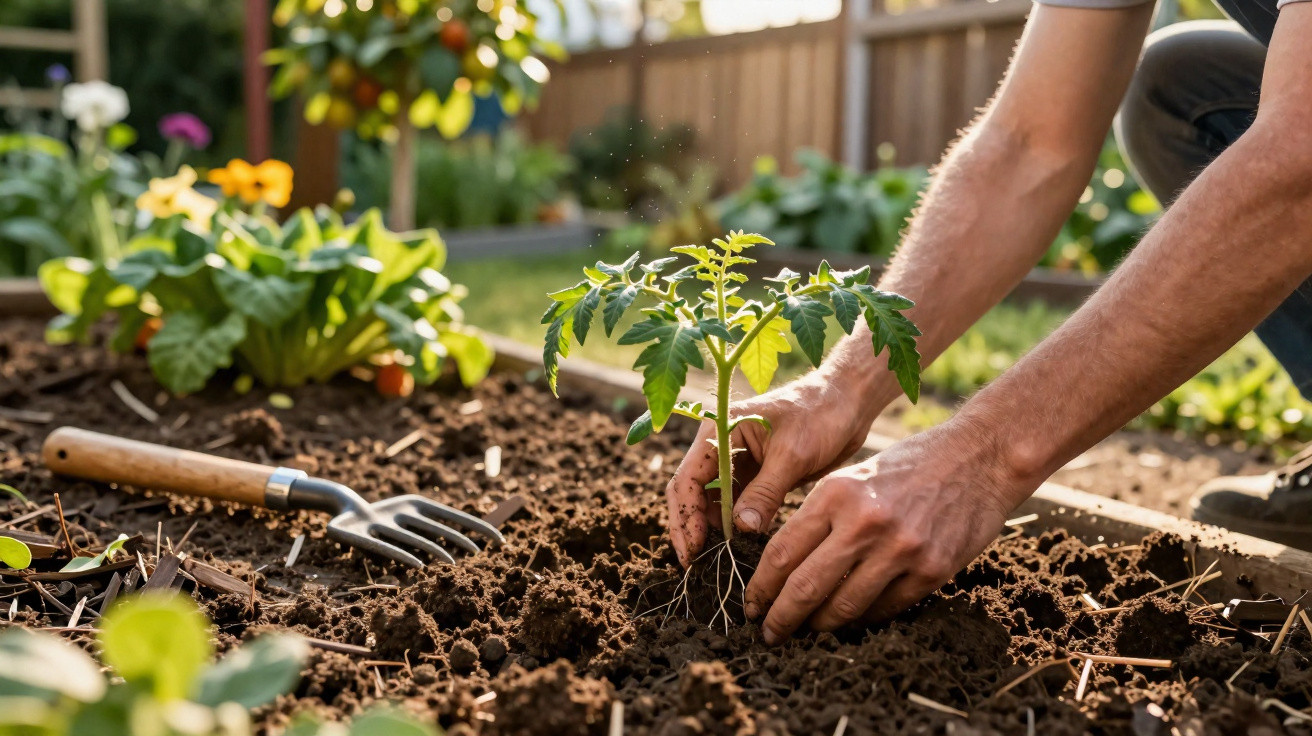
The gardener stops halfway along the bed, raises a hand and simply says, “Listen.” There is no birdsong and no neighbour mowing the lawn. He means the soil. He pushes a digging fork into the ground, rocks it gently, and small clods crumble away, worms wriggle and fine roots become visible. “That is what it should look like,” he murmurs. In the neighbouring bed, the soil resembles a parking bay: hard, grey and raked smooth. No cracks, no pores, no sign of life.
We know the impulse: make everything neat, smooth and “tidy”. Yet beneath the surface, a struggle is taking place that many amateur gardeners underestimate. The gardener talks about waterlogging, root rot and airless soil. Suddenly, loose earth no longer looks like laziness but like a smart strategy.
Most people only discover why loose soil means better harvests, less stress and healthier plants when it is already too late.
Why loose soil is the garden’s unsung hero
The gardener bends down, scoops up a handful of soil from the bed and rubs it between his fingers. It crumbles into small aggregates rather than sticking together in heavy lumps. “This,” he says, “is like a good mattress for roots.” Loose soil yields and springs back, allowing air to pass through it – and that air is exactly what roots and micro-organisms need to breathe. Compacted soil, by contrast, is like a concrete floor covered by a thin layer of bark mulch.
We see only the surface, but what matters to plants happens 10 or 20 centimetres below it. This is where roots need to make their way through the soil, store water and absorb nutrients. Loose soil works like a sponge: it takes in rainwater and releases it gradually. Compacted ground, meanwhile, leaves water sitting on top or lets it run away sideways. Anyone who has stood ankle-deep in the soil of their own bed after a summer storm will not forget the sight.
It sounds almost obvious: soil should be loose. Even so, we often treat it as though it needs to be levelled, pressed down and walked over – the very part of the garden that ought to be most alive.
The gardener recalls a terraced-house garden he took on a few years ago. Its soil was as hard as concrete, having been driven over by cars for years before being carelessly covered with 10 centimetres of “topsoil”. The previous owner could not understand why her tomatoes “just won’t grow”. Following the first heavy rain, water stood right up to the edge of the lawn. There was not a single earthworm to be seen, and the soil smelled stale, almost rotten. “There was nothing there to let air through,” he says.
He approached the problem gently: no rotavator and no deep digging. Just a digging fork, compost, a little sand and plenty of patience. Earthworms returned in the first year. By the second, he could push his hand 20 centimetres into the soil. In the third year, one tomato bed produced more fruit than the entire garden had previously. Laughing, the owner said she felt as though the plants “could be heard breathing a sigh of relief”. Such transformations are not magic; they are simply the result of loosened soil.
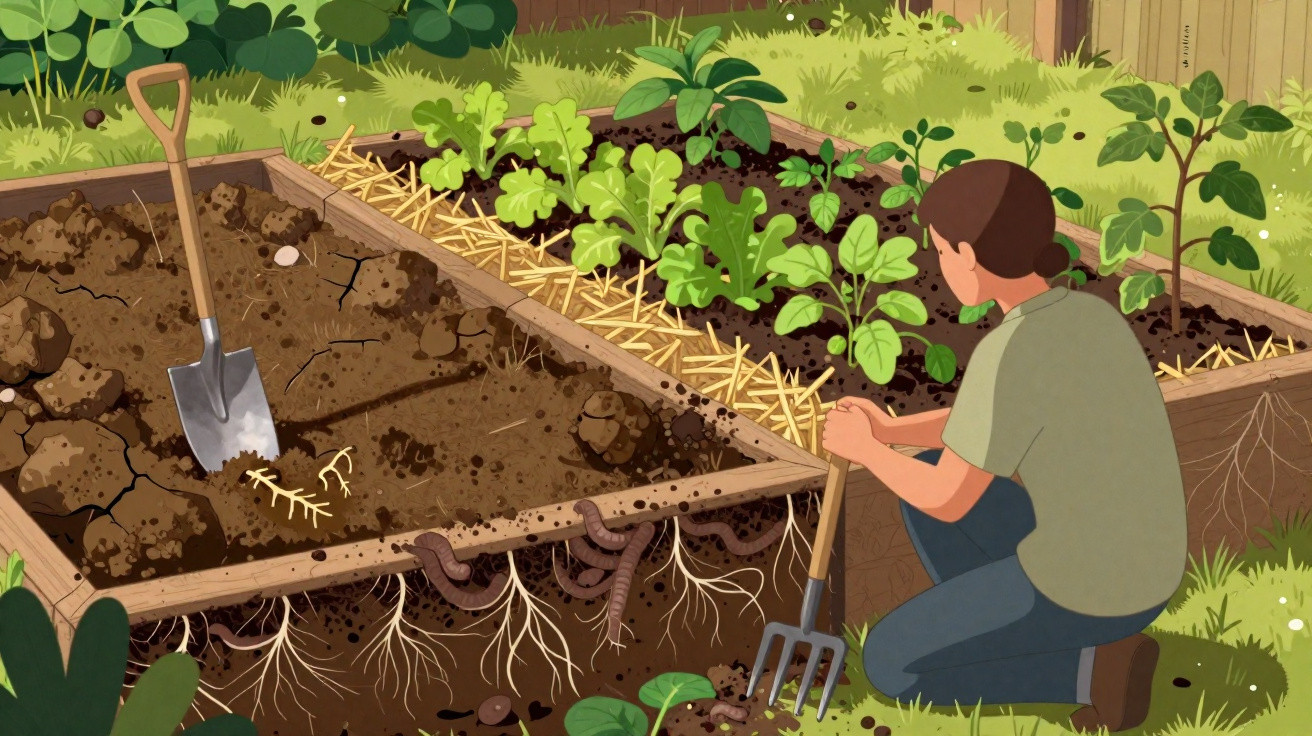
Let us be honest: nobody digs over their garden every week, nor would that make sense. The more important question is what soil compaction actually does to plants. When soil is compressed too heavily, the fine pores through which air and water circulate disappear. Roots stay shallow and grow in circles because they hit a hard layer deeper down. Rainwater either races away or pools, while nutrients remain unused. Fungi, bacteria, insects – the invisible life of the soil – gradually suffocate.
Loose soil, on the other hand, acts like a multi-storey building full of residents. At the top, tiny organisms break down leaves and compost. In the middle, earthworms burrow, draw organic matter further down and create small tunnels that work like natural drainage pipes. Deeper still, roots colonise the ground and reach water reserves that are barely noticeable on dry days. Keeping soil loose opens this building up a little further, time after time.
How to create loose soil without damaging your garden
The gardener drives a digging fork vertically into the soil, presses the tines in with his foot and levers it very slightly. “Don’t turn it over,” he says, “just lift it so air can get in.” He works along the rows as though carefully raising an old carpet to air underneath it. Often described as “aerating instead of digging”, this method protects the soil layers. The upper layers remain on top and the lower ones stay below. Earthworms survive, while fungal networks remain connected. With each season, the soil becomes a little looser rather than having to be rebuilt from scratch every year.
The second key element is organic matter: well-rotted compost, leaves, green cuttings and shredded twigs. Instead of digging these deeply into the ground, spread them over the bed like a blanket. Soil life will do the rest. Those with sandy soil should add materials rich in humus to help retain water. Those with heavy clay soil can use coarse compost, some sand and perhaps biochar. The gardener says: “I am not really feeding the plants; I am feeding the soil.”
Then there is a third, frequently overlooked tool: roots. Cover crops such as clover, lupins, phacelia or mustard open up the soil with their root systems and leave cavities behind once they die back. These root channels are ideal routes for water and air. Anyone who does not leave beds empty over winter but covers them with green manure gives the soil a quiet yet highly productive period.
Many gardeners want to do everything “properly” – while literally trampling their soil at the same time. Heavy wheelbarrows pushed through wet beds, stepping beside delicate plants, or rotavating deeply when the soil is too wet: all are common. It is understandable; the garden is meant to look orderly, time is short and the weather creates pressure. But compacted tracks often remain visible for years.
The gardener advises creating permanent paths and actually using them. Do not cut across a bed “just for a moment” because the watering can is at the other end. Avoid working soil when it is soaking wet. At that point it smears, its crumb structure breaks down and hard clumps form, later drying like bricks. And use less force. Deep digging every year repeatedly destroys the painstakingly created soil structure. You do not need to pull out every weed as though it is about to take over the garden. Mulching is often enough to protect the loose structure and reduce competition.
Another underestimated mistake is the “dead” bed: bare, exposed soil left for months because someone is “waiting for the season”. Sun, wind and heavy rain bake the soil hard, carry away humus and turn aggregates into dust. A thin layer of mulch made from grass clippings, shredded leaves or straw acts like a soft cloth laid over sensitive skin. It retains moisture, slows erosion and protects soil organisms – ultimately delivering exactly what you want: loose, crumbly earth that can be picked up with two fingers.
“Loose soil may look messier at first glance,” says the gardener, “but it is the most reliable savings account you can have in the garden. You pay in with patience – and collect the interest in dry summers.”
Anyone taking this approach can use a few straightforward guidelines:
- Aerate soil rather than digging it deeply every year.
- Use fixed paths and step into beds as little as possible.
- Apply compost, leaves and mulch as a blanket, not like cement.
- Sow green manure so roots can work the soil.
- Never leave soil bare for long, or it will bake hard.
Loose soil changes the way you see your garden
Once you have seen heavy, cloddy ground turn into a crumbly, living layer, you no longer look only at flowers and fruit. Suddenly, every earthworm becomes an ally and every small crack in the soil is good news. The gardener explains how he checks in spring whether the soil around his trees feels right: he pushes in a spade, tips out the block and crushes it. If it gives a quiet “rustle” and crumbs fall away, he knows it will be a good year.
At a time when gardens are often expected to look like shop windows – neat, sharply edged and clearly defined – loose soil feels almost subversive. It accepts disorder and trusts processes we cannot control. Those who stop constantly raking, levelling, treading and rotavating give up a measure of control, yet gain a great deal: less watering, fewer losses and greater resilience to heat and heavy rain. Loose soil is a quiet buffer against whatever the weather throws at us.
Perhaps that is the real change in perspective: moving away from the idea that we must “keep plants alive” and towards the understanding that we are caring for a habitat. Choosing to leave soil loose seems unremarkable in daily life. You stand in the bed with a digging fork, lift gently, scatter compost, step back and let things take their course. Yet it is this very act of letting go that changes what ends up on our plates in summer – and how contentedly we wash our hands after a long day in the garden.
| Key point | Detail | Benefit for the reader |
|---|---|---|
| Loose soil as a “mattress” for roots | A crumb structure allows air, water and roots to move deeper into the ground | Explains why plants in loose soil are visibly stronger and healthier |
| Gentle aeration instead of deep digging | Insert a digging fork and lift the soil only slightly, keeping soil layers intact | Protects soil life, saves effort and improves soil quality in the long term |
| Mulch and green manure as soil protectors | Organic material covers the soil, while roots loosen it from within | Less watering, fewer weeds and reliable yields even in dry periods |
FAQ:
- How can I tell whether my soil is too hard? If a spade enters only with difficulty, water remains on the surface for a long time, or cracks appear as they do in dry clay, the soil is compacted and needs loosening.
- How often should I “aerate” the soil? One thorough session before the main growing season is usually enough; after that, aerate only where needed, for example around particularly heavily used beds.
- Can I create loose soil with a rotavator? Only with great care: rotavators can easily destroy the crumb structure and cut up earthworms. Working by hand with a digging fork or broadfork is more sustainable.
- Which mulch loosens soil most effectively? Well-rotted compost, leaves, fine woodchip and thin layers of grass clippings encourage soil life and create loose, humus-rich soil.
- Does sand help with heavy clay soil? Yes, when combined with plenty of organic matter. However, sand alone mixed into clay can create a concrete-like mass, so it should always be used with compost.
Comments
No comments yet. Be the first to comment!
Leave a Comment