
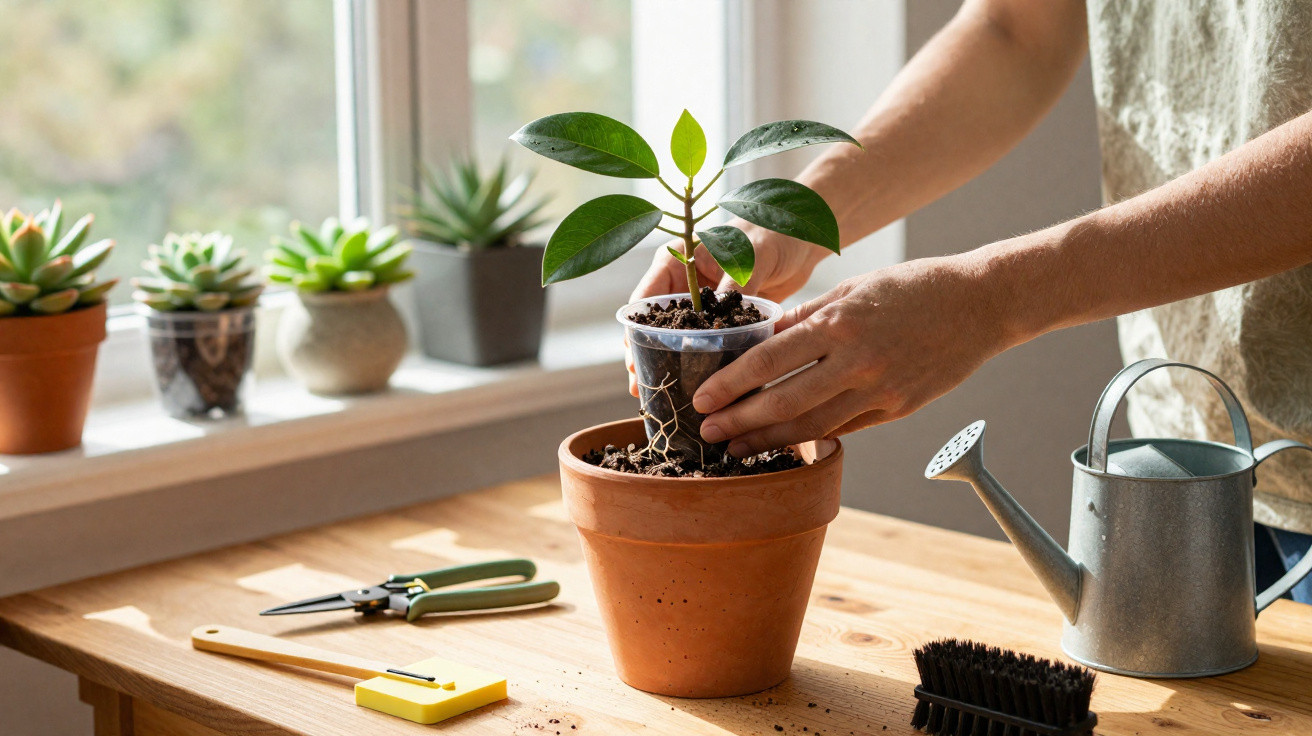
With a few well-chosen steps, a money tree can often be rescued surprisingly successfully.
Many owners give up on their money tree too soon, even though the cause is usually straightforward: too much water, too little light or the wrong pot. By interpreting the warning signs correctly and responding step by step, you stand an excellent chance of restoring your green housemate to good health.
Interpreting warning signs correctly
The money tree, botanically known as Crassula ovata, mainly “communicates” through its leaves. A close look will reveal early on when something is wrong.
- Soft, mushy leaves and spongy stems: a classic sign of overwatering, often accompanied by the onset of root rot.
- Wrinkled, limp or dropping leaves: an indication of significant water shortage.
- A musty smell and permanently damp compost: the pot is no longer drying out, so waterlogging is likely.
- Very dry compost that has pulled away from the pot edge: the growing medium has dried out completely, causing water to run off when watered.
- White, cottony deposits in leaf axils: usually mealybugs or other sap-sucking pests.
Anyone who monitors the leaf texture and condition of the compost can spot money tree problems before they become life-threatening.
First aid: stopping the decline
Before taking more extensive action, the plant needs a period of calm. First place the money tree away from other houseplants, so that any pests cannot spread. The condition of the compost then determines what to do next.
If it has been overwatered
Waterlogging is the most common cause of death in a money tree, so prompt action is essential.
- Stop watering immediately.
- Carefully ease the plant out of its pot.
- Shake as much of the old, wet compost as possible from the roots.
- Inspect the roots: remove anything black, brownish, mushy or foul-smelling with a clean, disinfected knife.
- Leave the plant with its cleaned roots to dry for 12–24 hours in a bright, warm place out of direct sun.
This process of “airing” the roots halts the rot and gives the money tree an opportunity to produce new, healthy root tips.
If the plant has dried out
Drought can also weaken a money tree, although it copes with it far better than with waterlogging.
- Do not shock-water it from above with ice-cold water.
- Instead, stand the pot in a bowl of room-temperature water.
- Wait 30–60 minutes, until air bubbles stop rising.
- Remove the pot and allow it to drain thoroughly.
- Do not water again until the upper layer of compost has dried completely.
This approach moistens the growing medium evenly without “drowning” the roots.
Controlling pests consistently
Mealybugs and other sap-sucking insects drain the money tree of strength and create an opening for fungal diseases.
- Gently wipe away visible clusters using a cotton bud soaked in alcohol (70%).
- Repeat the treatment every 7–10 days until no infestation remains visible.
- A severe infestation may require a specialist plant treatment based on soap or oil.
Consistent, repeated treatment matters more for pests than using one aggressive product.
Repotting correctly: fresh compost for a new start
Following rot problems or when the compost is very old and compacted, a full restart in fresh growing medium is often the only solution.
The ideal pot for a money tree
- A container with drainage holes is essential, otherwise water will collect at the bottom.
- Terracotta pots are often preferable to plastic ones because they release excess moisture through their walls.
- The pot must not be too large, as the compost will otherwise stay wet for too long.
Drainage and growing medium – the most important safeguard
The base of the pot needs a layer that allows water to drain away:
- 2–3 cm of expanded clay, gravel or coarse grit for drainage
Place a loose, airy compost mix above it. A reliable blend consists of:
- 50% succulent compost or standard houseplant compost
- 25% coarse sand (not children’s play sand; aquarium sand or washed builder’s sand is more suitable)
- 25% perlite or lava granules (for example pumice, expanded shale or fine gravel)
Then position the money tree so that the root collar sits just above compost level. Firm the compost gently, without compacting it. After that, patience is required: keep the plant completely dry for the first 4–5 days, allowing any cut surfaces on the roots to heal cleanly.
Watering a money tree systematically: less is more
A money tree stores water in its fleshy leaves and stems, so it needs watering less frequently than many other houseplants.
| Season | Watering interval (guide) | Note |
|---|---|---|
| Spring | every 10–15 days | Allow the compost to dry out completely between waterings. |
| Summer | every 7–12 days | Water slightly more often in heat and strong light, but never keep it permanently wet. |
| Autumn | every 14–20 days | Gradually reduce watering. |
| Winter | every 3–4 weeks | Water very sparingly, particularly in cool rooms. |
A simple finger test is useful: if the compost still feels cool and slightly damp 2–3 cm below the surface, wait before watering again.
Location, light and feed: how a money tree regains energy
Without sufficient light, a money tree will remain weak. A suitable position indoors helps it recover much faster.
- A bright south- or west-facing window is ideal.
- Direct midday sun at the height of summer can scorch the leaves; a light curtain can help here.
- In winter, a plant LED positioned at close range supports growth.
- Avoid placing it directly above a radiator or in draughts caused by permanently tilted windows.
When feeding, wait until the plant looks strong again and is producing new shoots. From March to September, a lightly diluted liquid fertiliser specially formulated for succulents is sufficient every three to four weeks. Keep the fertiliser bottle closed during the darker months and while the plant is weakened.
Too much fertiliser often harms a money tree more than no fertiliser at all – less, and less often, produces healthier plants here.
Long-term care and common sources of problems
Understanding the cause of the current issue helps prevent further setbacks. The following are recurring problems with struggling money trees:
- Saucers in which water remains after watering
- Windowsills directly above radiators
- Major temperature fluctuations between day and night
- Pots that are far too large and filled with plain compost without loosening additives
- Spider mites caused by extremely dry air in winter
Checking the leaves, stems and compost surface regularly takes only a few minutes each month, yet prevents issues from going unnoticed for weeks.
How quickly a weakened money tree recovers
Patience plays a greater part than many people expect. Even if the upper part of the plant still looks unhappy, the money tree may be working unseen on new roots and buds. Depending on how severe the damage is, it often takes four to eight weeks before the first fresh, firm-looking leaves appear.
Those feeling particularly brave can grow additional plants from healthy shoot tips: cut off a short, non-woody side shoot, leave it to dry for two days, then place it in a highly mineral growing medium. With a little luck, the cutting will become a second, vigorous money tree – a reassuring plan B should the old specimen fail to recover after all.
Many hobby gardeners report that their money tree seems more resilient after a rescue operation than before. The plant is now in a suitable growing medium, receives better light and is watered more consciously. What initially appears to be a disaster often becomes the starting point for a much longer, healthier plant life in the living room.
Comments
No comments yet. Be the first to comment!
Leave a Comment