
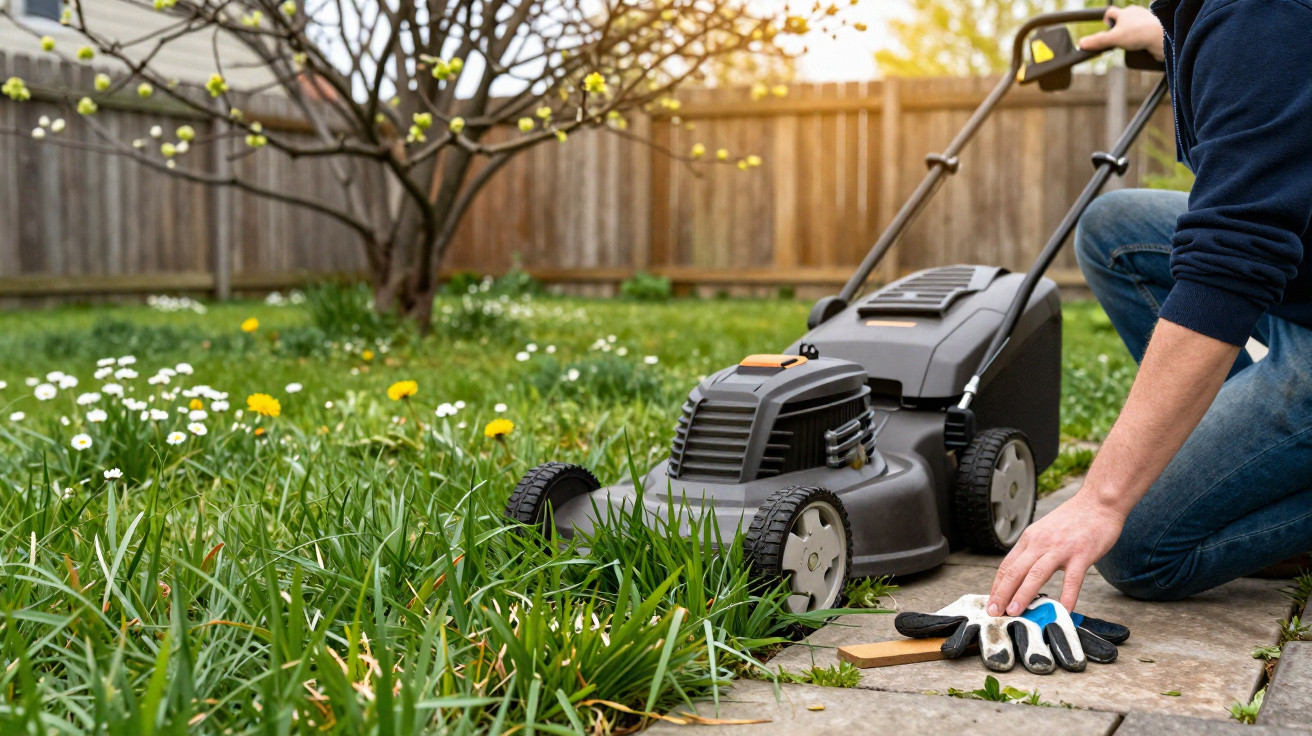
After a long winter, grass often looks shaggy and neglected. It is understandable that many people reach for the lawn mower straight away to restore “tidy” edges. However, mowing too early and too aggressively can weaken your lawn so severely that it remains pale, patchy and vulnerable throughout the summer. Choosing the right moment and cutting height determines whether the lawn becomes richly green or merely struggles to survive.
Why the first cut of the year shapes the entire season
During winter, the lawn enters a dormant phase. The plants barely grow, but they store reserves in their blades to withstand frost and wet conditions. Those energy reserves are still held in the grass when spring temperatures begin to rise slowly.
As conditions become milder, the lawn draws on these reserves to start growing again. It produces fresh shoots, sends its roots deeper into the soil and fills bare patches. To achieve this, it needs to retain some leaf material. Removing those leaves also removes the energy it needs in spring.
The first spring mow is not a styling appointment, but a development phase for strong, resilient green growth.
Rather than following the calendar, pay closer attention to what is happening outdoors in the garden. Look for these three signs:
- Daytime temperatures consistently above around 10°C
- Soil that is no longer frozen or waterlogged
- Grass that is visibly growing and noticeably greener than it was in winter
While the soil remains cold, the root system operates at a reduced level. Running a heavy mower across the lawn at this stage compacts the ground, gives the grasses less air and makes it harder for water to drain away.
The most common mistake: mowing too early and too short
After the first sunny days, a garden can quickly appear untidy. The instinct is: “Cut everything right down once, and it will look neat again.” This is exactly where the problem starts.
Cold, wet and spongy: why the soil must stabilise first
If the lawn is still soft, swollen or frozen in places, every pass with the mower causes twice the damage. Its wheels leave tracks, compact damp soil and flatten delicate blades. The result is a yellowish-looking, patchy lawn - an ideal environment for moss and unwanted weeds.
Rainwater drains more slowly through compacted ground. Puddles remain for longer, while the roots receive too little oxygen. Many grasses die off in these areas, whereas moss and certain weeds cope much better. Consequently, the lawn becomes uneven and springy, losing its dense, carpet-like appearance.
The cardinal error: cutting the lawn “to nothing”
An excessively low first cut is just as damaging. Many people set their lawn mower to the same height used in high summer, depriving the lawn of the basis it needs to recover after winter.
A simple rule of thumb is useful: never remove more than one third of the leaf length at a time. If the grass is around 9 centimetres tall, 6 centimetres should remain after mowing, rather than 3. Cutting blades almost to ground level shocks the plant. It then has to direct all its resources towards emergency recovery instead of developing new roots and side shoots.
A spring lawn at around 5 to 7 centimetres high is far healthier than a closely shorn “golf course” behind the house.
Slightly longer grass blades offer several benefits:
- They shade the soil, helping it to dry out less quickly.
- Roots grow deeper because they are not constantly under stress.
- Bare areas fill in faster because more leaf material is available to generate energy.
- Moss and many weeds find it harder to spread.
How to set the lawn mower correctly in spring
For the year’s first cut, set the mower height adjustment to a high position. Most machines have several settings. Choose one that leaves the grass clearly visible after mowing, rather than making it look short.
A sensible guideline is to select a cutting height that leaves 5 to 7 centimetres of grass. If you are unsure, start a little higher and gradually work towards your preferred height over several mowing sessions.
Blade sharpness: a small cause with a major effect
Worn blades tear grass rather than cutting it cleanly. The tips become frayed, turn brown and appear unhealthy. The damaged surfaces also cause the plants to lose more water.
Before the first mow of the year, carry out a quick check:
- Clean the underside of the mower
- Check the blade for visible nicks
- Sharpen the blade if necessary, or have it serviced by a specialist
Fresh, sharp blades produce a clean cut. The lawn recovers considerably faster and looks more even within just a few hours.
The ideal signs for starting the mowing season
Instead of simply marking March on the calendar, observe the weather and the plants. These signs indicate that it is time to start the mower for the first time:
- Daytime temperatures have been in double figures for at least a week
- No severe frost is forecast overnight in the coming days
- The soil gives slightly underfoot but is not muddy
- The grass blades are clearly green and around 8 to 10 centimetres long
- The lawn mower is set to leave at least 5 centimetres after cutting
When these conditions are met, the lawn will generally tolerate its first trim well. If you are uncertain, test the setting first in a less noticeable corner and inspect the result after a day.
Care before and after the first mow: small jobs with a big impact
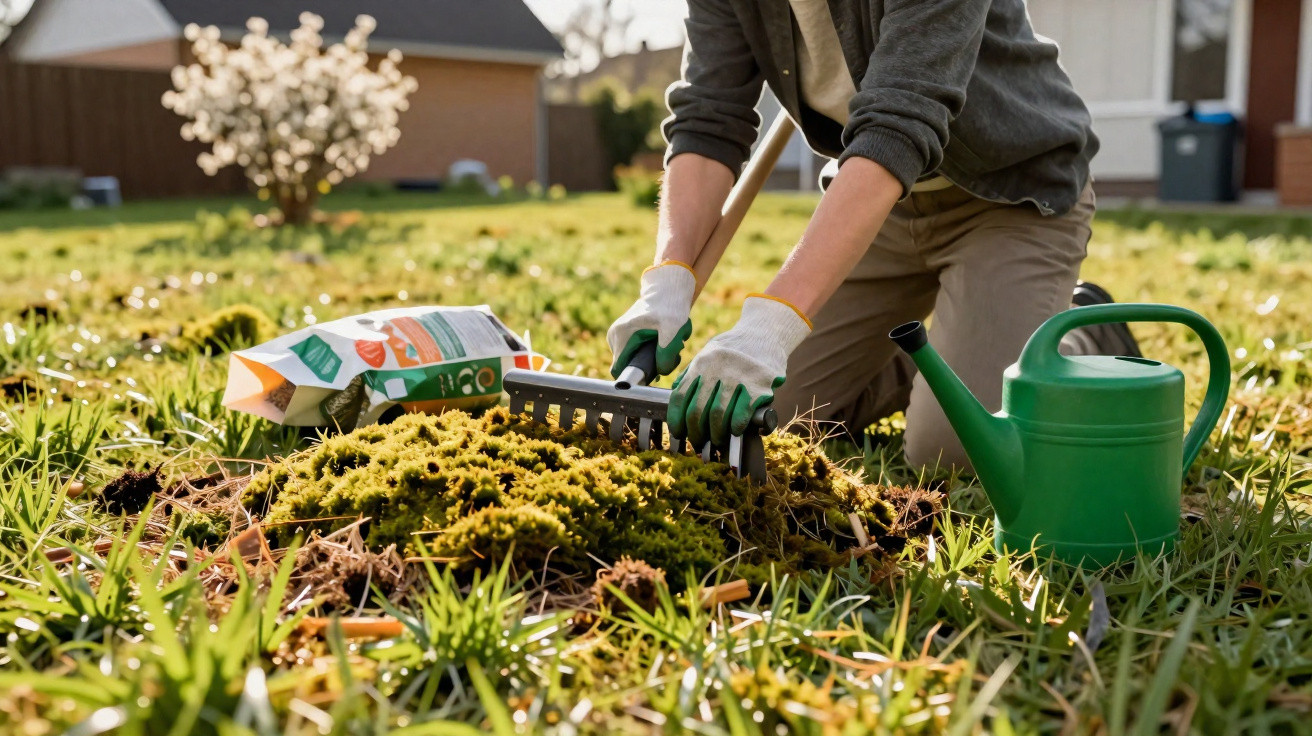
Before rolling the mower across the lawn, it is worth inspecting the area briefly. Remove branches, piles of leaves and dead plant matter. Where thick layers have built up, use a rake or scarifier so that air can reach the soil.
After the first cut, it becomes easier to see where the lawn is growing unevenly. Minor dips and raised areas can be levelled with a little sand or fine soil. If you spot bare patches, you can sow them with an overseeding mixture. A spring lawn that has not yet been mown too frequently provides a good starting point for this.
How often should you mow in spring?
During March and April, mowing every one to two weeks is usually sufficient, depending on growth. It is better to mow more often at a high setting than to cut very low only occasionally. This reduces stress on the grass and gradually establishes a robust lawn.
Once temperatures rise in late spring and growth accelerates, the intervals can become shorter. Gradually lowering the cutting height slightly at that point will create a dense, hard-wearing lawn as the season progresses.
Common misconceptions about the spring lawn
Many myths persist: the lawn supposedly needs to be “shaved down” in spring or it will never look good. In reality, the opposite happens: a short, stressful cut followed by dry spells leaves the lawn struggling for the rest of the year.
Another misconception is that more frequent mowing is always better. Frequency alone is not what matters; the combination of cutting height, weather and soil condition is crucial. A lawn that has not yet recovered after winter needs breaks between mowing sessions to rebuild its reserves.
Not every part of the garden should be treated in the same way either. Shade-tolerant grass copes much better with a slightly longer cutting height because it receives less light anyway. On sunny slopes, the soil dries out faster; keeping the mower setting reasonably high helps the grass shade the ground.
Why patience in spring means less work later
Taking a careful approach to the first cut saves plenty of repair work later in the year. A lawn with deeper roots copes better with dry periods, needs less water and is more resistant to foot traffic and heat. Moss and unwanted weeds have fewer opportunities to establish themselves because the grass grows more densely.
Patience at the start of the season therefore pays off twice: the lawn looks healthier and requires considerably less maintenance as the year continues. Instead of constantly repairing bare patches, you only need to maintain the lawn at a moderate height - and can spend the summer enjoying a stable, richly green carpet.





Comments
No comments yet. Be the first to comment!
Leave a Comment