
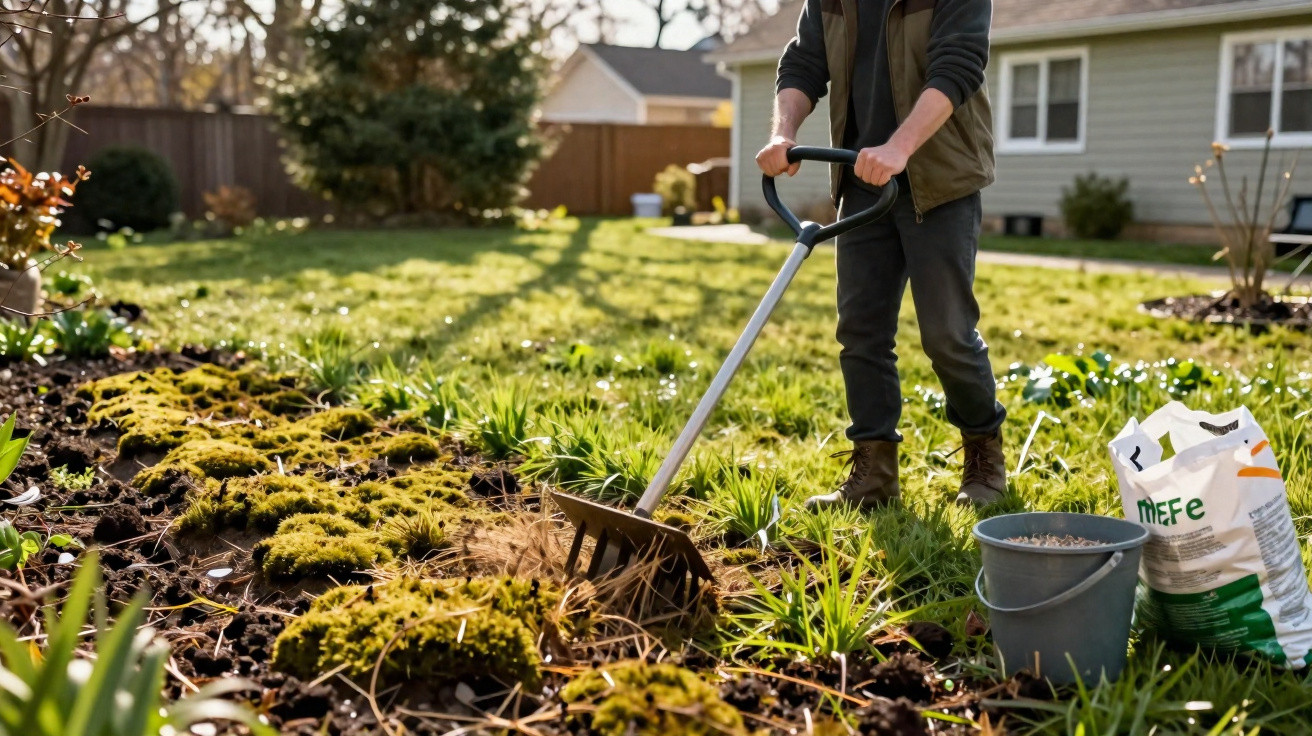
In spring, anyone walking through the garden will notice it immediately: the ground yields underfoot, it almost seems to squelch beneath your shoes, and instead of lush grass there is a soft, damp carpet of moss. This is not simply a “quirk of nature”, but a tangible soil problem – and it is precisely where professional gardeners start, using a straightforward yet methodical approach.
Why a lawn turns into a spongy moss-covered area
Shade and constant damp: the ideal habitat for moss
After a wet winter, soil often takes a long time to dry out. Areas beside house walls, beneath trees or along hedges in particular can remain shaded for extended periods. The ground stays cooler there, while moisture has little opportunity to evaporate. Moss thrives in exactly this combination: it is undemanding, tolerates cold conditions and requires very few nutrients.
The lawn itself is at a disadvantage in these spots. Without direct sunlight, the grass weakens, producing thin, vulnerable shoots. Gradually, it retreats and leaves the entire space to the moss. What starts at the edge can spread across whole areas within a matter of weeks.
When compacted soil causes the lawn to “suffocate”
A second factor, which is often underestimated, is compacted soil. Foot traffic over the year, children playing, garden furniture and heavy rainfall all compress the pores in the ground. This happens especially quickly in loamy or clay soils.
Once soil is severely compacted, hardly any air can circulate through it. Oxygen no longer reaches the grass roots, while rainwater drains away only slowly. The roots effectively suffocate, deteriorate and gradually die. Moss, by contrast, has no deep roots; it attaches only at the surface and copes remarkably well with this sealed crust.
A soft, spongy lawn is a clear sign that the soil needs air, structure and a better balance – not more fertiliser.
Moss as a warning light: what the soil is really “saying”
Overly acidic soil gives moss an easy advantage
A lawn with a great deal of moss is almost always dealing with an imbalanced pH level. Grass grows best in neutral to slightly alkaline soil, whereas moss favours acidic conditions. If the soil is not corrected over a number of years, the balance shifts.
In an overly acidic environment, grass can barely access nutrients, even when it is fertilised regularly. Blades become pale, growth slows, bare patches appear – and every gap invites moss to establish itself. The moss cushion is therefore not so much the real issue as a symptom: it indicates that the soil has lost its balance.
Poor drainage: roots are permanently left in a “bath”
If water remains on the surface after rain, drainage is insufficient. Small puddles, even those visible for only a few hours, show that the upper soil layers are saturated. The lawn roots then spend much of their time sitting in water.
This results in oxygen deficiency and rotting around the roots. Grass is sensitive to such conditions and begins to recede. Moss is barely affected. The longer this continues, the further the balance shifts: less grass, more moss and a softer surface.
The professional starting point: thoroughly clearing the surface
A scarifier rather than a rake: why thorough cutting is essential
Garden professionals almost always start the recovery work with a step that amateur gardeners often put off: thorough scarifying. A scarifier – whether electric or hand-operated – cuts into the surface and pulls moss and matted lawn debris out of the grass.
At first, this can look harsh: after scarifying, the lawn often appears worse than before. That is exactly the intended result. The dense layer of moss and thatch prevents gas exchange, traps moisture at the surface and deprives the lawn of air. Once it is removed, the soil can breathe again.
- Damp but not wet soil: This allows the blades to work effectively without tearing up the ground.
- Several passes in both directions: Work in one direction first, then across it, to catch almost everything.
- Remove moss debris: Sweep or rake up all of the material afterwards.
Anyone who skips this stage and fertilises straight away will often simply encourage further moss growth, because the underlying causes remain unchanged.
Deep air holes: how aeration stabilises the lawn
Scarifying is followed by the second step: the soil needs air. Professionals use aeration, creating holes driven vertically into the ground. In a domestic garden, a sturdy garden fork or dedicated lawn aeration shoes with spikes are often sufficient.
These holes break through the compacted layer and form small channels for oxygen, water and nutrients. Rain can drain downwards again instead of collecting in the upper layer. At the same time, air and microorganisms can penetrate the root zone more effectively, where they break down organic material and create structure.
Anyone who genuinely wants to transform their lawn does not reach for fertiliser first, but gets air into the soil – that is exactly what separates amateur gardeners from landscape professionals.
Fine-tuning the soil: from pH correction to overseeding
Apply lime gently, rather than using harsh chemicals
If the soil reaction is too acidic, targeted liming can help. Garden lime or dolomite powder should be spread thinly and evenly over the area. The key is dosage: apply a moderate amount, not a white blanket. A DIY-store pH test can help to assess the quantity more accurately.
Lime raises the pH slightly and removes the moss’s preferred habitat. At the same time, nutrients become more available to the grass. Soil microorganisms are activated, breaking down grass cuttings and organic matter more quickly – a natural cycle that creates a more resilient lawn over time.
Reseed bare patches immediately with the right seed
Scarifying and aeration inevitably leave gaps behind. If these areas remain exposed, moss or weeds will quickly colonise them again. Landscape gardeners respond straight away with targeted overseeding.
It is worth considering the site carefully:
- Shaded areas: Choose specialist shade-lawn mixtures that can cope with limited light.
- Heavily used areas: Use hard-wearing play and sports lawn varieties.
- Damp locations: Mixtures that manage wet conditions better have an advantage here.
Work the fresh seed lightly into the soil, then keep the area evenly moist over the following weeks without flooding it. This allows the green cover to close quickly again, leaving moss with less opportunity to take hold.
The right season and care: March as a turning point in the lawn year
Why early spring is the best time for lawn recovery
The shift from winter to spring offers ideal conditions for this “treatment”. The soil is usually sufficiently moist but not deeply frozen, temperatures are gradually rising, and grass is beginning to grow again. Measures such as scarifying, aerating, liming and overseeding work particularly well together at this time.
Spreading these stages over several weeks prevents the area from becoming overwhelmed and avoids stressing the grass. Over the following weeks, the lawn responds visibly: the blades become denser, the ground feels firmer underfoot, and the proportion of moss noticeably declines.
Lasting stability: what matters after the “recovery work”
To make the improvement last, the lawn needs a tailored care routine. This includes:
- Mowing regularly without cutting too short – grass should rarely be cut below four centimetres.
- Watering at longer intervals – water less frequently but thoroughly, to encourage deep roots.
- Targeted feeding – use a suitable lawn fertiliser two to three times per year rather than applying small amounts constantly.
- Repeated aeration – once or twice a season on heavily used areas.
Those who monitor their lawn and respond early to the first soft patches or new cushions of moss can avoid more extensive recovery work the following year.
How non-experts can identify problems – and what is best avoided
Many amateur gardeners instinctively reach for moss killers or “miracle products” from the shop shelf. Such products may temporarily darken or kill the green layer, but they do nothing to address compaction, pH level or waterlogging. In the worst case, they also harm soil life and lawn roots.
It is far more effective to look out for simple signs:
- The ground gives noticeably underfoot when walked on.
- Water remains visibly on the surface for a long time after rain.
- Grass grows poorly and looks yellowish, while the moss appears rich green.
- Solid cushions of moss first develop beneath trees and beside walls.
Anyone who treats these signals as useful guidance rather than merely fighting them can achieve a surprising amount through practical steps and suitable care – entirely without aggressive chemicals. A weekend with a scarifier, garden fork and overseeding can strengthen a lawn in the long term more effectively than any quick fix from a bottle.


Comments
No comments yet. Be the first to comment!
Leave a Comment