
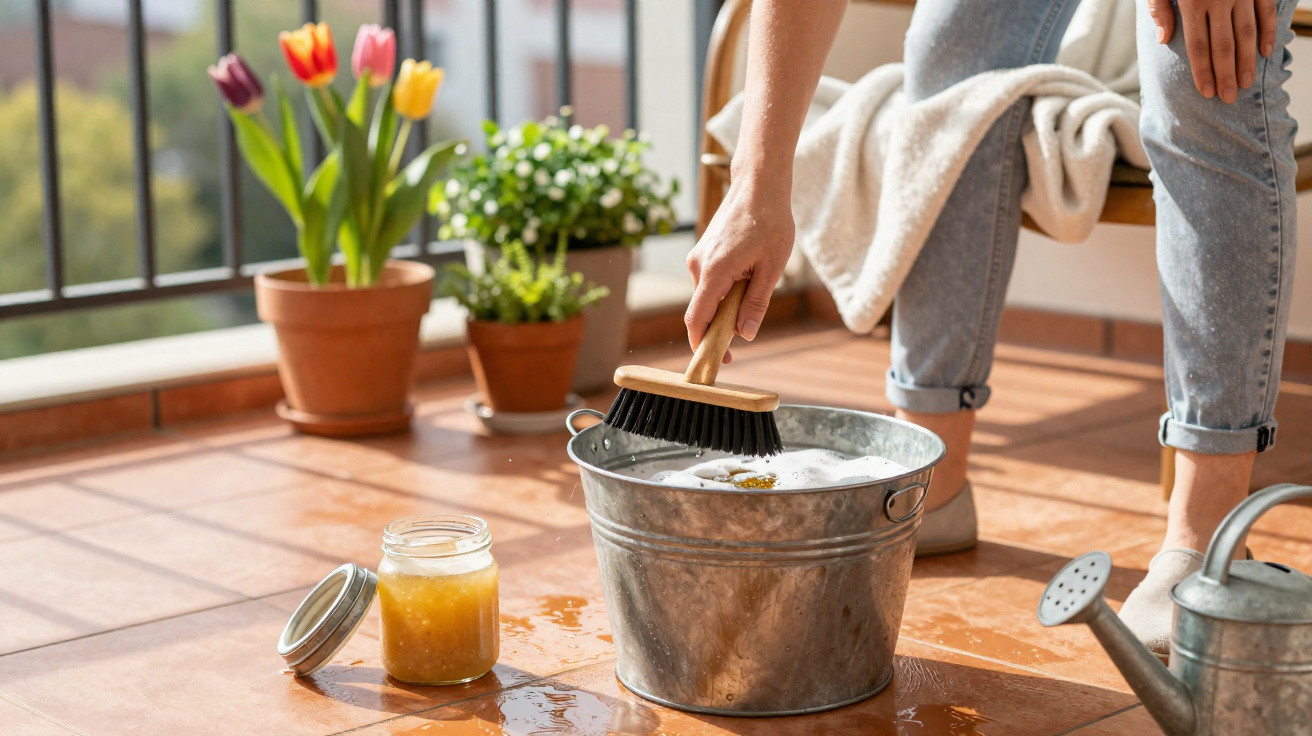
After winter, a favourite outdoor spot can look more like a neglected driveway than a comfortable place to unwind. Before that first coffee outside can be enjoyed, the patio needs cleaning. The good news is that there is no need for harsh chemicals or costly specialist products. One simple household remedy, known for decades, is enough when used correctly.
Why early spring is the best time to clean your patio
In early spring, dirt is generally still sitting on the surface of the paving. The persistently damp winter air may have left its marks, but moss and algae will not yet have spread into every crevice. Taking advantage of this window can save considerable effort later on.
- Dirt has not yet worked its way deep into the surface
- Temperatures are mild enough to use hot water
- Longer dry spells help the patio dry more easily
Choose a rain-free day when temperatures are comfortably above freezing. The surface can then dry properly, the cleaning solution works more effectively, and the task remains manageable.
“Anyone who gives their patio a thorough clean in March or early April will often be free of stubborn dirt until summer.”
The affordable household remedy that cleans almost any patio
Rather than reaching for heavy-duty chemicals, many professionals use a plant-based liquid cleaner that is now available on almost every German chemist’s shelf: liquid versions of traditional soft soap, often sold under names that clearly indicate their vegetable-oil base.
It cuts through grease, loosens dirt from joints and removes grey film from paving slabs without burdening the surrounding area. As it is made from vegetable oils, it is usually biodegradable and contains no harsh solvents.
Benefits of the plant-based cleaner at a glance
- gentle on nearby flower beds and lawns
- does not irritate children’s hands or pets’ paws
- suitable for many materials, including wood, tiles, concrete and some natural stones
- economical: a few tablespoons per bucket of water are sufficient
- inexpensive compared with specialist outdoor cleaners
One container will often last for several seasons if stored somewhere dry and frost-free. This substantially reduces the cleaning cost per square metre of patio.
Step by step: how to clean a patio with a household remedy
1. Remove loose debris
Start with a broom. Loose soil, leaves, small twigs and grit need to be cleared away before introducing water. Wetting the surface immediately would simply rub a layer of mud into the joints.
Pay particular attention to:
- sweeping leaf remnants out of the joints
- removing pebbles and gritting material
- carefully lifting loose patches of moss with a scraper
2. Prepare the cleaning solution
For a thorough spring clean, the following ratios work well:
| Amount of water | Amount of cleaner | Use |
|---|---|---|
| 10 litres of hot water | approx. 10 tablespoons | Deep clean after winter |
| 5 litres of warm water | 3–4 tablespoons | Light cleaning during the season |
The water should be as hot as possible without risking scalding. Heat breaks down grease and grime more quickly, allowing the cleaner to work at its best.
3. Scrub with a brush or deck scrubber
Apply the mixture using a deck scrubber or stiff brush. Dark areas and dirty joints especially deserve extra attention. Working over them on your knees with a hand brush produces noticeably better results, particularly for:
- black joints between concrete or stone paving slabs
- marks left by plant pots
- grease traces beneath the barbecue
On heavily soiled surfaces, it is worth leaving the solution to work for five to ten minutes. During that time, it releases much of the dirt without attacking the material beneath.
“The difference after a thorough scrub is usually visible before the water has even run away.”
4. Rinse properly
Once scrubbing is complete, use the garden hose. Rinse away the foam and loosened dirt with plenty of clean water. Using too little water risks leaving a slight greasy film that can make the surface slippery.
Finish by going over the area with a squeegee, mop or old towel. This leaves behind less dirty water and helps the surface dry faster.
Dosage, material protection and common mistakes
Many people assume that more is better. With outdoor cleaning products, this often causes problems. Too much soft soap in the mixture can leave a slippery residue. This is especially a safety risk on glazed tiles or smooth concrete slabs.
For routine care throughout the year, a weaker solution is usually enough - around half a tablespoon per litre of water. There is no need for “spring-cleaning mode” when only removing pollen dust or light surface dirt between deeper cleans.
Keep sensitive materials in mind
Not every surface tolerates every alternative. Some popular kitchen household remedies may be considered “natural”, but can still cause damage:
- Clear household vinegar: attacks many natural stones and can leave dull patches
- Sodium bicarbonate (raising agent): can roughen fine surfaces
- Chlorine-based products: bleach joints, harm plants and irritate skin and airways
Anyone with a patio made from high-quality natural-stone-look materials - such as marble, granite or quartz composite - should always test cleaning products first in an inconspicuous corner. This quickly reveals whether the surface discolours or becomes dull.
Take care with pressure washers and light-coloured joints
Using a pressure washer is tempting: switch it on, aim the jet and the job is done. In practice, however, holding the water jet too close can easily break up joints or permanently roughen wooden decking. It may look clean at first, but it speeds up wear in the long run.
Anyone who does not want to do without a pressure washer should:
- keep at least 30–40 centimetres away
- avoid directing the jet straight into the joints
- pre-clean with a soft-soap solution rather than relying on pressure alone
For older patios with joints that are already crumbling, the gentler approach of using a brush and plant-based cleaner is particularly worthwhile.
How often to clean - and what else helps keep a patio looking good
In many households, one thorough clean at the start of spring is enough, provided some maintenance is carried out during the season. After prolonged rain or periods of blossom fall, a quick pass with a mild mix of warm water and a small amount of cleaner can sometimes be sufficient.
Useful small routines include:
- Do not leave leaves lying on the patio in autumn; they stain slabs and clog joints.
- Put saucers beneath plant pots to prevent as many dark rings from forming.
- Blot up grease stains after barbecuing immediately with kitchen paper, then wipe the area soon afterwards.
Following these small measures noticeably shortens the major spring clean. The patio stays lighter for longer, and algae are less quick to develop in the joints.
What causes green deposits and black patio joints
Many homeowners are alarmed when green or almost black films appear on their paving after winter. Usually, they are a mixture of algae, fungi, fine dust and organic debris - an ideal feast for micro-organisms.
The plant-based cleaner removes this mixture mainly through mechanical action, aided by the degreasing properties of the oils. Combined with warm water and vigorous brushing, this creates a relatively gentle yet remarkably effective method - entirely without specialist outdoor chemicals.
Improving air circulation also helps in the longer term, for example by cutting back dense planting around the edges. The drier the surface covering remains, the harder it is for algae and moss to establish themselves.
Comments
No comments yet. Be the first to comment!
Leave a Comment