
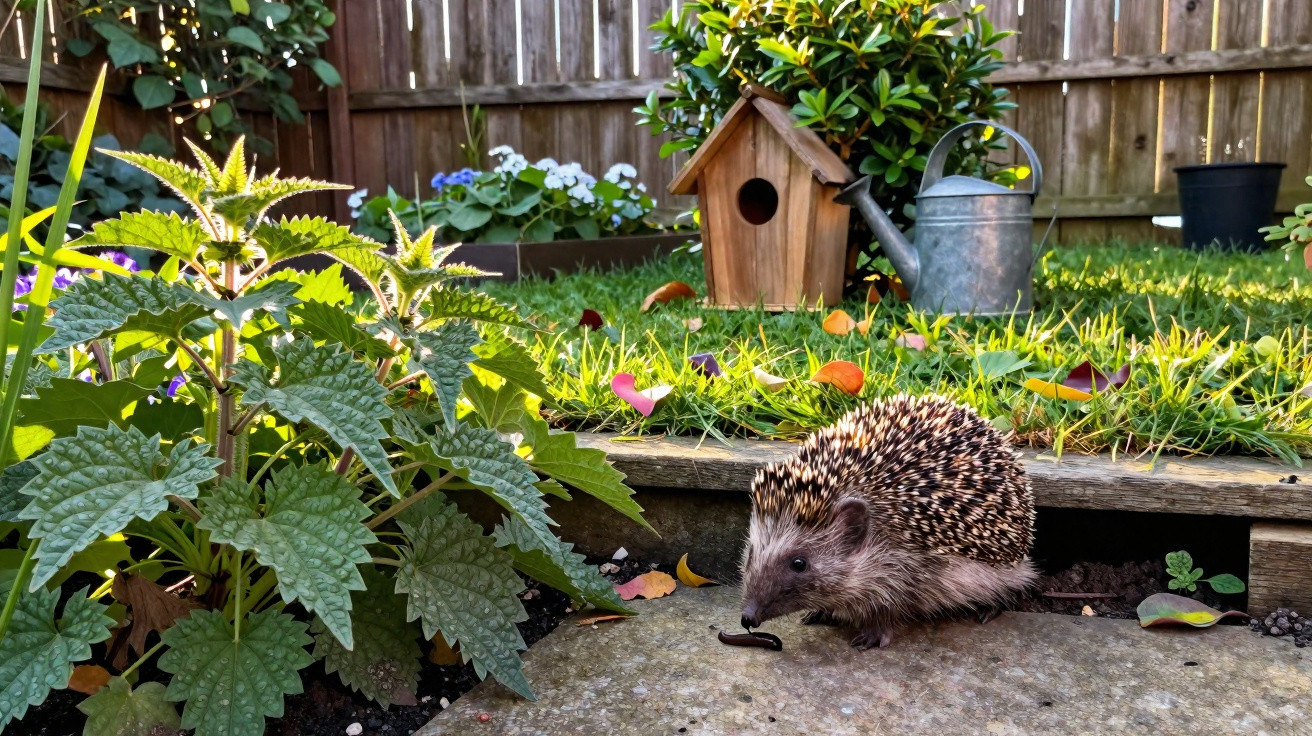
Between precisely mown lawns and immaculately trimmed hedges, nettles can look distinctly out of place. Anyone who leaves them growing is soon considered careless. Yet behind their prickly reputation lies a modest ecological marvel. The plant provides shelter and food, while turning your garden into a haven for hedgehogs, which in turn reduce slugs and other pests.
Why nettles are so attractive to hedgehogs
The unassuming nettle, especially the annual small nettle (Urtica urens), fulfils several needs that appeal to hedgehogs. Its stinging hairs deter larger animals, creating a natural defensive barrier. To a hedgehog, a thick patch of nettles means reliable cover.
Nettles act like a green protective bunker – perfect for hedgehogs that need peace and security during the day.
Among the nettles, a hedgehog can:
- rest undisturbed during daylight hours,
- raise its young in a protected setting,
- escape the heat and stress of an overly tidy garden.
Nettles offer another advantage: they attract insects in large numbers. Aphids, caterpillars and larvae may sound like trouble to many amateur gardeners, but to hedgehogs they simply mean “buffet”.
This creates a small yet effective mini ecosystem. The plant supplies cover while also producing a source of food. As a result, a nettle patch becomes an ideal habitat for a hedgehog within just a few square metres.
An unusual behaviour with possible benefits
Observers repeatedly report that hedgehogs even deliberately rub themselves against nettles. Researchers have not yet reached agreement on the reason. Two explanations seem plausible:
- The hedgehog may be trying to get rid of parasites such as fleas and mites.
- The irritation to the skin may work rather like a massage, stimulating circulation.
Comparable methods are seen in birds that take “ant baths” to combat lice and mites. Hedgehogs may be using nettles for a similar grooming technique.
The hedgehog: the ideal ally against slugs
Many amateur gardeners know the aftermath of a damp spring evening: young plants have been nibbled away, leaves are full of holes and lettuce is reduced to little more than ribs. Slugs are often responsible. This is exactly where the hedgehog comes in.
Its diet mainly includes:
- slugs and snails without shells,
- small shelled snails,
- caterpillars, chafer grubs and other larvae,
- various pest insects,
- earthworms and beetles.
Anyone who attracts hedgehogs into the garden can avoid many poison baits – the prickly-backed visitor does the slug-control work all by itself at night.
This makes the hedgehog a quiet garden helper, maintaining balance without the use of chemicals. It eats creatures that damage plants and can therefore help keep vegetable beds and ornamental plants healthy.
How to make your garden hedgehog-friendly
You do not need extensive landscape design to encourage hedgehogs to settle in your garden for the long term. A few straightforward steps are enough, and nettles are an important part of the approach.
A small nettle corner is entirely enough
There is no need to turn the whole garden into wilderness. A limited area will do. Ideally, create a small zone that is allowed to remain partly untidy:
- a nettle corner by the fence or behind the shed,
- close to a stack of logs or a pile of leaves,
- combined with an untrimmed hedge or line of shrubs.
There, hedgehogs will find cover, nesting material and plenty of food. If you wish, you can also mow one section of lawn less often so that it develops more naturally.
Openings rather than fortresses: making fences hedgehog-friendly
Many gardens are completely sealed off from their surroundings. For hedgehogs, this creates a dead end which, in the worst case, can prove fatal if they can no longer reach food or potential mates. A few simple adjustments can change that.
Useful measures include:
- cutting openings around 13 centimetres in diameter into wooden or solid garden fences,
- leaving small tunnels beneath chain-link fencing,
- ensuring there are gaps in walls that a hedgehog can pass through.
A closed-off plot is like a trap for hedgehogs – small openings turn separate gardens into a connected network of habitats.
A simple DIY hedgehog house
Anyone wishing to give a prickly visitor a particularly warm welcome can build it a shelter. There is no need to buy an expensive specialist product: a few wooden boards are enough to create an improvised hedgehog house.
The important features are:
- untreated, rough-sawn wooden boards with no varnish or chemicals,
- a low, tunnel-like entrance opening positioned away from the wind,
- dry bedding inside, such as hay, straw or dry leaves,
- a site beneath shrubs or behind nettles.
The result is a safe sleeping place that can even serve as a hibernation shelter in winter.
Avoid poison – and never offer a bowl of milk
Anyone wanting to protect hedgehogs should largely avoid chemical products. Slug pellet products are particularly hazardous. Even if a hedgehog does not eat them directly, it can consume poisoned slugs, sometimes with fatal consequences.
Feeding can also involve hidden risks. Many people leave out milk with the best intentions. This is harmful for hedgehogs because their digestive systems can barely process lactose, often leading to diarrhoea and severe gastrointestinal problems.
Better options are:
- a shallow dish of fresh water,
- if necessary, a little high-quality cat food without gravy,
- several water stations around the garden during dry, hot spells.
Nettles: weed, superplant, or both?
Nettles are valuable for more than just hedgehogs. They are exceptionally versatile plants in the garden, and many gardeners already use them deliberately.
Their useful applications include:
- nettle feed: a natural liquid fertiliser for hungry plants such as tomatoes or squash,
- plant tonic: when diluted and sprayed onto leaves, it strengthens plants,
- habitat: a food plant for butterfly caterpillars, including red admirals and peacock butterflies,
- wild vegetable: young shoots can be used in soup, pesto or as a substitute for spinach.
Anyone who sees nettles only as an annoying weed is missing out on fertiliser, animal food, wild vegetables – and one of the very best hedgehog magnets of all.
In the kitchen, young nettle leaves offer a surprisingly spinach-like flavour. Cooking removes their stinging hairs. Many people use them in quiches, pasta fillings or as a green addition to smoothies.
How your garden can become a mini nature reserve
A little intentional “messiness” in the garden can create valuable refuges. A nettle bed, a leaf pile or a wild hedge margin may appear unremarkable, but each makes a major contribution to biodiversity.
Those who encourage hedgehogs and other beneficial creatures gain several advantages:
- less slug and insect damage to vegetables and ornamental plants,
- less need for chemical plant-protection products,
- more garden wildlife, including birds, butterflies, toads and ladybirds,
- a natural cycle of predation that is more stable than any chemical solution.
Particularly in densely built-up areas, gardens become important stepping stones between parks, fields and woodland. A few fence openings and a refusal to make everything completely sterile can transform an ordinary plot into a small sanctuary for hedgehogs and other wildlife.
Practical advice and small risks to keep in mind
If you deliberately establish nettles, there are a few points to consider. The plant spreads readily when left entirely unchecked. A clearly defined area, bordered for example by lawn edging stones or a small barrier, will help keep it under control.
Gloves are essential when handling nettles, especially while cutting or harvesting them. It is worth briefly explaining to children why this corner is “prickly” and why it is being left in place nevertheless. This also has an educational benefit: nature is understood as something worthwhile rather than inconvenient mess.
If you are unsure how strongly to make or dilute nettle feed, begin by experimenting with small amounts. Many gardeners favour a ratio of around 1:10 with water for use in a watering can. The feed has a strong smell, but it is said to promote growth noticeably.
When combined with other structural features, such as piles of stones, deadwood and dense hedges, nettles create a genuine mosaic of habitats for hedgehogs. No individual measure needs to be spectacular. It is the combined effect of many small, thoughtful choices that makes the difference. Suddenly, the supposedly troublesome nettle becomes the starting point for a lively, healthy garden, where a hedgehog snuffles through the night while quietly keeping your slug problem within limits.

Comments
No comments yet. Be the first to comment!
Leave a Comment