
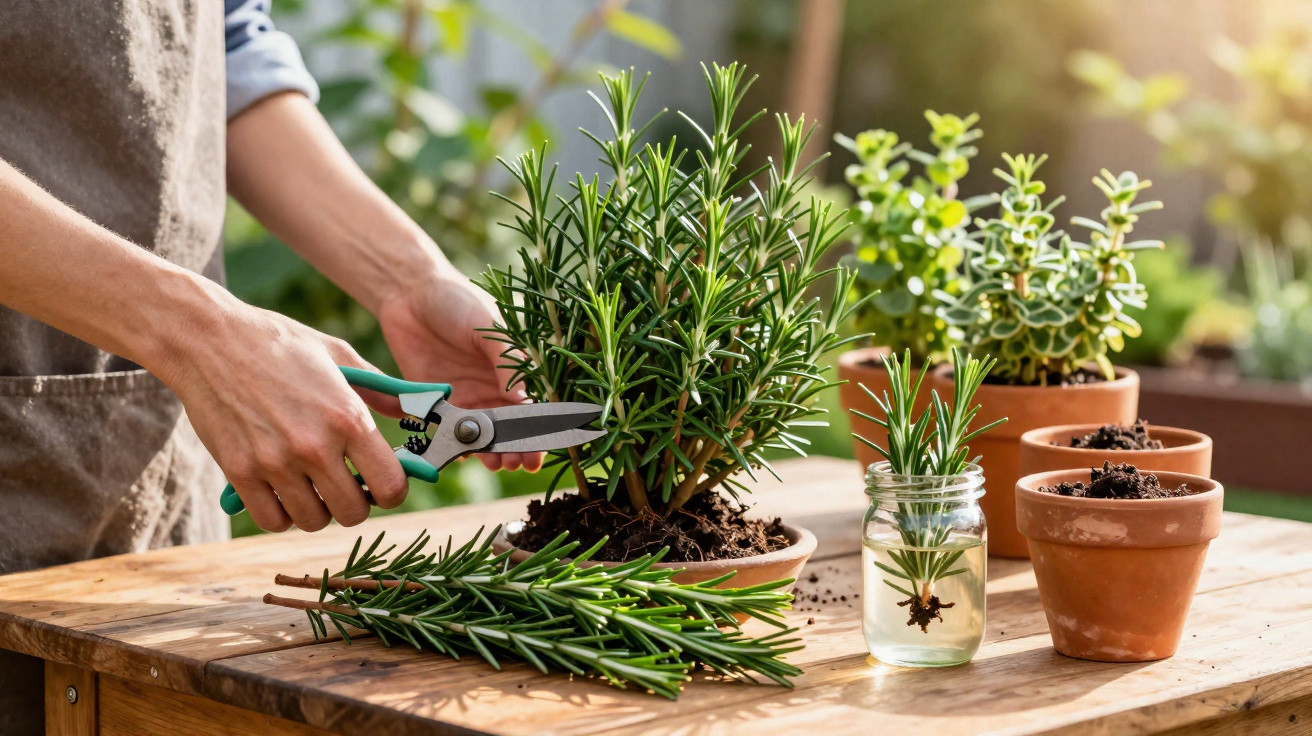
With the right pruning, that can be changed.
Rosemary is considered an easy-care Mediterranean plant. However, without purposeful pruning, the shrub becomes woody, turns bare in the centre and loses its flavour. Knowing when and how to use the secateurs will keep rosemary vigorous, compact and full of fresh, aromatic shoots for decades.
Why rosemary needs pruning at all
Rosemary is an evergreen subshrub. Its shoots initially grow soft and green before becoming increasingly woody. If it is not pruned, the following can happen:
- old shoots dry out and turn grey-brown
- bare, poorly lit areas develop inside the plant
- the shrub sprawls apart and looks untidy
- the leaves lose a noticeable amount of their aroma
“Regular, light pruning encourages new green shoots, denser foliage and a more intense fragrance.”
A moderately pruned rosemary plant provides fresh sprigs for the kitchen throughout the year, retains an attractive shape and copes far better with heat, drought and frost.
The best time to prune rosemary into shape
Spring pruning after flowering
The ideal time for the main prune is in spring, once flowering has finished. In many areas, March to April is particularly suitable, although it may be slightly later depending on the weather.
Proceed as follows:
- cut back only young, green growth
- shorten faded shoots by around one third
- never cut entirely into old, brown wood
In cooler areas, it is worth waiting until there is no longer any risk of overnight frost. Young plants are particularly sensitive there. For newly planted rosemary, it is enough to pinch out the soft tips by five to eight centimetres. This encourages branching without putting the plant under stress.
A light maintenance prune in autumn
A second, small prune in October helps prepare the shrub for winter. This is not intended as drastic pruning, but rather as a tidy-up:
- remove dead, dried-up shoots
- shorten damaged branches or those that have grown badly out of shape
- thin out overcrowded branches so that air can reach the centre
Dry, sunny days are best. Cold, damp conditions slow wound healing considerably. In exposed areas, autumn pruning should be especially gentle; otherwise, frost damage can easily occur at fresh cut surfaces. A mineral mulch, such as gravel or grit, around the root area provides further protection and perfectly suits the nature of a Mediterranean plant.
Times when rosemary should not be pruned
Some periods are more harmful than helpful for pruning:
- Frosty spells: fresh cut surfaces can freeze in sub-zero temperatures.
- Heatwaves: pruning combined with drought stress is a double shock for rosemary.
- Prolonged rain: wet wounds create ideal conditions for fungal diseases.
- Peak flowering: extensive cutting at this point deprives the plant of a great deal of energy.
Small sprigs for cooking can, of course, be picked all year round. More substantial pruning should be reserved for spring or mild autumn weather.
Young or old rosemary: how pruning changes
Shaping young rosemary gently
For plants up to around two years old, the priority is building their framework. Pruning should therefore be very cautious:
- shorten only green tips by 5–10 centimetres
- remove no more than one quarter of the total leaf mass
- always cut just above a pair of leaves or a node
This gradually creates a compact, well-branched bush. Cutting too severely at this stage weakens young roots and noticeably slows growth.
Rejuvenating old rosemary step by step
Older specimens with heavily woody, bare branches need a longer-term approach. One major cut would quickly overwhelm them. A plan spread over several years is better:
- first remove severely dried-out and completely bare branches
- retain areas with even a few remaining green shoots as “rescue islands”
- gradually shorten further old sections over two to three years
This gives the plant time to produce new shoots without suddenly losing too much foliage. With some patience, even elderly rosemary shrubs can become denser and more vigorous again.
Severe pruning as a last resort
If the shrub has been completely neglected for years, a drastic measure may sometimes be the only option. In that case, shoots can be cut back to half their length, but only where small buds or leaves can still be seen on the wood. Completely dead sections will not regrow.
“After heavy pruning, rosemary needs peace, loose soil and very carefully controlled watering – no constant wetness and no severe drying out.”
Such a plant often produces new shoots only after several months. Giving up too soon may mean pulling out a plant that was just beginning to return to life.
Rosemary in pots and beds: different approaches
Pruning rosemary in a pot correctly
In a container, roots are restricted for space, so the plant has less capacity to recover than it does in a bed. Pruning should be adjusted accordingly:
- when in doubt, remove slightly less than you would from rosemary in the ground
- shorten only green, soft shoot tips
- avoid cutting hard, old wood wherever possible
Check the compost after pruning: it should be free-draining, with no standing water in the saucer. If the root ball dries out too severely, growth quickly stalls; if it remains wet, the roots rot.
Pruning rosemary in the ground more extensively
Rosemary grown in a garden bed is noticeably tougher. Its roots have more room, nutrients and moisture, allowing the plant to tolerate stronger pruning:
- longer shoots can be cut back by one third of their length
- remove obstructive inner branches so that light and air reach every part of the plant
- shape the shrub so it neither hangs over paths nor crowds neighbouring plants
In a bed, gardeners can confidently do a little “sculpting” – from a loose bush to a clearly defined shape, anything is possible as long as enough green sections of shoot remain.
Special forms: trailing varieties and ball rosemary
Strongly trailing varieties, such as those grown over wall tops or in hanging baskets, often produce individual upright shoots. Remove these to maintain the characteristic carpet-like effect.
Anyone wishing to train rosemary into a ball should use a similar approach to clipping box:
- shorten all shoots evenly twice a year
- move slowly around the plant while cutting
- step back regularly to check the overall shape
Over time, this produces a dense green ball that gives beds structure while also supplying fresh herb sprigs.
Common mistakes when pruning rosemary
Cutting into old wood
Rosemary rarely produces new shoots from truly old, brown wood. Cutting deeply into it risks leaving permanent bare patches. A simple test can help:
- lightly scratch the bark with a fingernail
- if the tissue beneath is green and fragrant, it can be cut
- if it looks grey, dry and has no scent, leave the secateurs alone
This preserves the living areas, from which the shrub can develop new green growth.
Removing too much at once
As a general rule, do not remove more than around one third of the total leaf and shoot mass in any one pruning session. A more drastic cut puts the plant under stress. It will then direct all its energy towards healing wounds rather than producing strong new growth.
“It is better to prune in several moderate stages over two to three years than to take the secateurs to the whole plant at once.”
Unsuitable tools and poor conditions
Sharp, clean garden secateurs are essential. Blunt blades crush shoots, making it easy for bacteria and fungi to take hold. The blades should be briefly disinfected, particularly when moving from one plant to another.
Weather also plays a major role: dry, sunny conditions support wound healing, while persistent dampness encourages fungal infection. A position receiving at least six hours of sun each day strengthens the shrub in the long term and significantly improves its tolerance of pruning.
Propagating rosemary from cuttings – a useful benefit of pruning
Choosing suitable shoots
Pruning produces plenty of attractive semi-soft shoots that can easily be turned into new plants:
- select healthy, green sprigs measuring 15 centimetres long
- strip all leaves from the lower third
- leave only the upper needles in place
Place the cuttings in a very free-draining mix of potting compost and coarse sand at a ratio of roughly 1:1. This blend prevents waterlogging and supports root formation.
Rooting cuttings in water or compost
There are two ways to do this:
| Method | Benefits | Particular points |
|---|---|---|
| Water | Root development is visible, which encourages you to keep going | Change the water daily and use only young, soft shoots |
| Compost | Roots become more robust, with less adjustment needed when planting out later | Keep the growing medium slightly moist, not waterlogged; ideal for somewhat firmer shoots |
The pots or glasses should be kept somewhere bright but out of full sun. After four to six weeks, the first roots are usually visible, or the cutting will be firmly anchored in the growing medium.
Caring for young plants
Once they have formed a clear root ball, move the young plants into larger pots. Use a loose, gravelly growing medium again and water very sparingly. They will tolerate full sun only after a brief acclimatisation period. A sheltered, bright spot away from strong winds is ideal.
When young rosemary reaches around 15 centimetres in height, it can be planted into a bed or left in a large container. A first light shaping cut will immediately help it grow bushy rather than straggly.
Pruning rosemary correctly provides not only a permanently attractive, compact shrub but also a reliable supply of aromatic sprigs. Each maintenance prune also creates new cuttings, so your own stock of Mediterranean herbs grows year after year almost by itself.




Comments
No comments yet. Be the first to comment!
Leave a Comment