
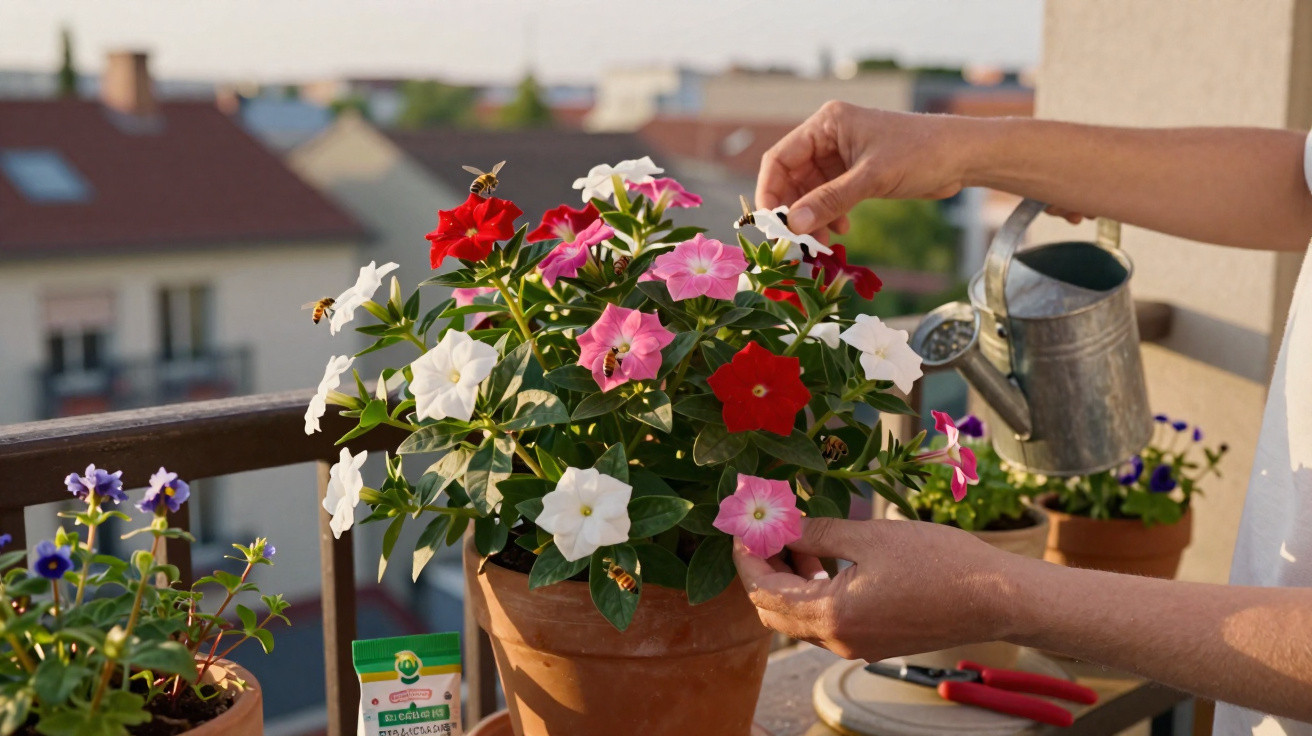
Between work, family commitments and limited space, there is often no more than a small balcony or a narrow strip of front garden available. Yet it can still be a place that buzzes, flutters and glows with colour. This is where an impressively uncomplicated flower comes in: it attracts insects almost irresistibly while being remarkably easy to care for.
An unassuming plant with major benefits for bees and butterflies
The plant in question is Pentas, botanically known as Pentas lanceolata. It is also sold as the “star flower” or “Egyptian star cluster”. Both names are fitting: its blooms grow in dense clusters, with every tiny flower shaped like a star. Together, they form a compact ball of flowers that immediately stands out.
Pentas originally comes from tropical areas. It grows there as a perennial, while in the UK it is generally cultivated as an annual summer plant. Reaching around 60 to 90 centimetres tall, it branches freely and produces numerous flower clusters. There is a colour to suit almost every taste: rich red, soft pink, vivid cerise, white and purple, with newer varieties even offering yellow tones.
“For insects, Pentas is like a permanent filling station: its tubular flowers provide plentiful nectar for many weeks.”
This is precisely what makes the plant so appealing for anyone keen to support pollinators without having time for a complex wildlife garden. Bees, bumblebees and butterflies visit the flowers repeatedly because food is quick and easy to reach. In warmer parts of the world, hummingbirds also feed on Pentas; in the UK, it is mainly day-flying butterflies and solitary bees that take their place.
Why Pentas suits a busy routine
Many traditional bee-friendly plants are beautiful, but they require room, some gardening knowledge and ideally proper garden soil. Pentas, by contrast, can be grown without difficulty in pots or balcony planters. This makes it suitable even for people whose entire “garden” consists of a narrow railing.
Given sufficient warmth and light, the plant flowers continuously from late spring until the first night frosts. Pentas truly comes into its own during high summer, when many other plants slow down. Buying established plants in April or May and moving them into larger containers gives you a long, colourful season.
- ideal for full sun and warm positions
- suitable for borders, containers and balcony planters
- flowers profusely with little maintenance
- a powerful insect magnet on paved urban balconies
Choosing the right position for Pentas
Pentas thrives in warmth. A site in full sun is ideal, provided that the compost does not dry out completely. Light partial shade is possible, but flowering will be less abundant the less sun the plant receives.
“The number-one rule: too much light is better than too little – Pentas is a sun lover.”
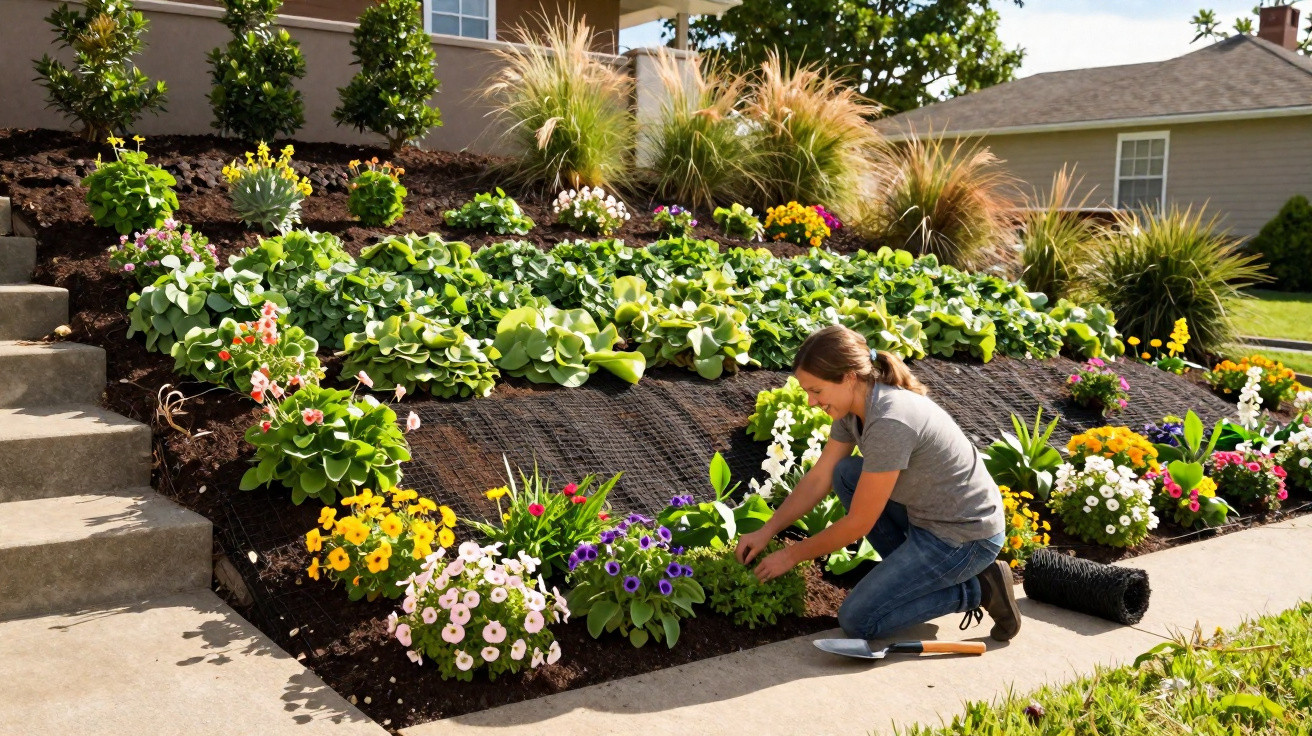
In a garden border
In borders, Pentas performs best in a sheltered, warm spot, such as in front of a house wall or beside a patio. The soil should be:
- loose and rich in humus
- free-draining, rather than prone to waterlogging
- improved with compost or potting compost if it is very sandy or very heavy
Plant young specimens around 30 to 40 centimetres apart. This allows air to circulate between the shoots and makes diseases less likely.
On a balcony or patio
Pentas is particularly effective in small spaces. It develops a bushy habit while remaining reasonably compact, making it well suited to:
- large balcony planters at least 20 centimetres deep
- pot displays combined with other summer flowers
- a tall specimen container positioned beside a seating area
Use high-quality potting compost containing some slow-release fertiliser, or mix in well-rotted compost. A drainage layer of expanded clay pellets or gravel in the base of the pot helps prevent waterlogging.
Easy everyday care: few tasks, months of flowers
Despite its tropical origins, Pentas is not fussy. Follow a few basic guidelines and you can enjoy it for months.
Watering and feeding
Pentas prefers consistently moist compost, but does not tolerate “wet feet”. Compost dries out more rapidly in pots than it does in a border. A simple routine is helpful:
- Push a finger 2–3 centimetres into the compost.
- If it feels dry, water thoroughly until water runs from the base of the pot.
- Tip away any excess water left in the saucer after a few minutes.
During its main growing period, apply a liquid feed for flowering plants every three to four weeks. This encourages fresh buds to form and keeps the plants vigorous.
Removing faded blooms – the fast track to fresh buds
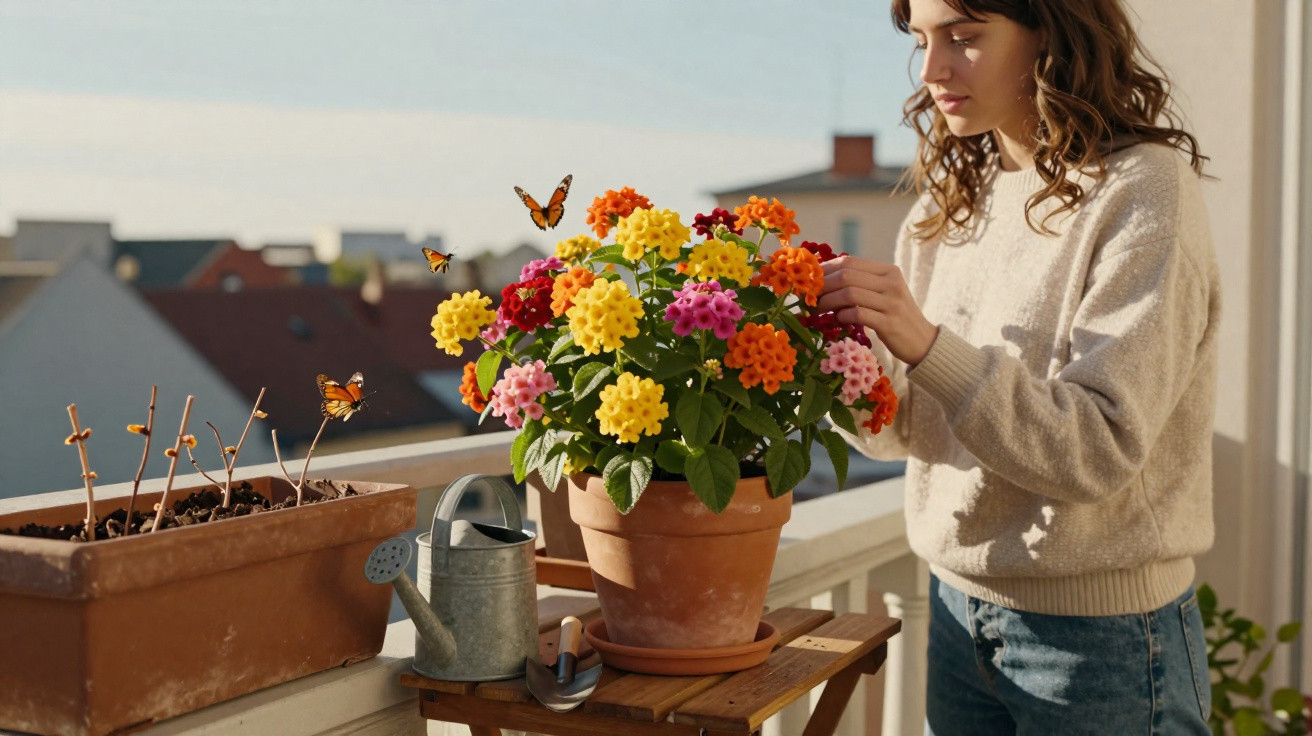
A small amount of pruning has a big effect: regularly snipping off spent flower clusters with scissors or pinching them away tells the plant to produce more blooms. It will remain compact and continue adding fresh bursts of colour.
“A useful rule of thumb: whenever a flower ball has visibly faded, it can be removed – the plant will repay you with more blooms.”
Frost-sensitive: helping Pentas through winter
The plant’s one genuine weakness is its sensitivity to frost. In areas with mild winters, comparable to hardiness zones 9 to 11, Pentas can remain in a border as a perennial. There, it can be cut back hard in winter before growing again in spring.
This will usually not work outdoors in the UK. There are two options:
- grow it as a seasonal plant: Plant in May, enjoy it until frost arrives, then dispose of it and start again the following year.
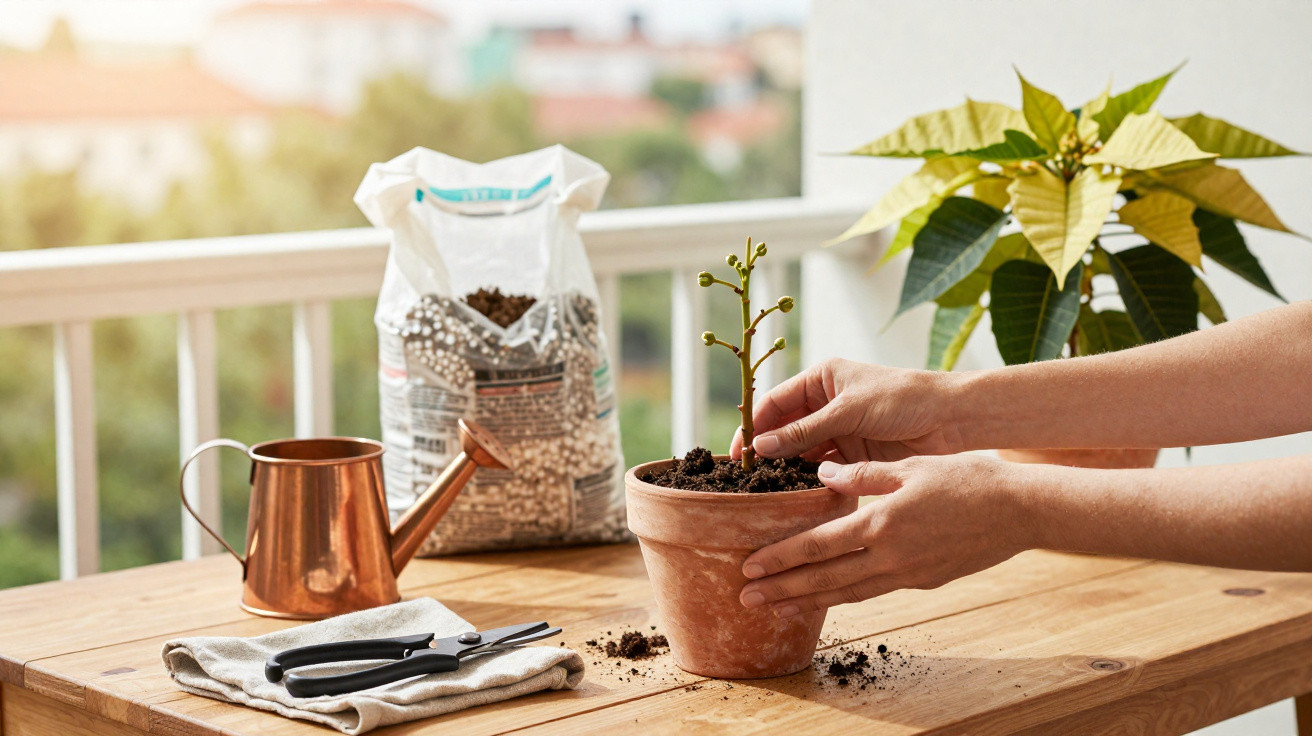
- overwinter it in a pot: Move containers into a bright, cool space before the first frost, such as a conservatory, a stairwell window or a light garage.
Water less in winter, do not feed, and keep the compost only lightly moist. In spring, gradually acclimatise the plant to brighter conditions before returning it to the balcony or patio.
Plants that make an excellent pairing with Pentas
The flower becomes even more attractive when it forms part of a small buffet for insects. Interesting combinations can be created in balcony planters or borders, providing structure and colour throughout summer.
| Plant | Effect when combined with Pentas |
|---|---|
| Lavender | Strongly scented, attracts additional bees and adds a Mediterranean feel |
| Verbena | A similar flowering period, with delicate clouds of bloom above the compact stars |
| Marigolds | Tough and uncomplicated; fill gaps and provide pollen for insects |
| Sage (ornamental sage) | Upright flower spikes and a strong attraction for bumblebees |
Such mixed plantings can enhance even a narrow urban green space or a small courtyard visually. At the same time, they create valuable stepping stones for pollinators in densely built-up neighbourhoods.
Why Pentas is an excellent starting point for an insect-friendly garden now
Many people want to “do something for bees” but are unsure where to begin. Pentas is a practical introduction because it does not demand textbook gardening knowledge. A sunny position, a sufficiently large pot, some water and occasional fertiliser are usually all it needs.
Anyone who develops a taste for it can expand step by step: a second planter filled with herbs such as thyme and oregano, a pot of lavender, perhaps a small insect hotel nearby. In this way, an impulse plant purchase can gradually become a small ecological project that not only looks good but also brings measurable benefits.
Pentas has another advantage: it is well suited to introducing children to nature. Its flowers sit at an easy height for looking at and reaching, while visiting butterflies and bees can be observed from a safe distance. The result is a living mini experiment just outside the balcony door, with no complicated equipment required.

Comments
No comments yet. Be the first to comment!
Leave a Comment