
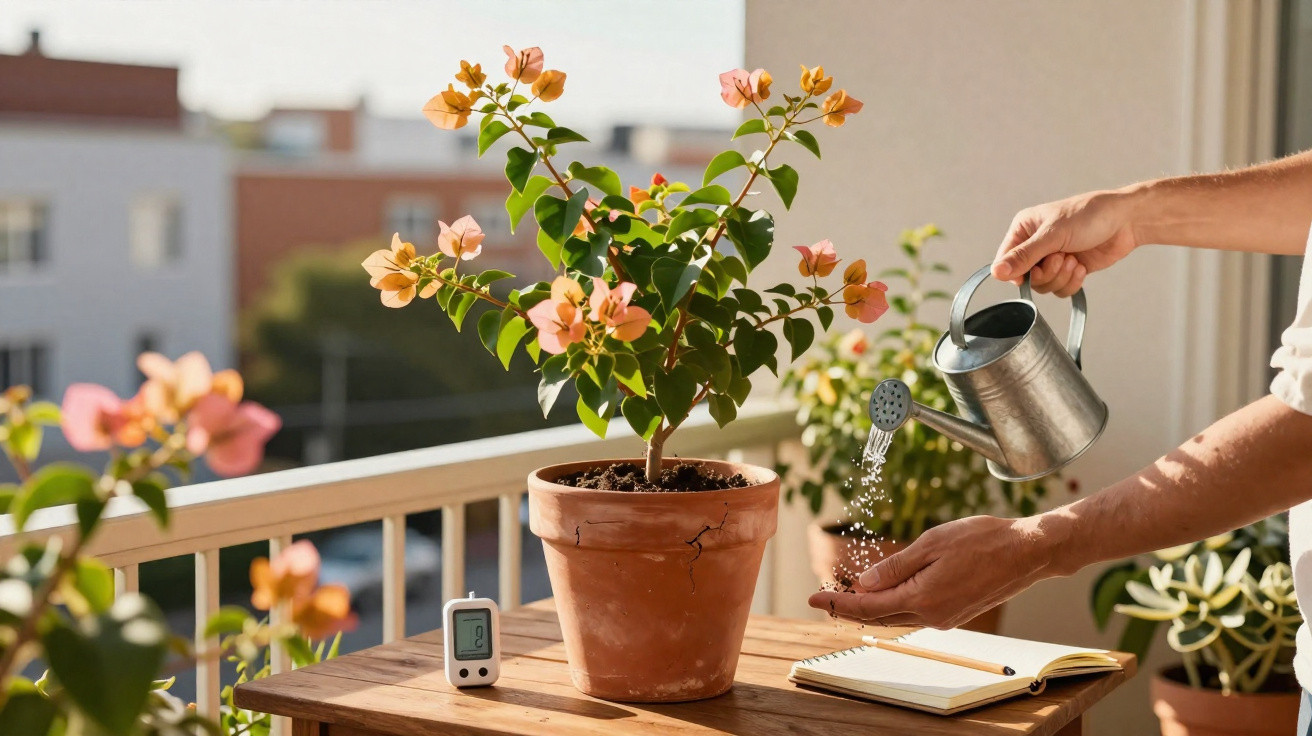
Dense green growth, yet not a single flower – many Bougainvillea owners know this frustration all too well.
Gardeners are now sharing a straightforward adjustment.
With its spectacular colours, this climbing plant is a holiday favourite for patios and balconies. Yet in Central Europe, it often stubbornly stays green. This is rarely due to a lack of plant-care skills, but usually to a well-intentioned routine that prevents flowering.
Why Bougainvillea is so reluctant to flower
When buying a Bougainvillea, most people picture a wall covered in pink, orange or white, much like a Mediterranean house façade. What they often get instead is a pot full of lush, healthy foliage, while the colourful bracts fail to appear.
The starting conditions are hugely important. This plant comes from dry regions baked in sunshine and thrives on:
- at least six hours of direct sunshine each day
- temperatures between 20 and 30 degrees during the growing period
- a bright, sheltered position, ideally against a south- or south-west-facing wall
- brief, relatively infrequent rain showers rather than constant dampness
As temperatures approach 0 degrees, many varieties can suffer damage. Once temperatures fall below 5 degrees, the plant should be moved to a protected spot, usually indoors or to a frost-free location.
“If the foliage is perfect and the plant is growing wildly, the Bougainvillea often lacks precisely what it needs to flower: the right amount of stress.”
The common mistake: too much water and too much fertiliser
A typical patio situation looks like this: there is a July heatwave, the owner waters every two days and adds general-purpose fertiliser each week. After all, the plant is meant to be “spoilt”. The outcome is long, vigorous shoots, dark green leaves and not one colourful bract.
From a botanical perspective, this makes complete sense. With plenty of water and high levels of nitrogen, the plant thinks: “Growth! Ideal conditions! Build leaf mass first.” Its energy is directed into stems and foliage. It invests very little in reproduction, meaning neither flowers nor the characteristic colourful bracts receive much attention.
When water is temporarily scarce, however, Bougainvillea switches to “flowering mode” more quickly. Slightly dry compost acts as a signal to focus on producing offspring. The plant then forms more flowers to attract pollinators – and, with them, those famous vivid bracts.
The controlled dry-period strategy for Bougainvillea
Before changing your watering routine, the basics must be right. Even the best technique achieves little without them.
Choosing the right position and basic care
- Full sunshine: A position in full sun is essential. In partial shade, it will generally produce foliage only.
- Free-draining compost: Use a light, sandy, humus-rich growing medium that dries out quickly.
- A pot with drainage: Drainage holes in the base are vital; do not leave the pot permanently standing in water-filled saucers.
- Fertilise sensibly: Feed moderately during the season, favouring potassium and keeping nitrogen low.
Fertilising should stop by mid-September at the latest. New leaves should not produce excessive soft growth before winter, but instead have time to mature.
How the “thirst treatment” works in practice
During warm months, the rule is simple: water only once the top three to four centimetres of compost have dried out – not before. Then water thoroughly until it runs out from the bottom. Around half an hour later, empty any excess water from the saucer so that the roots are not left sitting in wet conditions.
From November to March, the plant should spend winter in a bright, cool place. Temperatures of 10 to 15 degrees are ideal. It needs water only very rarely at this time, and the pot should remain mostly dry. No fertilised tap water and no warm corners by radiators: the dormant period should genuinely feel like “winter”.
“The combination of slightly dry periods and thorough watering in summer, together with a cool, relatively dry winter position, is the trigger for flowering in many Bougainvilleas.”
Watering without flower frustration: finding the right moment
Rather than following a calendar or an irrigation computer, it is worth checking directly inside the pot. The easiest method is still using your finger:
- Push a finger two to three centimetres into the compost.
- If that layer still feels damp, do not water.
- If it is dry and crumbly, water generously.
Slightly drooping leaves indicate mild water shortage. This is acceptable and usually reversible, provided the leaves do not turn brown or curl tightly. The plant can be allowed to “ask for a drink” without causing immediate alarm.
The core principle is this: the compost should dry out regularly, but it must not remain bone-dry for weeks. This pattern resembles a summer thunderstorm that arrives repeatedly after a short dry spell.
Common traps that slow down flowering
Even gardeners who have mastered watering can unintentionally hold their Bougainvillea back. Frequent pitfalls include:
- Automatic irrigation: Constant moisture prevents the alternation between dry and wet periods.
- Water permanently left in the saucer: This encourages root rot and severely reduces flowering vigour.
- A pot that is too large: The plant puts all its energy into growing roots before it turns to flowering.
- Pruning at the wrong time: Heavy pruning before flowering removes the shoot tips where the colourful bracts develop.
A light trim immediately after flowering is more appropriate, followed by a shaping and somewhat heavier prune towards the end of winter. This leaves sufficient young shoots for the following season.
What many people confuse: flowers or simply leaves?
A closer look at the plant often clears up misunderstandings. Its apparent “floral display” is actually made up of colourful bracts. The true flowers are small and fairly inconspicuous, sitting in the centre.
This also explains why the plant looks so dramatic despite its real flowers being tiny. The bracts provide the visual display: they shine in pink, violet, orange, white or two-colour combinations, attracting insects.
Practical examples: when the approach works – and when it does not
A Bougainvillea newly bought from a garden centre is often already well prepared for flowering. After its first winter in your own home, though, it may react sulkily, producing plenty of green growth but no colour. In many cases, keeping it consistently a little drier at intervals during the second summer and slightly reducing fertiliser will help.
The technique will not work without sunshine, however. If the plant is sheltered from wind but sits in the shade of a balcony, controlled water shortage will make little difference. It returns to flowering only when light, temperature, watering and nutrients work together.
Risks, limits and useful additions
Taking “dry stress” too far risks leaf drop and root damage. The key is careful judgement: dry but not completely parched, cool but not frosty. Particularly in small pots, compost can dry out entirely within a few hours in summer sunshine. A layer of mineral mulch, such as expanded clay, can help retain water in the compost without encouraging waterlogging.
Combining it in the same container with other sun-loving plants, such as Mediterranean herbs, is also interesting. Rosemary and thyme tolerate similarly dry conditions. This creates a planting scheme that looks coherent and has comparable requirements for water and position.
Anyone willing to adopt this slightly unfamiliar care method will often get exactly what they want from a Bougainvillea: a plant that does more than grow, bursting into colour without exotic tricks, simply through careful management of water, light and a little shortage to encourage flowering.
Comments
No comments yet. Be the first to comment!
Leave a Comment