
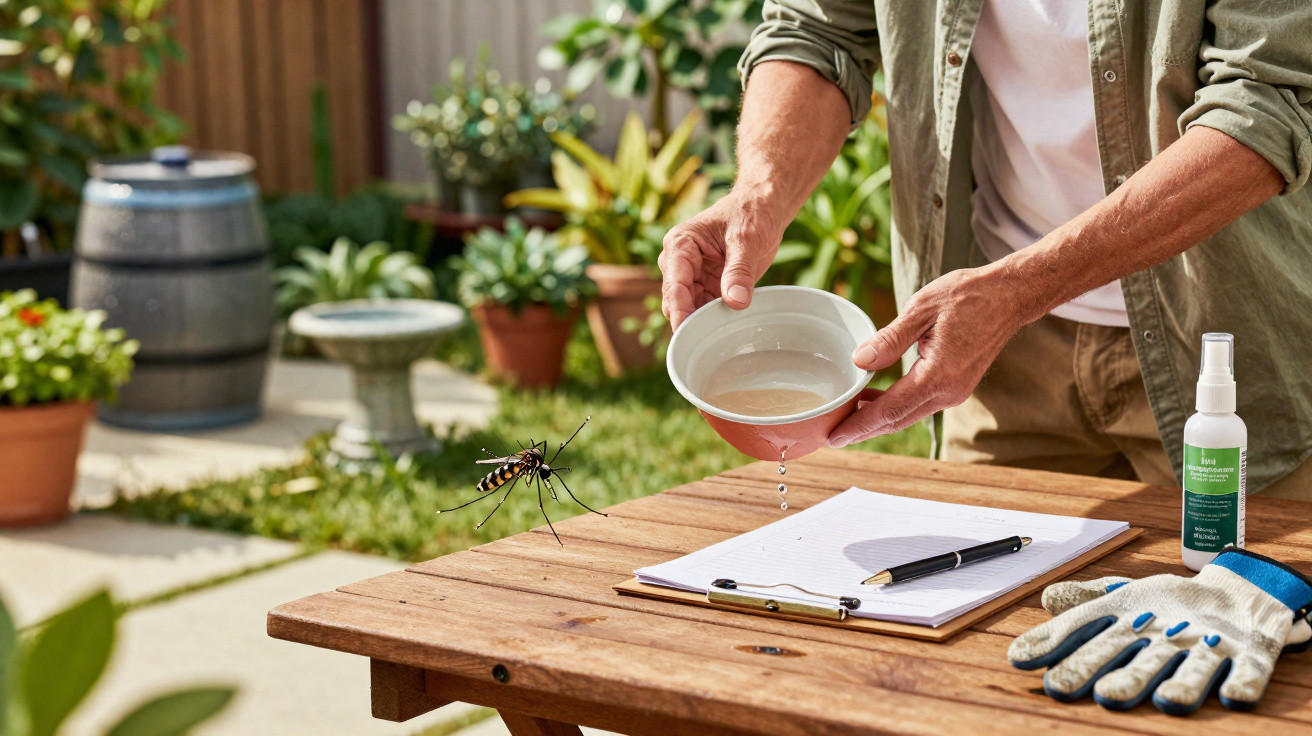
While many people are still in winter mode, the first mosquitoes are already on the move. The Asian tiger mosquito in particular, which has spread rapidly in recent years, is beginning its season much earlier because winters have been exceptionally mild and wet. Anyone hoping to avoid a full-scale mosquito infestation over the coming months needs to act now – before the invasion in their own garden really gathers pace.
An earlier season: why conditions favour mosquitoes this year
Last winter was unusually mild and rainy in many areas, with frosty spells either brief or absent altogether. This mix of warmth, plentiful water and rapidly lengthening daylight means mosquito larvae can develop far earlier than they could only a few years ago.
Experts have reported finding larvae as early as the end of February – a time when many assume the “mosquito season” is still a long way off. Yet the groundwork for a long, intense summer is already under way: tiny eggs can become biting adult insects in roughly a week.
“Anyone who waits until the first mosquito bites has already missed the crucial opportunity for prevention.”
The tiger mosquito benefits especially from these conditions. It is a highly successful urban and suburban parasite, adapted to densely built-up neighbourhoods, balconies, courtyards and allotments, with a particularly short development period and an exceptionally high egg-laying rate.
How your garden becomes a mosquito breeding pool
Native mosquitoes tend to use ditches, ponds or flooded areas, whereas the tiger mosquito needs only the smallest amount of water: a plant-pot saucer, the base of a parasol, an overlooked watering can, a toy with a hollow, or a crumpled sheet of tarpaulin.
In autumn, females deposit their eggs on the dry inner walls of such containers. Up to around 150 eggs can be laid at a time. These tiny survivors cope easily with low temperatures and simply wait for suitable conditions: if the temperature reaches around 15°C for several consecutive days in late winter or early spring, one heavy downpour is enough for the eggs to end up in water. From there, the process takes care of itself.
Given sufficient warmth, larvae turn into pupae within a few days and then emerge as adult mosquitoes. The whole cycle can be completed in just over a week, turning an inconspicuous drop of water into an entire cloud of biters.
“The mosquito that bothers you on a sun lounger in summer is very likely to have come from a container in your own garden or on a neighbouring property.”
Tiger mosquitoes also stay close to home. They generally fly only within a radius of about 100 to 150 metres from where they hatched. This makes private properties key battlegrounds against an infestation – and the places where a mosquito surge can either be curbed or intensified.
When to act against Asian tiger mosquitoes
The thermometer provides the clearest signal. Once daytime highs reach roughly 15°C for several days running, large-scale hatching begins out of sight – even if nobody has yet noticed a bite. At the latest, the first spell of heavier rain triggers the start of the new season.
This late-winter to early-spring period is when every intervention has its greatest impact. By consistently removing all breeding sites nearby now, you can prevent mosquitoes from breeding for weeks and stop an entire summer generation.
Regular inspections, not a one-off clear-out
Health authorities advise making a mosquito check part of the routine throughout the warmer months. Useful times include:
- once a week from around April to November
- after every heavy rain shower, regardless of the time of year
- immediately before and after holidays, when the garden has been left unattended for longer
The reason is that eggs can survive the entire winter without difficulty. Anyone who takes action only in high summer overlooks the whole lead-up and, indirectly, makes life easier for mosquitoes.
What to do immediately: the most important garden measures
The most effective approach is straightforward: get rid of standing water. In practice, the problem is often not a lack of willingness, but failing to notice how many small “mini ponds” can build up around a property.
Checklist: remove these water traps
- Plant-pot saucers: empty the water or fill them with sand.
- Watering cans, buckets and tubs: always empty them and, where possible, turn them upside down.
- Parasol and gazebo bases: do not allow water to remain in them.
- Garden or sandpit toys: inspect hollow sections and dry them out.
- Tarpaulins, covers and foldaway pools: smooth out folds so water cannot collect.
- Outdoor pet bowls and dishes: wash them out and refill them with fresh water every day.
If you use water butts, cover them with a secure lid or fine mesh. Garden ponds need moving water or natural predators, such as fish species that eat larvae. Small fountains or pumps may also help, as mosquitoes favour still water.
“Just ten focused minutes in the garden are often enough to remove dozens of potential breeding sites.”
Traps, repellents and other helpful options
Technical solutions can supplement water removal. So-called suction traps mimic the human body using warmth and carbon dioxide, attracting blood-feeding females before drawing them in. Rather than using conventional insect spray, they gradually reduce mosquito numbers around the house.
Repellents applied to the skin provide short-term protection against bites, but have little effect on the mosquito population in the garden. They are better suited to barbecues or holidays than as the sole strategy against an invasion around the home.
Rethinking planting can bring further relief. Dense hedges, overgrown corners and heavily shaded spots provide shelter for many mosquito species. A more open garden, where air can circulate more freely, is less hospitable for them.
Health risks: why this mosquito is more than a nuisance
The tiger mosquito stands out not only for its markings and aggressive daytime biting, but also for its potential to transmit disease. It can carry pathogens previously associated mainly with tropical and subtropical regions, including dengue fever, chikungunya and the Zika virus.
Several local outbreaks have already occurred in southern Europe in recent years after infected travellers returned from abroad. Where a dense local tiger mosquito population is present, a pathogen can, in rare cases, spread within a region. This remains comparatively uncommon in German-speaking countries, but the risk rises as temperatures increase and summers become longer.
Practical advice for balconies, patios and allotments
It is not only house gardens that are affected. City balconies in particular can become ideal breeding sites: a few plant pots, watering cans and small decorative bowls are all the tiger mosquito needs.
Practical everyday examples include:
- Fill balcony planter saucers with a thin layer of sand – plants remain moist, but no puddle can form.
- Bring small decorative bowls that collect rainwater indoors, or fill them with stones so that no exposed water surface remains.
- Open patio storage boxes and crates from time to time to check whether water has accumulated inside.
For allotment holders, establishing a fixed inspection schedule is worthwhile, perhaps on the same day each week. Anyone watering plants anyway can check all possible breeding sites at the same time. It creates a routine that takes very little time but makes a major difference to mosquito density.
Why small temperature changes have such a large effect
Mosquitoes are cold-blooded animals, so their development depends heavily on the surrounding temperature. An increase of just a few degrees accelerates their entire life cycle. An egg that needs several weeks at a cool 12°C can produce a fully grown insect within a few days at a constant 20°C. Mild winters also extend the period during which eggs and larvae can survive.
Mosquitoes cannot be eliminated entirely in this way. However, consistently removing every collection of water nearby in spring substantially reduces the starting population. The result is fewer bites, less buzzing at night and lower risks from transmissible diseases – not only in your own garden, but also for neighbours within a few hundred metres.





Comments
No comments yet. Be the first to comment!
Leave a Comment