
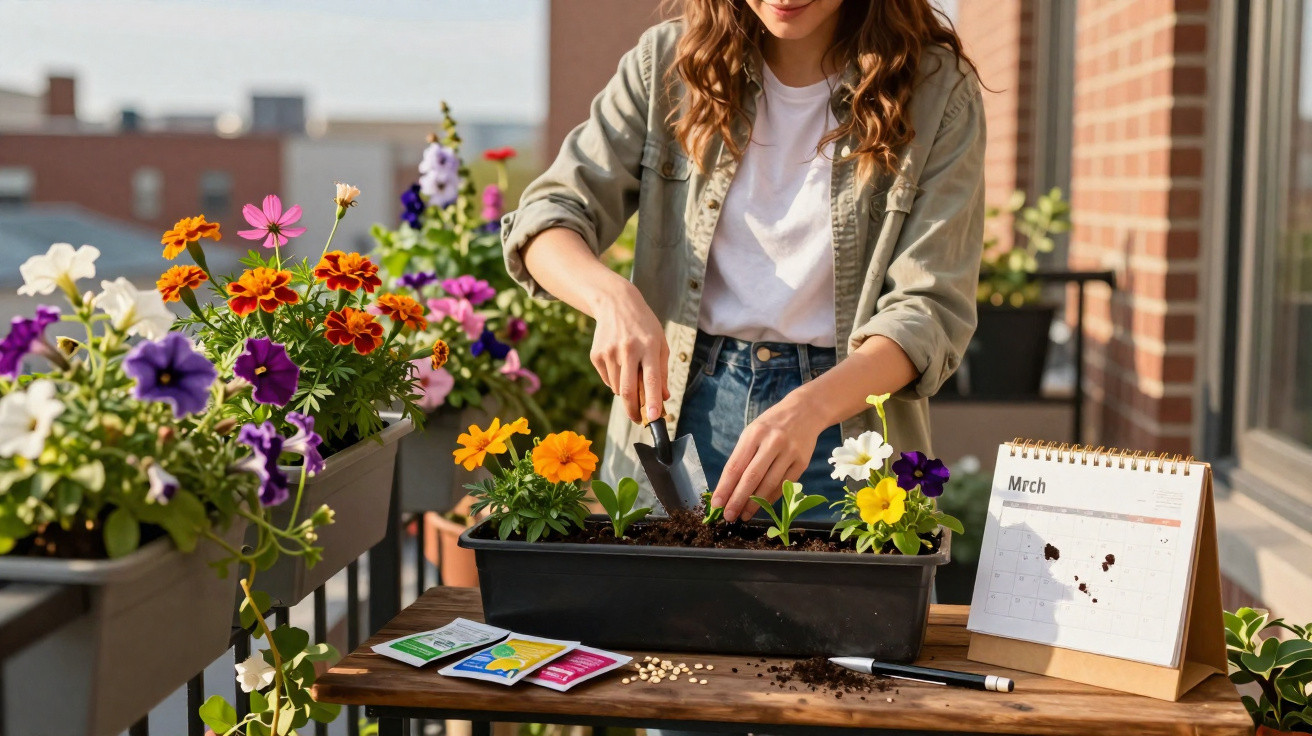
Many amateur gardeners in the UK and German-speaking countries underestimate how quickly certain flowers can go from seed to bloom. Choosing the right varieties in March, together with a few straightforward habits, can bring colour to balconies and gardens far earlier than expected.
Why March is the secret advantage for fast flowers
Although the calendar says spring, many gardens still look as though they are recovering from winter: empty beds, grey corners and wet soil. Yet this very period is the ideal window in the UK – and across much of central Europe – for sowing fast-starting annuals.
The soil is beginning to warm, daylight hours are increasing, and nights remain cool without usually being freezing. These are conditions that suit hardy annual flowers especially well. They tolerate lower temperatures, can be sown straight into beds or large containers, and then grow at an impressive pace.
“Choosing fast-growing annuals in March can often reduce the wait for flowers from three months to around two.”
While conventional bedding plants commonly need twelve weeks or more before their first flowers appear, specially bred quick starters can begin flowering after roughly six to ten weeks when conditions are reasonable.
Hardy versus half-hardy annuals: which types really get moving now?
Gardeners generally divide spring annuals into two broad categories:
- Hardy annuals – tough plants that cope with cooler nights and can be sown outdoors from March
- Half-hardy annuals – warmth-loving plants that should be started indoors and moved outside only after the last frosts
Hardy annuals for speedy beds and window boxes
These resilient varieties are particularly useful for rapidly transforming bare areas:
- Pot marigold (Calendula) – when sown in a bed during March, it will often flower by late May in warm yellow and orange shades.
- Cornflower – a classic blue flower that handles cold weather well and suits wildlife-friendly and cottage-style gardens.
- Love-in-a-mist (nigella) – has delicate foliage and gentle flowers, and readily self-seeds.
- California poppy – produces vivid cup-shaped blooms and copes remarkably well with poor soil.
In many areas, these flowers can already be sown once the soil feels friable rather than sodden or frozen.
Warmth-loving stars for record colour from late spring
The second group needs warmer conditions, but repays that patience with quick results:
- French marigold – first flowers can emerge after around 45–60 days in ideal conditions.
- Zinnia – large-flowered and intensely coloured, requiring about 65 days from seed to bloom.
- Petunia – loves sunshine, flowers generously for a long period and responds particularly well to regular deadheading.
- Cosmos – tall, airy plants that continue flowering from early summer into autumn.
It is best to start these varieties in March on a windowsill, in a basic indoor propagator or in a frost-free greenhouse. Once the final frosts have passed – generally from mid to late May in both the UK and Germany – they can be planted into the ground or large containers.
The true turbo flowers: for gardeners short on patience
Anyone eager for the quickest possible display should choose the fastest of these rapid starters:
| Flower | Approximate time to flowering | Special advantage |
|---|---|---|
| French marigold | 45–60 days | Easy to grow from seed; good for bed edging |
| Zinnia | approx. 65 days | Ideal for colourful bouquets, with a wide colour range |
| Nasturtium | approx. 60 days | Edible flowers; available in trailing or bushy forms |
| California poppy | approx. 60 days | Drought-tolerant with bright colours |
Nasturtiums offer more than just colour. Their flowers and leaves are edible, with a peppery flavour, and they can cascade dramatically over railings, trellises or the edge of a pot. In many British gardens, they are often paired with borage, which is highly attractive to bees and bumblebees and frequently self-seeds over the years.
“With just a few varieties such as French marigolds, zinnias and nasturtiums, a dreary corner can be completely restyled in under ten weeks.”
The three-step March routine for flowers in record time
Variety selection is only half the answer. A simple but consistent March routine is equally important.
1. Prepare the soil and position
- Loosen the top layer of soil and work in a little compost or well-rotted organic matter.
- Choose a spot receiving at least six hours of sunshine each day.
- Prevent waterlogging; containers must always have drainage holes.
This gives seedlings air, nutrients and warmth from the outset, noticeably speeding up their development.
2. Sow correctly, indoors and outdoors
- Sow hardy annuals such as cornflowers, pot marigolds, nigella and California poppies thinly where they are to grow, covering them with only a light layer of soil.
- Sow half-hardy annuals including zinnias, French marigolds, cosmos and petunias in seed trays or small pots indoors, keeping them in a bright, moderately warm position.
- Keep compost lightly moist rather than wet, ideally using a spray bottle or a fine rose watering can.
As soon as the first leaves emerge, give seedlings room. Plants growing too closely together will otherwise slow each other down.
3. Harden off, thin out and deadhead
Once the danger of frost outdoors has passed, gradually introduce warmth-loving young plants to outside conditions: first during the day, then overnight as well. This acclimatisation period prevents cold shock and leaf scorch from strong sun.
In beds, remove weaker seedlings early so the remaining plants receive sufficient light, water and nutrients. During vigorous growth, a light liquid feed every few weeks is enough.
Deadheading is particularly important for petunias: regularly pinch off faded flowers so the plant produces fresh buds rather than putting its energy into seed production.
Colour schemes that work well in British gardens
A broad colour plan helps a garden look effective both in photographs and in person. Three uncomplicated combinations have proved popular in many UK gardens and can be transferred directly to German balconies and terraces:
- Fire & sun: nasturtiums, French marigolds and California poppies – abundant orange, yellow and red for a highly lively effect.
- Pastel spring: pink and white cosmos, cornflowers and soft-toned pot marigolds – ideal for a cottage-garden feel.
- Bee buffet: borage, nigella and cornflowers – highly beneficial for insects, with a wilder, more natural appearance.
Those with limited time can combine seeds by colour group and scatter-sow them across an empty patch. Within a few weeks, this creates a generous, slightly informal display that suits modern naturalistic gardens.
Extending March sowings into summer
A modest timetable helps prevent the floral display from fading as early as June. A second, smaller sowing can be made in pots or bed gaps as early as April or at the beginning of May. The next generation of flowers then develops while the first begins to decline.
Allowing a few plants to form seed at the end of the season can create an unexpected self-sown patch the following year, especially with nigella, borage and pot marigolds. Gardeners who prefer more control can collect some of the dry seed pods and store them somewhere cool and dry until the next season.
What protects amateur gardeners from common mistakes
Many disappointments result from small errors that are easy to avoid:
- Sowing too early into ice-cold soil – seeds simply wait without germinating or rot.
- Applying too much fertiliser at the start – this encourages soft, vulnerable shoots instead of healthy, compact plants.
- Constant wetness – causes seedlings to collapse and encourages fungal diseases.
- Planting too closely – slows every plant down and leaves them more susceptible to pests.
Starting with a modest amount of seed, keeping appropriate spacing and sowing additional batches later usually produces quicker, sturdier results.
Practical example: transforming a mini balcony in eight weeks
Imagine a narrow urban balcony in northern England or southern Germany in early March: a few empty window boxes and perhaps some winter heather still in place. With a straightforward plan, the space can change dramatically within two months.
In week 1, sow pot marigolds and cornflowers directly into the larger boxes, with nasturtiums around the edges. At the same time, start zinnias and French marigolds on the windowsill. From mid-May, move the larger young plants into any remaining empty spaces. A first layer of flowers appears from late May, and by June the balcony is almost completely filled – without buying expensive ready-grown plants.
This scenario closely reflects what many British gardeners currently want: the greatest possible amount of colour as early as possible, using minimally complicated methods and varieties that forgive minor mistakes.
Why fast-growing annuals are ideal for inexperienced gardeners
Fast-growing flowers respond quickly: water them and you see growth; thin them out and the difference becomes clear. This immediate feedback is especially motivating for beginners and children. It also lets them learn key gardening principles, including site selection, water management and soil care, in a practical way without lengthy waits.
For families in the UK and German-speaking countries alike, these March projects offer an enjoyable introduction to the new season: little risk, relatively low costs and a strong chance of clear successes by late spring. This blend of speed, colour and simplicity is exactly what makes March flower sprints so popular at present.




Comments
No comments yet. Be the first to comment!
Leave a Comment