
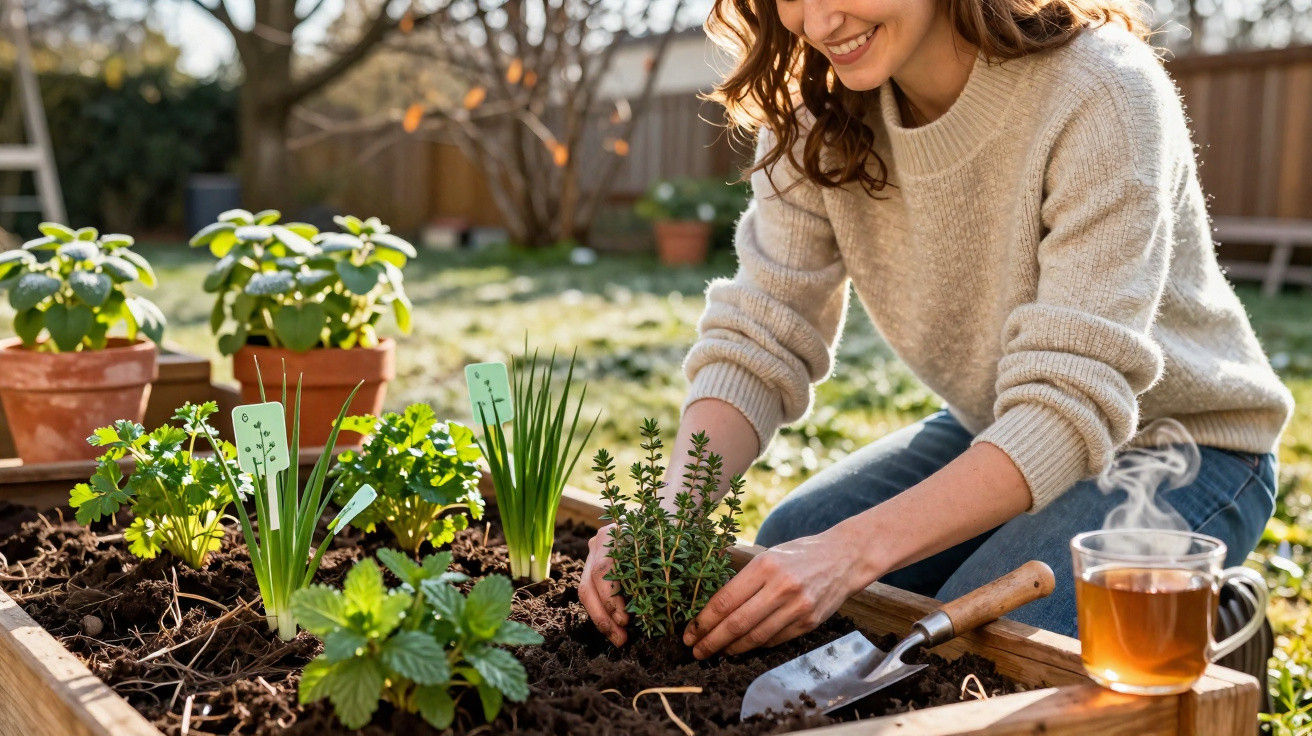
Rather than simply longing for spring, make the most of this opportunity. Several aromatic perennial herbs shift into high gear while the rest of the garden is still dormant. Planted in the right place, they can provide fresh greenery from February onwards, without the hassle of raising seedlings on the windowsill.
Why now is the ideal time for perennial kitchen herbs
Many amateur gardeners think of the winter vegetable patch as a muddy wasteland containing little more than a few weary leek stems. Yet the reality can be quite different: choosing perennial, long-lived herbs can turn a garden into a self-service buffet in late winter.
“The principle is simple: plant once, harvest for years – even while everyone else is still leafing through seed catalogues.”
These herbs withstand frost, hold energy in their roots and burst into growth as soon as temperatures rise a little above freezing. Brief mild spells in late January or early February are often enough to trigger new shoots. At a time when supermarkets generally stock only costly imports or energy-intensive greenhouse herbs, fresh flavour is virtually within reach in your own bed.
The seven winter stars: herbs that return year after year
These are not exotic novelties, but tough kitchen favourites that many people already know – although few make full use of their potential in the garden. The following seven varieties can provide an almost year-round supply:
- Chives
- Sorrel
- Parsley (especially curly-leaf varieties)
- Mint
- Thyme
- Oregano
- Tarragon
Chives: the first green shoots through the snow
Chives are often among the quickest herbs to get going. Their hollow stems can push up even through melting snow. Once well established, the dense clump will cope with harsher winters too.
For convenience, plant several small clumps around the garden – perhaps close to the kitchen and at the edge of the vegetable bed. This gives you an on-demand “flavour station” in several spots.
Sorrel: tangy flavour for tired winter dishes
Sorrel reappears from its roots every year and is particularly early to shoot. Its young, tender leaves have a pleasantly sharp flavour that brings a fresh lift to omelettes, cream soups and fish dishes.
Frequent harvesting keeps the plant compact and encourages a continual supply of fresh leaves. It performs best in slightly moist soil with some partial shade.
Parsley: far tougher than its reputation suggests
Parsley is classed as a biennial, but it can overwinter successfully in a bed and put on vigorous new growth in its second year. Curly varieties generally withstand frosty nights better than flat-leaf types.
Set out several strong plants in late summer and you have a good chance of harvesting fresh greenery again towards the end of winter. A free-draining soil that does not become waterlogged is essential.
Mint: invisible in winter, explosive in spring
Mint often disappears completely above ground during winter, but below the surface it continues expanding its root network. As soon as the weather turns milder, new shoots emerge remarkably quickly.
Since mint tends to take over entire beds, it is best planted in a large pot or within a root barrier. This keeps it manageable while still supplying leaves for tea, desserts and savoury dishes for months.
Thyme, oregano and tarragon: a Mediterranean trio with winter strength
Thyme and oregano retain some of their foliage through the colder months in many locations. Their leaves are packed with essential oils, making them perfect for richly flavoured winter cooking.
Tarragon, by contrast, may look as though it has vanished during the depths of winter, but it reliably returns from the root system. Give it a sheltered, sunny position and it will reward you with tender, aromatic shoots in spring.
How perennial herbs do most of the work themselves
The greatest benefit of these plants lies in their internal “store cupboard”. While annuals have to germinate and grow from scratch each year, perennial kitchen herbs store starch and nutrients in their roots, rhizomes or bulbs.
Increasing day length in January and February signals that it is time to begin again. This is what happens:
- The plant comes out of winter dormancy.
- Stored energy moves from the roots into the shoots.
- Clearly visible new leaves form within a short time.
“For the gardener, there is usually only one task: cut away old, dried stems in late winter so that light and warmth can reach the crown.”
There is no pricking out, no seed trays and no daily checks on moisture levels – nature handles almost everything. If you wish, apply a light mulch in autumn to protect the roots during severe frosts.
From a grey garden corner straight to the plate
The real magic happens in the kitchen. During this sparse season in particular, these early herbs can transform the character of countless dishes.
- Sorrel adds bright acidity to scrambled eggs or pan-fried fish.
- Chives turn a simple jacket potato with soft cheese into a proper evening meal.
- Parsley refreshes stews and braised dishes in both appearance and flavour.
- Thyme and oregano are ideal with lentils, roasted vegetables and slowly braised meat dishes.
- Mint gives teas and salads a reminder of summer.
- Tarragon lends sauces and poultry a delicate, gently aniseed-like note.
When root vegetables and cabbage dominate the cooking, just a few leaves can completely change a dish’s flavour. Harvesting regularly keeps plants compact and prompts them to produce more shoots.
Build the foundation now for years of intense flavour
If these herbs are not already growing in your garden, do not wait until high summer to plan for them. Any time is suitable when the ground is not frozen and can be worked with a spade.
| Herb | Ideal position | Useful tip |
|---|---|---|
| Chives | Sunny to partially shaded, nutrient-rich | Divide every few years to keep plants vigorous |
| Sorrel | Partial shade, slightly moist soil | Young leaves have a milder flavour than older ones |
| Parsley | Bright but not in full sun, humus-rich | Do not add fresh farmyard manure, as it will languish |
| Mint | Partial shade, fresh to moist soil | Grow in a pot to restrict spreading |
| Thyme | Full sun, fairly dry, free-draining | Avoid waterlogging or the roots will rot |
| Oregano | Sunny, lean soil | Regular cutting promotes dense growth |
| Tarragon | Sheltered, sunny, loose humus-rich soil | Divide and rejuvenate every few years |
Instead of sowing seeds laboriously, it is worth buying young plants in pots. They establish quickly and often provide a small harvest in their first year. Root sections or divisions from friends are equally useful, as many of these herbs are easy to propagate in this way.
How perennial kitchen herbs transform the garden over time
Perennial kitchen herbs are not only practical; they also help to stabilise the garden’s small ecosystem. Flowering thyme and oregano attract bees and other pollinators, which in turn support fruit trees and berry bushes.
Many of these plants cope with little water, need no chemical plant protection and support insects through their flowers. Planting them along the edge of a vegetable bed or beneath fruit trees makes double use of the space and creates living structure instead of leaving beds bare for months.
Their interaction within the bed is interesting too: mint’s powerful scent deters some pests, while thyme and oregano thrive in dry, warm corners that may be less suitable for certain vegetables. In this way, the herbs fill gaps and make the garden generally more resilient to weather extremes.
Practical advice and points of caution for beginners
Anyone new to perennial herbs should focus on two things: choosing the right position and controlling spread. Mint needs boundaries; tarragon and chives benefit from division every few years; and thyme and oregano require free-draining soil, otherwise they suffer during wet winters.
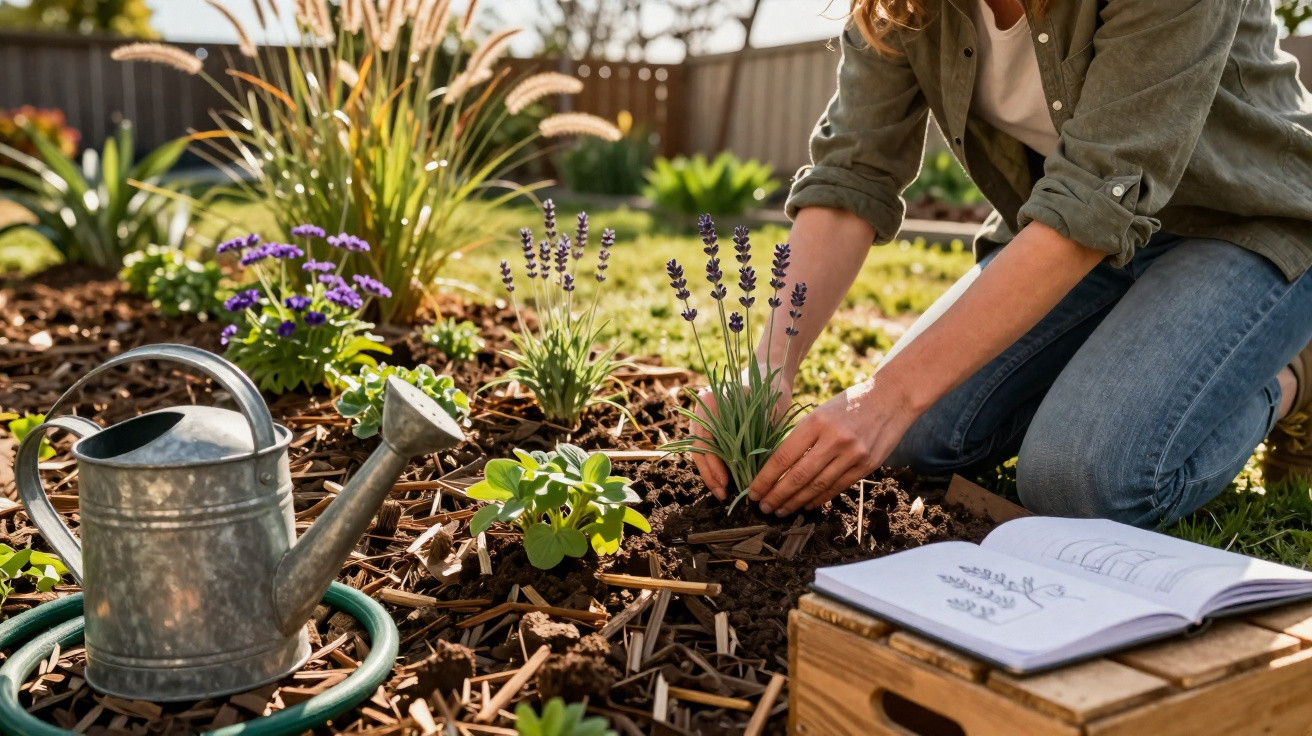
One practical tip: a narrow bed directly beside the patio or kitchen path makes it much easier to harvest regularly. Herbs that have to be searched for at the far end of the garden in the dark and rain are far less likely to end up in the cooking pot.
Children can easily get involved too: collecting mint leaves for tea, cutting chives or tasting the first sorrel leaves. It makes the start of the gardening season tangible and builds an awareness of how much a few unassuming plants can change everyday cooking.
Comments
No comments yet. Be the first to comment!
Leave a Comment