
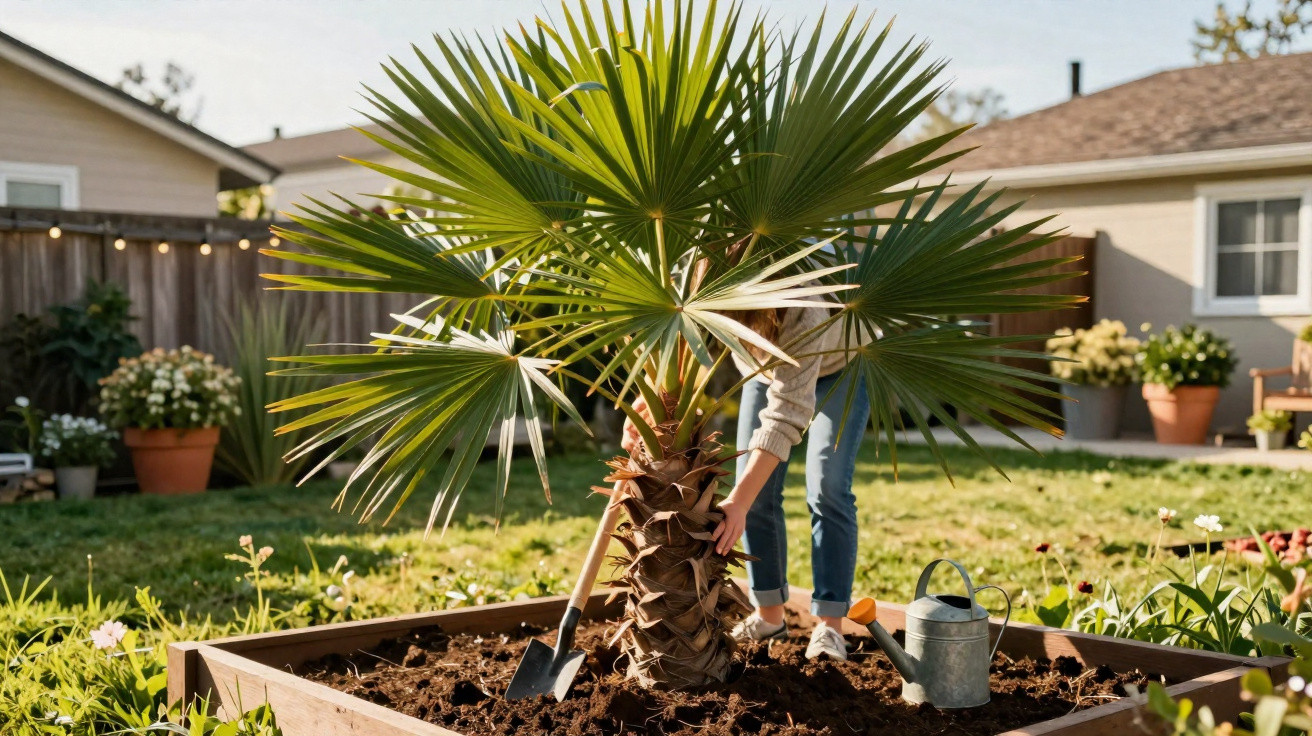
Many garden owners are already thinking about winter protection and leaf blowers by late August. Yet this is precisely the ideal time to take your garden in an entirely new direction. One understated but remarkably effective feature can take centre stage: the windmill palm, Trachycarpus fortunei, which copes surprisingly well with cold and visually elevates any outdoor space.
Exotic appeal instead of an ordinary lawn: why this palm is so popular now
Instant impact: turning a standard garden into a holiday-style space
Plant a windmill palm before the first night frosts and its impact is almost immediate. Its upright habit, slender trunk and large fan-shaped leaves add definition to areas previously made up only of lawn and hedges. An otherwise unremarkable corner suddenly becomes an eye-catching spot with a holiday feel.
“The windmill palm acts like a natural design accent: it casts delicate shade, draws the eye and gives the garden a clear focal point.”
Its fine, almost graphic-looking foliage stands out clearly against traditional garden shrubs such as box, cherry laurel or thuja. This creates an appealing contrast between familiar planting and an exotic touch. It is exactly this contrast that prevents the garden from looking bleak in winter, while preserving a distinct framework.
Hardy, low-maintenance and versatile: an exotic plant with its feet on the ground
Perhaps its greatest advantage is that Trachycarpus fortunei is regarded as one of the hardiest palms available. It can tolerate temperatures down to around –18 °C without immediately failing. This makes it suitable for large parts of German-speaking Europe, from the mild Rhine Valley to cooler areas, provided the position offers reasonable shelter.
The plant also requires comparatively little water. It can withstand dry summers when other perennials have long since begun to wilt. Especially in areas facing increasingly strict watering restrictions, the windmill palm offers a decorative alternative to thirsty lawns.
- tolerates frost down to around –18 °C
- moderate water requirements, well suited to dry summers
- suitable for front gardens, urban gardens, patios and large containers
- relatively slow-growing, making it easy to keep under control
- requires very little maintenance throughout the year
Because the palm does not shoot upwards rapidly, it is also well suited to smaller gardens or terraced-house patios. Its proportions remain manageable without the need for constant pruning.
The right position: making the windmill palm the star of the garden
Light, warmth and shelter: finding the ideal spot
Positioning is crucial if you want a striking overall result. Trachycarpus fortunei prefers bright, warm conditions but dislikes draughts. A location in full sun or partial shade is ideal, such as against the south or south-west side of the house, on a sheltered patio or in a recess in front of a hedge.
“The better the site is protected from cold easterly and northerly winds, the more successfully the palm will cope with harsh winters and reward you with vigorous growth.”
In a relatively flat garden, the windmill palm can be used deliberately to introduce height. One specimen at the end of a path draws the eye and makes the entire garden appear longer. It also works well as screening: over time, several palms create a semi-transparent, living screen.
Effective pairings: plants that work well alongside it
The windmill palm becomes even more interesting when paired with other structural plants. Typical companions for a Mediterranean-style border include:
- lavender and thyme
- grasses such as feather grass or fountain grass
- agaves or other succulent plants
- sun-loving perennials such as coneflower or sage
For a calmer garden with an East Asian influence, gravel areas, stepping stones and individual formal shrubs can showcase the palm effectively. White or grey pebbles around the base of the plant heighten the sense of brightness and clarity.
Several windmill palms planted along a driveway or garden path form a kind of green avenue. Even when the lawn turns yellow in high summer or looks muddy in winter, the structure of the space remains clearly visible.
Planting now: how to give it a stress-free start
Best planting time: why late summer is ideal
The pleasantly warm period from late August to roughly mid-October is considered the best time for planting. The ground is still warm, nights are gradually becoming cooler, and autumn rain helps the plant establish. This gives the roots several weeks to settle in before winter arrives.
“Planting the windmill palm in late summer gives it a head start – and gives you an exotic view in the very same season.”
Planting very late, shortly before the first frost, is risky. The roots may no longer have enough time to anchor themselves properly, leaving the plant to enter the cold season weakened.
How to plant it: prepare the soil and place it correctly
A well-prepared planting site is essential to success. The soil needs to drain freely so that waterlogging does not develop, particularly in winter. Heavy clay soils benefit from the addition of coarse sand or grit.
- Dig a planting hole at least 60 × 60 cm, preferably slightly larger.
- Loosen the soil and remove large stones and remaining roots.
- Mix in some well-rotted compost; for heavy soil, also add sand or grit.
- Carefully loosen the roots of the root ball without damaging them.
- Position the palm so that the root collar sits just above soil level.
- Backfill with soil, firm it lightly and water thoroughly so that no air pockets remain.
- Finally, spread a layer of mulch around the trunk.
Mulch made from bark material, shredded prunings or leaves not only guards against drying out, but also moderates temperature fluctuations around the roots.
Care through the year: minimal effort, maximum effect
Water, mulch and protect: keeping the palm healthy
During its first year in the ground, the windmill palm needs regular watering on dry days so that it can develop a strong root system. Avoid waterlogging, but allow the soil to dry slightly between watering sessions. Once established, the plant needs considerably less water.
It is best to renew the mulch around the trunk in autumn. This gives the roots better protection from cold while making it harder for weeds to establish. Additional feeding is usually only needed in spring, using an organic slow-release fertiliser.
Frost, diseases and pests: how tough the windmill palm really is
Compared with many other palm species, Trachycarpus fortunei has impressive resilience. In ordinary winters, a sheltered location is sufficient. In very cold areas, or when severe frost is forecast, a simple fleece cover placed loosely around the crown can help.
“With light winter protection during extreme spells, the windmill palm becomes a dependable year-round feature in the garden – without complicated care routines.”
Diseases are uncommon. It is worth occasionally checking the base of the leaves for trapped moisture or accumulated dead material. Dried or damaged fronds can be cut off close to the trunk for an instantly tidier appearance. Pest problems are generally the exception, as long as the plant is in an airy position and is not left standing in water.
Visual tricks: helping the windmill palm make its full impact
Playing with light: holiday-style atmosphere after dark
A small spotlight placed at the foot of the trunk and aimed up into the crown completely transforms the garden after nightfall. Light catches the fan-shaped leaves, creating shifting shadows on a wall or hedge. This is particularly effective on a patio or balcony, where it works like a natural alternative to garden-centre decorations.
Planting herbs, grasses or flowering perennials near the palm strengthens the sense of space. The varying heights and leaf shapes create depth – a long-established technique in professional garden design.
Small space, big presence: ideas for urban gardens and patios
The effect can be achieved even without a large plot. In a sizeable container filled with well-drained compost, the windmill palm is happy on a balcony or roof terrace. A drainage hole in the pot is essential, together with a layer of expanded clay pellets or coarse gravel for drainage.
A particularly effective combination includes:
- one windmill palm as a specimen plant in a container
- one or two colourful pots planted with grasses or lavender
- pale pebbles or wooden decorative elements beneath and around the containers
With only a few simple touches, this creates a corner that feels more like a holiday resort than a back yard. Add a small seating area and the palm becomes the natural centrepiece of everyday evenings, showing that exotic garden style does not depend on tropical temperatures.


Comments
No comments yet. Be the first to comment!
Leave a Comment