
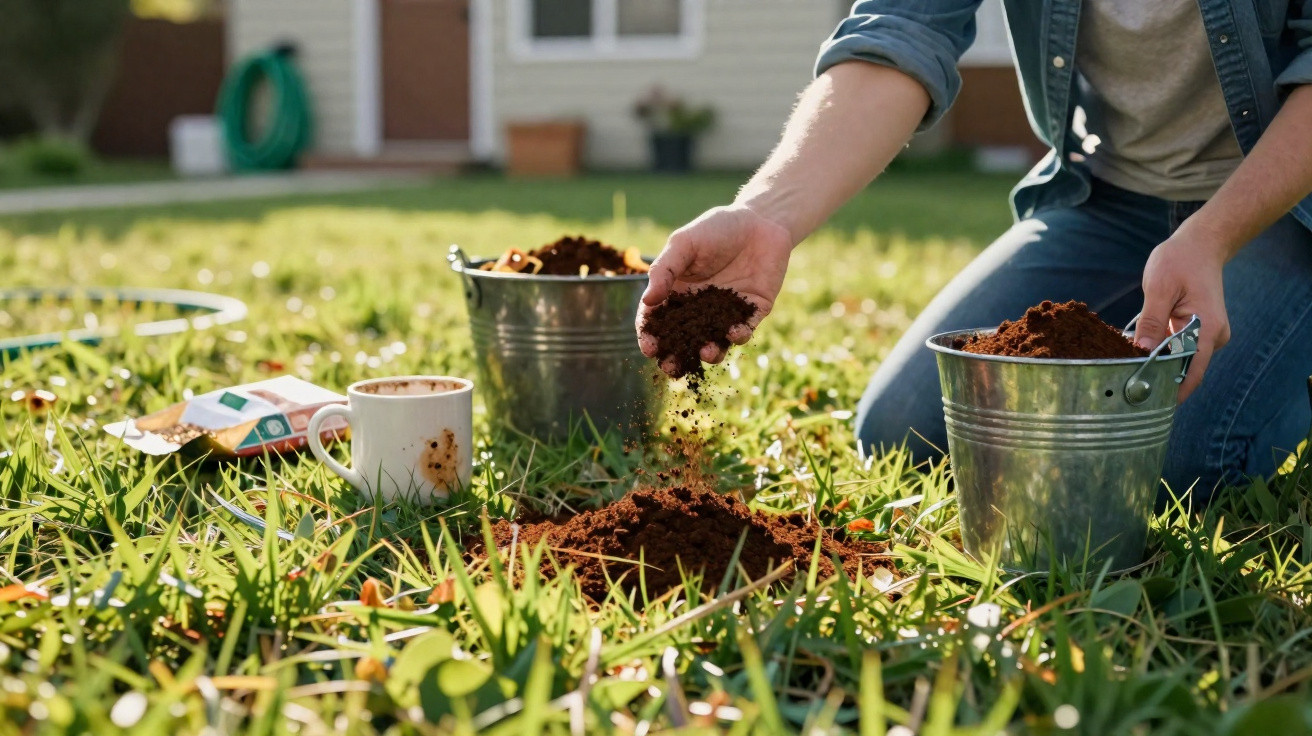
After winter, a look at the lawn in spring often reveals brown patches, sparse blades and bare areas. Chemical lawn fertiliser can quickly end up in the shopping basket. Yet a simple kitchen by-product can achieve a similar result – more gently, more cheaply and with less risk to the soil and environment.
Why your lawn looks so tired after autumn and winter
A wet winter or a hot, dry August can take a heavy toll on grass. Waterlogging, frost, dog urine, children playing football and the stress of mowing all leave their mark. The soil becomes compacted, roots receive too little air, and mosses and weeds take advantage of the gaps.
Many people instinctively reach for a high-nitrogen fertiliser. Although it can make grass grow quickly, it may:
- make the blades soft and more prone to disease
- upset the balance of soil life
- cause brown scorch marks when applied at the wrong rate
This is where a material that many people throw away from their kitchens every day comes in – despite its surprisingly useful properties.
The overlooked resource: what coffee grounds do for the lawn
"Coffee grounds contain nutrients like a mild fertiliser, improve the soil and feed microorganisms – all without harsh chemicals."
Used coffee grounds contain plenty of ingredients that grass benefits from. In particular, they provide:
- nitrogen – for rich green leaves and dense growth
- phosphorus – to strengthen the roots
- potassium – to improve resistance to heat and cold
The key benefit is that these nutrients are not released all at once, as they are with many artificial fertilisers. Instead, they become available gradually as the coffee grounds decompose. Soil bacteria and fungi break down the particles, while worms carry them into deeper layers.
Coffee grounds can also act as a small soil treatment:
- In heavy clay soils, they can gently loosen the structure.
- In sandy soils, they help the ground retain moisture slightly better.
- They add organic matter that stimulates soil life.
The more active the soil is, the better the lawn can cope with weather extremes, whether torrential rain or a drought spell.
How to use coffee grounds on the lawn correctly
Coffee grounds can support a lawn, but only when used sensibly. A few basic rules always apply:
- Only use spent coffee grounds, never fresh ground coffee.
- Let them cool first and, where possible, allow them to dry a little.
- Never apply them in thick layers; spread them very thinly instead.
Option 1: Apply coffee grounds to the lawn via compost
The simplest and safest method is to add them to the compost heap first. Coffee grounds count as a ‘green’, nitrogen-rich compost ingredient and blend particularly well with dry garden waste.
Step by step:
- Collect the coffee grounds and allow them to dry briefly.
- Spread them through the compost in thin layers, mixing them with leaves, twigs or cardboard.
- Leave the compost to mature for a few months.
- In spring or early autumn, spread the finished compost across the lawn in a thin layer (no more than around 1 cm) and lightly rake it in.
Gardeners refer to this as soil improvement or lawn topdressing. As well as supplying nutrients, this approach helps to stabilise the entire soil structure beneath the lawn.
Option 2: Spread coffee grounds directly on the lawn
Anyone without a compost heap can use coffee grounds directly, but caution is needed.
Proceed as follows:
- After mowing, scatter a very thin layer of coffee grounds over the area.
- Work it in with a rake or leaf rake so that the grass remains visible.
- In dry weather, water lightly to help the particles settle into the turf.
Important: the lawn must not look black. If only coffee grounds are visible, too much has been used. The layer can then clump together, repel water and suffocate the grass roots.
Option 3: Close bare patches more quickly
For worn areas or patches damaged by a dog, a small repair mix can help:
- some lawn seed
- a thin layer of loose soil or lawn substrate
- a pinch of dry coffee grounds, spread finely
Water the area regularly afterwards, but do not overwater it. The combination of seed, substrate and organic material supports establishment and may help the area become dense again sooner.
When coffee grounds belong on the lawn – and when they do not
Timing determines whether the lawn can genuinely benefit from the extra boost. Particularly suitable times include:
- early spring, when the grass begins growing again
- late summer, following heat stress and dry periods
- autumn, as part of a thin soil-improving layer
The guiding principle is: "a little, but regularly". For most gardens, once or twice a year is entirely sufficient. Spreading large quantities every week is more likely to create problems than benefits.
Periods of persistent frost, continuous snow cover or completely parched soil are unsuitable. In these conditions, the coffee grounds cannot decompose or be worked into the ground effectively.
Common mistakes when using coffee grounds on the lawn
"Layers that are too thick and impatient expectations are the most common pitfalls when using coffee grounds in the garden."
Two issues appear repeatedly in reports of people’s experiences:
- Using too much at once: Thick layers form a dense mat, allow very little water through and can encourage fungal growth.
- Expecting rapid results: Anyone hoping for a miracle after two weeks will usually be disappointed – the effect is gradual and long-term.
Soil type matters too. In gardens that already contain plenty of organic matter, the difference may sometimes be barely noticeable. On depleted soils, however, it is easier to see that the lawn becomes denser, more resilient and less patchy.
Pets and coffee grounds: what owners should consider
Coffee contains caffeine, which is toxic to dogs and cats in larger quantities. Brewed coffee grounds contain considerably less caffeine than fresh coffee powder, but they are not completely harmless.
Pet owners should therefore:
- avoid leaving small piles of coffee grounds exposed on the lawn
- avoid spreading them directly in areas where a dog frequently digs or sniffs
- when in doubt, use the compost route, where the coffee grounds are more thoroughly incorporated
Working coffee grounds into compost and applying that compost finely later on greatly reduces the risk, as the residues are much more diluted.
How coffee grounds can be combined with other lawn care measures
This kitchen leftover can do even more when it forms part of a broader lawn-care routine. Useful additions include:
- regular aeration or scarifying, allowing air into the turf
- keeping the mowing height slightly higher (around 4–5 cm), so the soil does not dry out as quickly
- watering less often but deeply, rather than continually giving the lawn a light sprinkle
Those who favour gradual additions of organic materials such as compost, grass-clipping mulch and coffee grounds instead of heavily dosed artificial fertilisers can build a more stable lawn over time. It reacts less sensitively to weather extremes and generally needs less overseeding and repair work.
What the technical terms mean
Many gardening guides refer to ‘surface soil improvement’ or ‘topdressing’. Both describe the thin application of loose material over a grassed area. This can be a mix of sand, compost and a little soil – or compost containing coffee grounds.
Another term is ‘turf’. This means the zone right at the surface where grass roots, the bases of the blades and organic residues meet. Most growth takes place there, and this is also where coffee grounds work when they are incorporated correctly.
Anyone who understands these basics will quickly see that an unremarkable kitchen by-product can become one element of a healthy, dense lawn – without expensive specialist fertiliser from the garden centre.





Comments
No comments yet. Be the first to comment!
Leave a Comment