
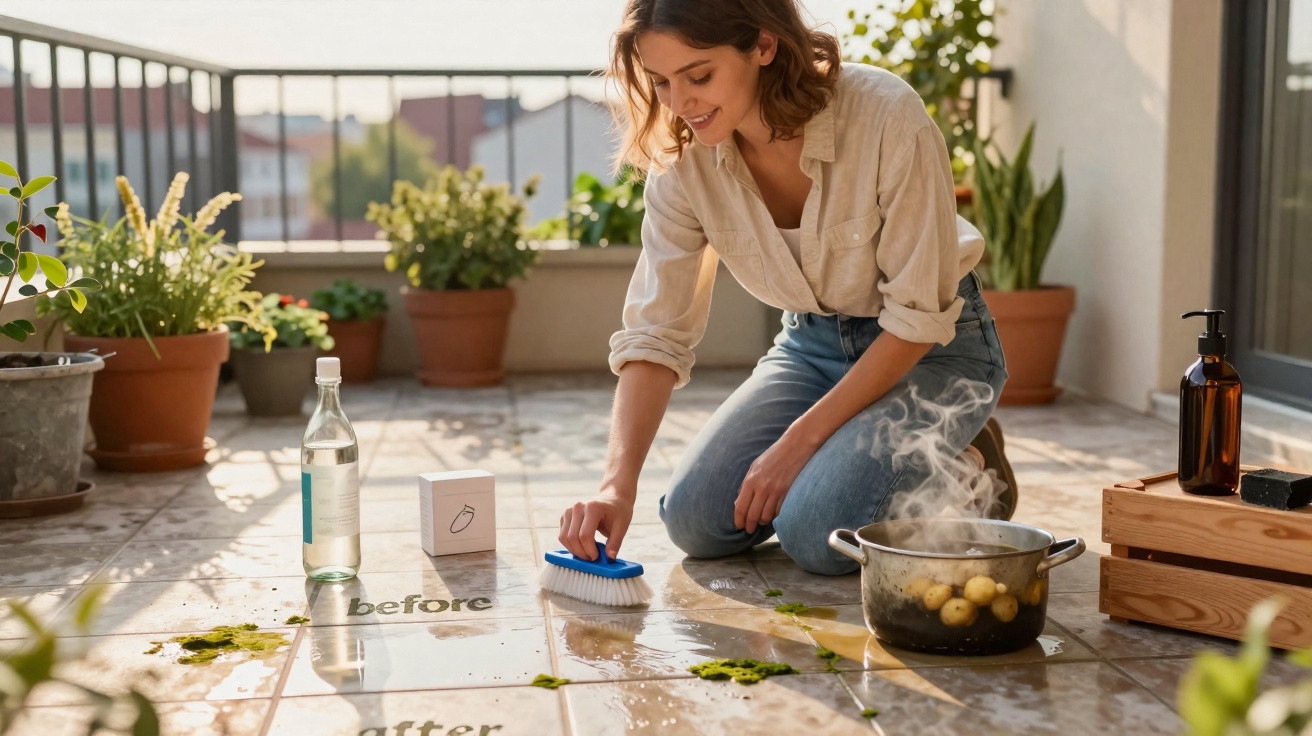
A few simple household remedies can make all the difference.
After the first warm days of the year, many people step onto a terrace only to find dull, slippery paving slabs. The immediate reaction is often to reach for harsh DIY-store cleaners. Yet inexpensive kitchen staples are usually enough to clean stone, concrete or tiles thoroughly – without resorting to harsh chemicals or putting joints and the environment under strain.
Why harsh terrace cleaners can cause damage
Many commercially available terrace cleaners rely on powerful chemicals. Although they remove moss, algae and dirt, they can also affect both the surface materials and the environment.
“Cleaners containing chlorine can leach out joints, discolour stone and contaminate wastewater – and they are far from ideal for pets and children using the terrace.”
It is particularly worth considering gentler options for older slabs, sensitive natural stone or terraces with numerous joints. The good news is that the most effective solutions are often already in the cleaning cupboard or kitchen.
Five natural ways to make your terrace look new
1. White household vinegar for green deposits and limescale
Household vinegar with a high acid content is a classic remedy for green growth and limescale marks. Its acidity breaks down deposits without damaging most types of stone, provided it is used diluted.
- Mix vinegar and warm water in a 1:1 ratio.
- Pour or spray the solution generously over the affected areas.
- Leave it to work for 15–20 minutes, without allowing it to dry out.
- Scrub firmly with a deck brush or stiff brush.
- Finally, rinse with plenty of clean water.
Vinegar is especially suitable for concrete slabs, ceramic tiles and porcelain tiles. Acid should be avoided on sensitive natural stones, such as marble or limestone; always test it first on an inconspicuous area.
2. Bicarbonate of soda for extremely stubborn stains
Bicarbonate of soda, also known as baking soda, has a mildly abrasive effect without scratching the surface excessively. This powder is particularly effective on deeply embedded dirt or thick layers of moss.
Use it as follows:
- Lightly dampen the surface beforehand.
- Sprinkle bicarbonate of soda generously over the affected spots.
- Spray or pour on a little water until it forms a paste.
- Work it in using a deck brush or hard brush.
- Leave it briefly, then brush again and rinse thoroughly.
This approach works well on rough concrete slabs, stone paving and heavily used spaces, such as areas beneath a barbecue or table. It is less suitable for painted surfaces or soft plastics.
3. Black soap as a gentle all-purpose cleaner
Liquid black soap made from vegetable oils is widely regarded as an all-purpose household cleaner. Diluted in cleaning water, it lifts grease, dust and road grime while leaving a lightly protective film behind.
Cleaning with black soap:
- Add 2–3 tablespoons of soap to a bucket of hot water.
- Stir thoroughly until everything has dissolved.
- Clean the terrace using a deck brush or mop.
- For light dirt, allowing it to dry is sufficient; for heavier soiling, brush first and then rinse with clean water.
“Black soap is perfect for regular care: gentle on surfaces, powerful against everyday dirt – and already found in many households.”
It is particularly useful on coated tiles or smoother stone floors after a deeper clean with vinegar or bicarbonate of soda, helping them retain a cared-for appearance and reducing new deposits.
4. Potato cooking water as an anti-moss trick
It may sound unusual, but it works surprisingly well: water used to cook potatoes contains starch, which settles on deposits and helps moss come away.
Make good use of the leftover water as follows:
- Cook potatoes without salt and keep the water once cooking is complete.
- Pour the still-hot water directly over the dirty slabs.
- Let it work for several minutes.
- Scrub the areas with a brush or deck brush.
- Rinse with water so that no sticky residue remains.
This technique is especially suitable for smaller spaces, such as a balcony, or for individual heavily soiled patches. Cleaning an entire large terrace would require a correspondingly large amount of cooking water.
5. Washing soda for heavily soiled areas
Washing soda (sodium carbonate, not to be confused with bicarbonate of soda) has a stronger cleaning action than ordinary washing-up liquid. When correctly dosed, it tackles grease, algae and stubborn road dirt.
Recommended method:
- Put on gloves, as washing soda can irritate the skin.
- Depending on the level of dirt, add 1–2 tablespoons of washing soda to 1 litre of hot water.
- Stir well until fully dissolved.
- Apply the solution with a watering can or deck brush.
- Leave it to work for several minutes, but do not let it dry.
- Brush the surface, then rinse thoroughly with water.
“Washing soda is highly effective at dissolving grease – making it ideal for areas where barbecues are often used or food scraps regularly fall.”
For delicate materials, use a weaker concentration and test it first in an unobtrusive corner.
Keeping moss away for good: prevention is half the battle
Where does the green growth come from?
Moss and algae thrive in damp, shaded spots. Overhanging trees, areas that remain wet and fallen leaves left in place create the perfect conditions.
Typical trouble spots include:
- Areas right next to house walls with no direct sunlight.
- Corners beneath balcony railings or large window boxes.
- Places where rainwater does not drain away properly.
- Joints between slabs where soil and leaves collect.
Once these zones are identified, you can take targeted action – by improving the slope for drainage, sweeping more frequently or cutting back plants that cast heavy shade.
Simple routines that save a great deal of work
Rather than facing a frustrating task once a year, a small weekly effort is worthwhile:
- Sweep at least once a week.
- Remove wet leaves immediately.
- Position window boxes so that water can drain away.
- Briefly check areas where puddles form after heavy rain.
A light monthly wash with soapy water may be enough to keep the terrace permanently clean and slip-resistant. This prevents a thick layer of dirt from building up in the first place.
Mistakes that ruin terrace surfaces
Two common mistakes regularly cause damage: using pressure washers incorrectly and relying on overly strong chemical products.
| Mistake | Consequence | Better approach |
|---|---|---|
| Holding the pressure-washer nozzle too close to the slab | The surface breaks up and fine grooves form | Keep a greater distance, use a wide nozzle and select a lower setting |
| Persistently aiming a concentrated jet at joints | Jointing material is washed out and slabs become loose | Avoid the joints where possible and clean broad areas only |
| Using highly chlorinated cleaners continuously | Discolouration, crumbling joints and harm to plants | Switch to natural remedies and use chemicals only as a last resort |
Natural remedies are a substantially safer long-term choice, particularly for anyone with children, pets or plenty of plants in the garden.
Choosing the right terrace cleaning method
Not every terrace needs the full chemical-free treatment. This rough guide can help you decide:
- Light dirt, hardly any moss: black soap in cleaning water is usually enough.
- Fine green deposits, first signs of slipping: use a vinegar solution or potato cooking water.
- Heavy crusting and old moss patches: use bicarbonate of soda or washing soda, combined with vigorous brushing.
- Sensitive natural stone: use the gentlest possible cleaners and check the material beforehand.
If you are unsure, always start with a small test area before treating the whole terrace. This helps prevent unpleasant surprises.
What many people underestimate: safety and the environment
A slippery terrace does not merely look neglected; it also presents a genuine safety risk. Older people, children and guests wearing wet shoes can easily slip.
“Regular maintenance does more than keep the terrace looking attractive: it reduces the risk of falls while also protecting the garden’s ecological balance.”
Using vinegar, bicarbonate of soda, black soap or potato cooking water may require a little more brushing, but it avoids sending harsh chemicals down the drain. Bordering flowerbeds benefit through healthy growth, while pets can roam without concern.
A combination of sensible household remedies, small maintenance routines and a watchful eye on problem areas will make the terrace a favourite springtime spot again – without toxic fumes, damaged joints or slippery surprises at the season’s first barbecue.
Comments
No comments yet. Be the first to comment!
Leave a Comment