
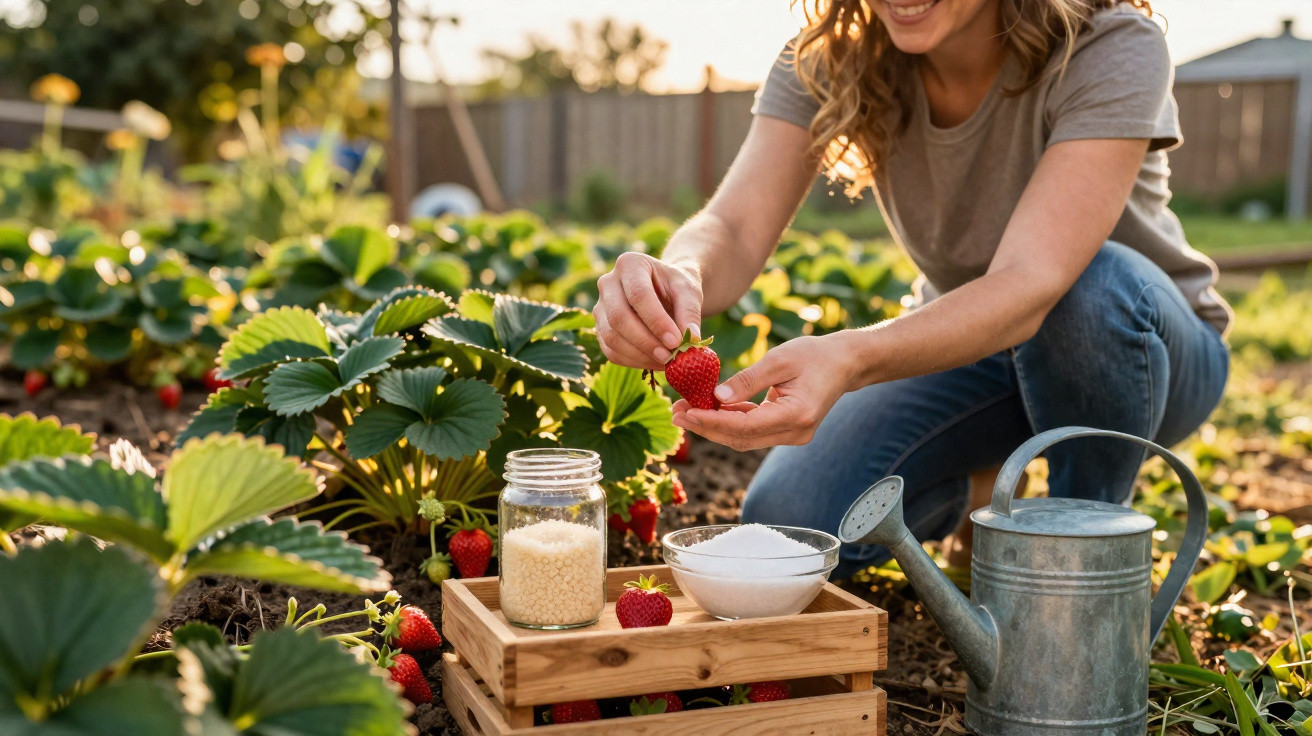
A modest blend of yeast, water and sugar is currently making the rounds among gardeners. Prepared correctly, it can turn strawberry plants into real fruit-producing machines, yielding large, flavoursome berries rather than small, watery disappointments. The key lies in the correct proportions, timing and a few straightforward care measures.
Why this fertiliser gives strawberries such a boost
The principle is remarkably simple: yeast does not primarily feed the plant itself, but the living organisms in the soil around its roots. This creates a small, invisible powerhouse beneath the surface.
“Yeast-and-sugar fertiliser strengthens the root system, stimulates soil life and provides strawberries with readily available nutrients – the foundation for large, healthy fruit.”
Yeast contains B vitamins, proteins and minerals including nitrogen, phosphorus and potassium. These are precisely the nutrients strawberries require for vigorous growth, flower formation and fruit set. In this recipe, sugar serves as fuel for beneficial microorganisms in the soil. These microbes break down organic matter and make nutrients available to plants. As a result, plants grow more robustly, produce more flowers and can nourish developing berries more effectively.
How to prepare yeast fertiliser correctly
You need just three ingredients for this mixture, all of which are found in almost every kitchen:
- 50 grams of fresh yeast or one teaspoon of dried yeast
- 1 litre of lukewarm water
- 1 tablespoon of sugar
Step-by-step instructions
- Crumble the yeast into a bowl or watering can, or sprinkle in the dried yeast.
- Add the sugar.
- Pour in the lukewarm water and stir thoroughly until everything has dissolved.
- Leave the mixture at room temperature for around 24 hours so that it can ferment.
- Once fermentation is complete, dilute it with water at a ratio of 1:5: one part yeast mixture to five parts water.
Around 0.5 litres of this diluted mixture is sufficient for each strawberry plant. It is important to pour it directly onto the soil around the plants rather than over their leaves. This delivers the nutrients exactly where the roots can absorb them.
When and how often to use yeast fertiliser
Timing has a major influence on the strength of the effect. Strawberries respond especially well during active growth and shortly before, or during, flowering.
- First application: In spring, as soon as the plants are visibly starting to grow and producing fresh leaves.
- Second application: Shortly before flowering or at the beginning of the flowering period.
- Third application (optional): After the main harvest, to strengthen plants for the following season, though at a weaker concentration.
More is not necessarily better. Excessive nutrients can upset the balance in the soil and encourage too much leafy growth at the expense of fruit. For most home gardens, one or two substantial applications a year are entirely adequate.
The science behind the yeast trick
Soil researchers have highlighted for years just how important microbial life is beneath the ground. A fertiliser alone does not make a plant strong; what matters is the interaction between roots, bacteria, fungi and organic material.
“Feeding the microorganisms in the soil indirectly strengthens plants – the yeast-and-sugar mix makes use of exactly this effect.”
The nutrients in yeast support root development, while the added sugar stimulates bacteria and fungi. This helps create loose, well-aerated soil with improved water retention. Strawberries are particularly sensitive to waterlogging and nutrient shortages. Active soil moderates both issues and creates more balanced growing conditions.
Natural alternatives for gardeners who like to experiment
Anyone who enjoys testing and comparing methods can combine or alternate various household fertilisers. Some tried-and-tested options include:
- Stale bread fertiliser: Soak stale bread in water, allow it to ferment for one week, then dilute it with water at a ratio of 1:10 and apply it to the plants. It mainly provides readily available carbohydrates and some organic matter.
- Nettle feed: Place nettles in a bucket of water and leave them to steep for several days to several weeks, then dilute at 1:20. It contains plenty of nitrogen and trace elements, acting as a natural growth booster.
- Sour-milk compost: Mix out-of-date milk with compost. This blend adds calcium to the soil, strengthens plant cell walls and may help prevent blossom-end rot.
- Diluted chicken manure: Those with access to chicken manure can dilute it with water at 1:10 and apply it before flowering. It provides abundant nutrients, but must always be heavily diluted to prevent root damage.
Each option has a different focus within the nutrient range. Strawberries respond well when they receive balanced nutrition rather than a one-sided supply. Many gardeners alternate yeast fertiliser, nettle feed and organic compost throughout the year.
Getting the most from your strawberry bed
Even the best fertiliser has limited value if the site and general care are unsuitable. Strawberries have clear preferences that are easy to meet.
| Aspect | Recommendation |
|---|---|
| Sunlight | At least 6–8 hours of direct sunshine per day |
| Watering | Keep the soil consistently moist while avoiding waterlogging |
| Soil pH | Slightly acidic, ideally between 5.5 and 6.8 |
| Plant spacing | 30–45 centimetres between plants |
A mulch of straw or grass clippings helps retain soil moisture and keeps fruit clean. At the same time, the mulch layer suppresses weeds that would otherwise compete with strawberry plants for water and nutrients.
Common mistakes that limit strawberry success
Many problems in a strawberry bed are easy to avoid. Typical pitfalls include:
- Too much water: Constantly wet soil encourages root rot and fungal diseases. Water less frequently but more thoroughly instead.
- Too much nitrogen: Nitrogen-only fertilisers produce plenty of foliage but little fruit. Always aim for a balanced mix.
- Old plants: Strawberry plants usually produce considerably less after three to four years. Replace them with young plants in good time.
- A dark, shaded position: There is little flavour without sunshine – sweetness needs light.
How yeast fertiliser fits into everyday gardening
The major advantage of this yeast recipe is that it can be mixed at short notice, without costly specialist products from the garden centre. Anyone who bakes bread or already keeps yeast in the fridge can put any leftover yeast to practical use. Even small containers of strawberries on a balcony benefit, provided excess water can drain away properly.
For families with children, the method is almost a small experiment: prepare the mixture, wait a day, then water the plants together and watch them become visibly stronger over the following weeks. It creates a direct connection with food, from fertiliser to a home-grown bowl of red fruit.
Health, flavour and storing giant strawberries
Additional nutrients in the soil can result not only in larger berries but often in more flavoursome ones too. Strawberries develop sugars and flavour compounds chiefly when they can ripen slowly and evenly. A steady supply of water and nutrients, supported by yeast fertiliser, promotes exactly this process.
The best time to harvest is late morning, once the dew and any moisture have dried. Ripe berries detach easily and display an even red colour. Freshly picked strawberries keep in the fridge for only a few days and quickly lose flavour there. Anyone with a large crop can purée and freeze them or make jam – the intense flavour of XXL berries is especially well suited to this.
Combining yeast fertiliser with a well-chosen site, some mulch and regular care can produce noticeable differences after just one season. A simple recipe of yeast, water and sugar then becomes a practical tool for anyone who enjoys reaching for their own bowl of strawberries in summer rather than a plastic punnet from the supermarket.

Comments
No comments yet. Be the first to comment!
Leave a Comment