
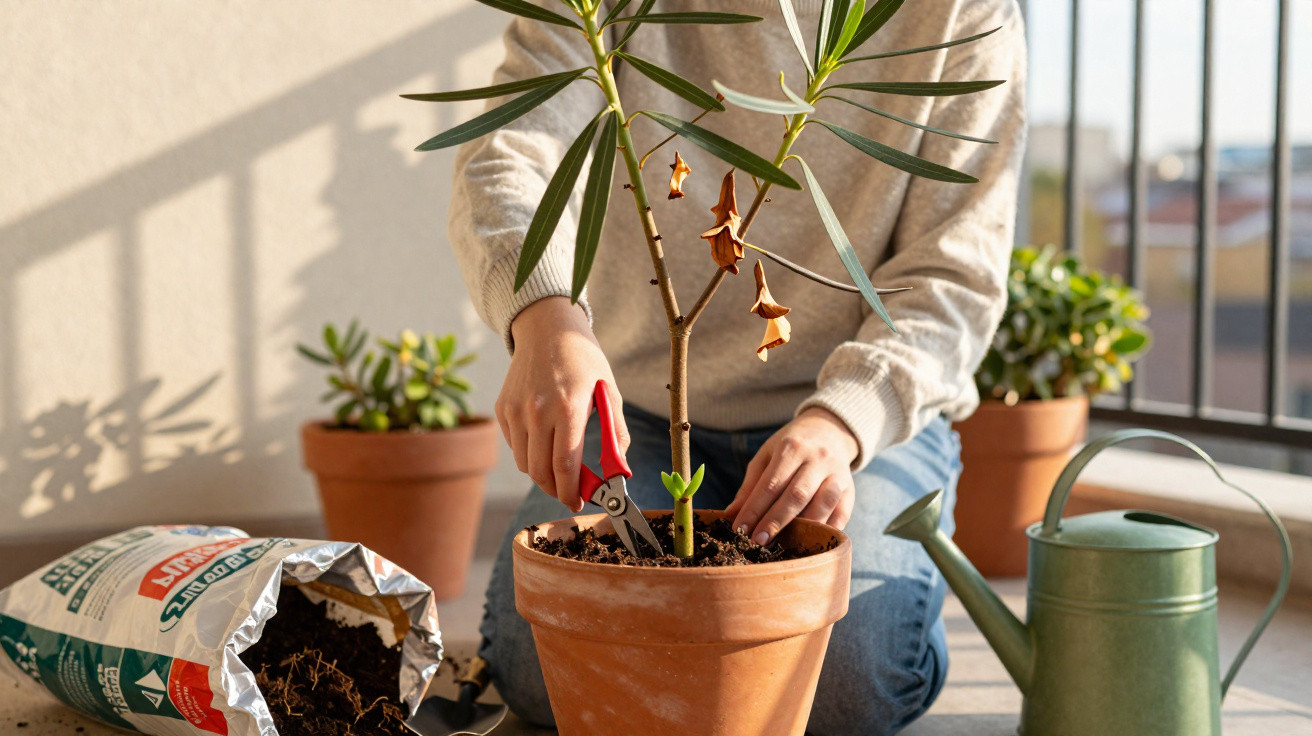
Right now is the decisive moment: will the shrub give up, or burst into a spectacular display of flowers?
A frost-damaged or weakened oleander often looks dead to inexperienced gardeners. Yet many plants still have enough life in them to put on vigorous new growth in summer – provided they receive the right treatment now. Simply pruning or watering at random, on the other hand, can result in the complete loss of the plant. A clear plan covering diagnosis, gradual acclimatisation outdoors, careful pruning, root care, suitable feeding and controlled watering can often save even a badly battered shrub.
First check whether there is still life in it
Before moving the container out of the garage, cellar or conservatory, assess the plant’s condition. An oleander may appear entirely dried out above ground while still holding reserves lower down.
- Bark test: Gently scratch the bark with a fingernail or small knife.
- Green beneath: Moist, greenish tissue means the shoot is still alive.
- Brown and dry: This branch is dead and should be removed later.
It is particularly worthwhile inspecting the very base of the shrub, where the best-protected buds are often found. Small, plump bumps along the shoots signal a fresh start. If they are completely absent, the damage is more severe – but even then, it is worth trying to rebuild the plant from its roots.
Moving outdoors: avoid temperature shock
Oleander comes from warm climates. After winter storage, it must not be moved straight into strong April sunshine overnight. Doing so can scorch its leaves and cause further stress.
As a very broad guideline, take it outdoors only once night frosts are no longer forecast and night-time temperatures are around 10°C or above. Depending on the region, this is usually between late March and mid-April.
Gradually acclimatising it to light and air
For a container-grown shrub, the best approach is as follows:
- Days 1–3: Leave it outdoors for a few hours in light shade, then return it to a sheltered spot overnight.
- Days 4–7: Extend the time spent outside, but continue to avoid direct midday sun.
- From week 2: Introduce it gradually to full sun, before finally placing it permanently in a bright position.
Specimens planted in garden soil are less flexible. Gradually remove winter protection, fleece or layers of leaves instead. Weather apps remain essential reading: if a late frost night is still expected, the shrub will need temporary protection again.
“Anyone who gently acclimatises oleander to light and temperature lays the foundation for strong new growth – and therefore abundant flowers.”
Targeted pruning: cut confidently back to healthy wood
Once the risk of frost has passed, it is time to use the secateurs. Pruning determines whether the shrub grows dense, vigorous and free-flowering, or produces only sparse new shoots.
Do not merely trim back the brown tips timidly; cut properly into healthy wood. You can identify this again from the cut surface: it should be green and moist inside rather than grey-brown and fibrous.
- Remove every completely black, mushy or bone-dry shoot.
- Also cut out branches that cross each other or grow inwards.
- Shorten very long, thin shoots by one third to two thirds.
For severely damaged plants, a radical measure may be the only solution: cut them back to around 40 centimetres above ground level. This may seem harsh, but it often encourages the oleander to regrow strongly and bushily from the base. Flowering will be somewhat sparse this year, but this fresh start usually pays off the following summer.
Oleander roots and pots: fresh room for renewed strength
Container-grown oleanders quickly suffer when they run out of space. If the root ball is circling tightly and roots are growing out through the bottom of the pot, it is time to move the plant.
Repotting correctly in spring
The ideal time is after pruning, when the shrub can return outdoors.
- Choose a pot only one size larger, rather than an enormous container straight away.
- Add a layer of expanded clay or coarse gravel for drainage.
- For the growing medium, use a free-draining mix of flowering-plant compost, coarse sand and a little mature compost.
- Gently tease apart compacted roots around the root ball so they can grow into the fresh compost again.
If your oleander is already in a very heavy container, you can avoid repotting and simply replace the top five centimetres of compost. Swap this layer for loose, nutrient-rich compost – a small refresh for the root system.
Fertiliser: why potassium matters more than nitrogen now
Many amateur gardeners automatically reach for a general fertiliser with a high nitrogen content. While this produces plenty of green growth, it also makes the shrub soft and more vulnerable to disease.
For a weakened oleander, a potassium-rich fertiliser is more appropriate. Potassium strengthens cell walls, supports flower formation and improves resilience. From March until around September, one application every one to two weeks is enough, depending on the product and the plant’s size.
“Less is more here: regularly measured, moderate feeds achieve much better results than infrequent ‘shock doses’ that are far too high.”
Watering properly: neither swamp nor bone-dry compost
After winter, many oleanders are like a patient recovering from flu: weakened and poorly able to tolerate extremes. Water with care.
- Always allow the compost surface to dry slightly before watering again.
- Apply water directly around the roots rather than spraying it over the leaves.
- Empty saucers after a few minutes to prevent waterlogging.
For plants in garden soil, one or two deep waterings per week are sufficient in hot summer weeks in most regions. It is better to water less often but thoroughly than to give small amounts constantly. A mulch layer of bark pieces or gravel helps retain moisture in the soil and protects the roots.
The most common post-winter mistakes – and how to avoid them
Many oleanders struggle not because of winter itself, but because of mistakes made in spring. Typical pitfalls include:
- The container is moved outside far too early and freezes during a late frost night.
- The shrub is transferred from a shady veranda to a sun-drenched patio in a single day.
- Concern for the plant leads to excessive watering, causing the roots to rot.
- Highly concentrated fertiliser is applied to bone-dry compost and burns the roots.
- Water is left permanently in the saucer, so the plant slowly “drowns”.
Keeping these points in mind greatly improves the chances that even a badly affected shrub will recover within a few weeks and produce new flowering shoots.
Location, microclimate and protection from the next cold spell
Oleander thrives on light and warmth, with shelter from cold winds. A position against a south- or south-west-facing house wall is ideal. The wall stores warmth, softens temperature extremes and creates a pleasant microclimate.
In harsher areas, a mobile approach is sensible: container plants can spend summer in the sunniest available spot, then move in good time during autumn to a bright, cool, frost-free winter location. If the shrub has been planted out, thick leaf mulch, fleece covers and, if necessary, improvised wooden or cardboard surrounds can make a considerable difference.
How to tell whether the rescue has worked
The big question for many gardening enthusiasts is: has it worked? In the weeks after pruning and repotting, inspect the shoots closely:
- Fresh, light-green tips indicate successful new growth.
- Developing flower buds form mainly on young shoots.
- If a branch remains bare for a prolonged period, it can be cut back again to healthy wood.
Patience is important. Some plants react quickly, while others take several weeks before showing visible signs of growth. As long as the trunk and base still appear green and vigorous, there is hope.
Toxic beauty: what households with children and animals should consider
For all the enjoyment of its summer flowers, one warning must not be overlooked: oleander is among the toxic ornamental plants. Every part of the plant contains substances that can be harmful to people and animals.
Households with children or pets should position the shrub where nobody can chew its leaves or branches. Wear gloves when pruning, and put cuttings in general waste rather than on the compost heap.
When cared for correctly, oleander remains one of the most rewarding container plants for warm corners of balconies, patios and gardens. A few targeted spring measures are often enough to turn an apparently hopeless case back into a vigorous summer star that flowers for months.
Comments
No comments yet. Be the first to comment!
Leave a Comment